Mermaid Wedding Dresses Return as Bridal Fashion Turns Sculptural
The mermaid dress is back, and it is not trying to be easy. It is the sculptural bridal move for brides who want drama, definition, and a little fashion attitude.
The comeback is not subtle
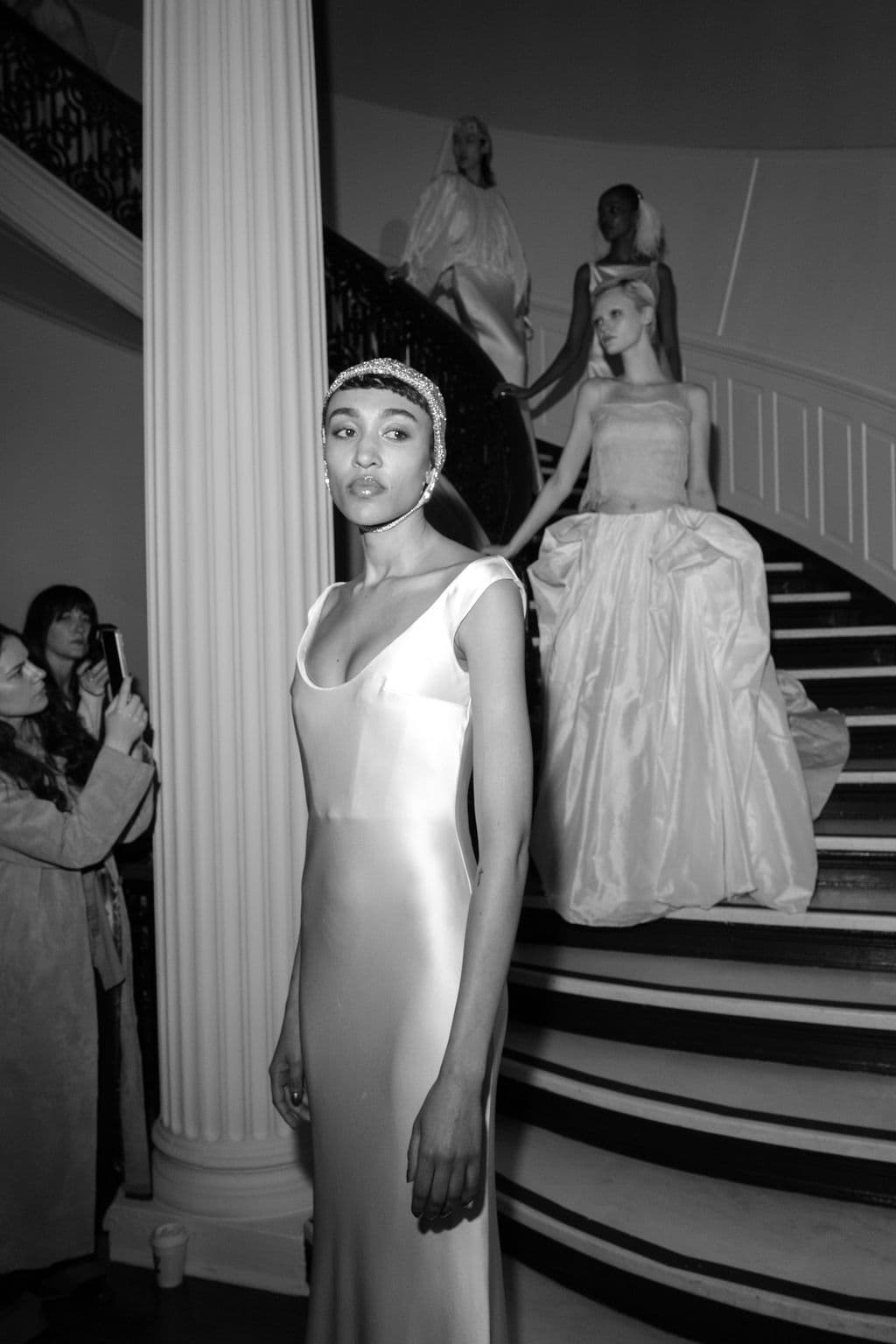
The mermaid silhouette is back in the conversation because bridal fashion has gotten louder, sharper, and much less interested in playing nice. At New York Bridal Fashion Week, the bi-annual setting where designers unveil what will eventually reach bridal salons, spring 2026 collections leaned hard into shape, with dramatic silhouettes, bubble skirts, basque waists, corsetry, and more color all pushing wedding dressing away from softness and into something more sculptural.
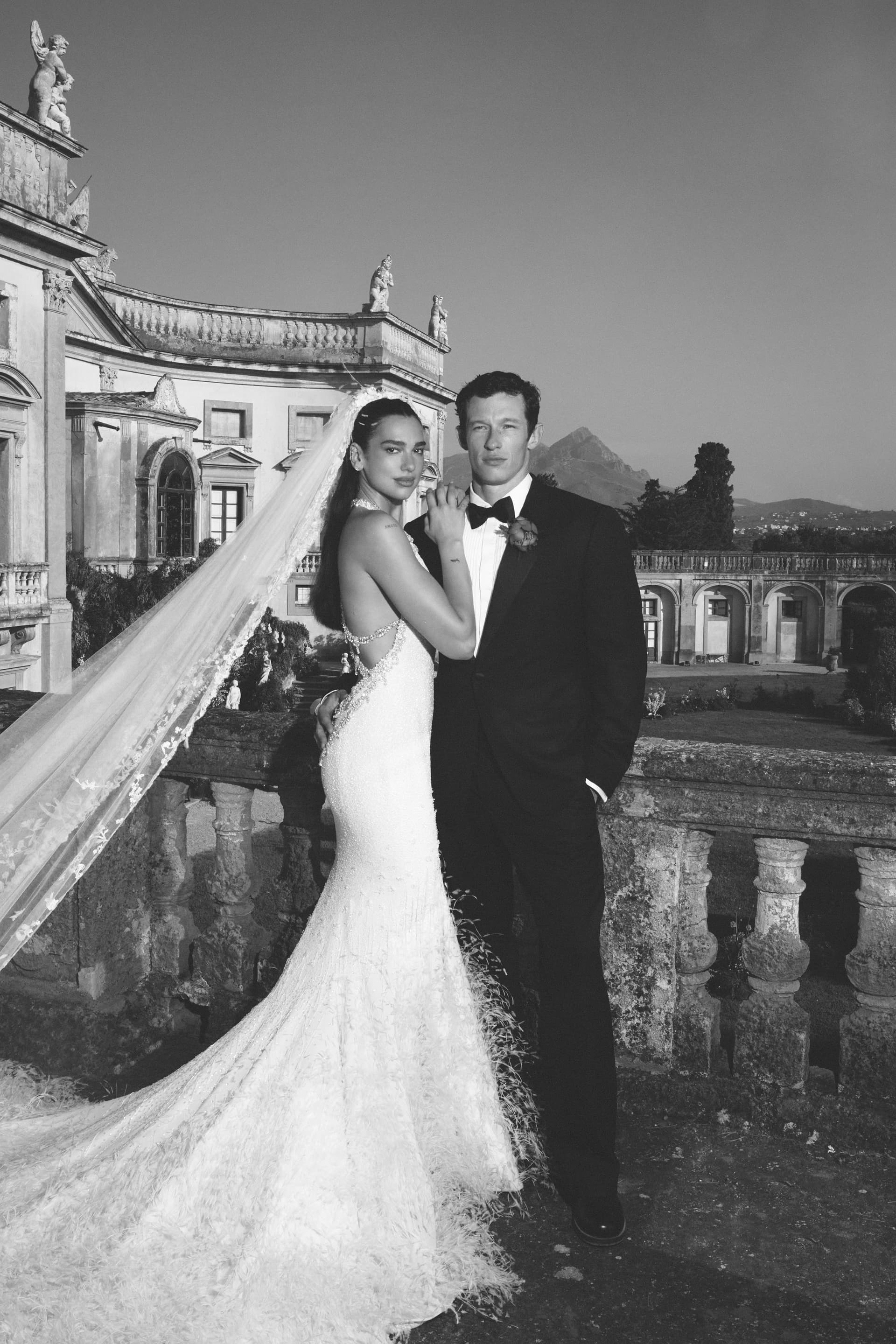
That is exactly why the mermaid feels fresh again. It is the opposite of vague. It hugs the body, defines the waist, and then kicks out at the hem with a kind of theatrical confidence that reads fashion-first rather than politely bridal. Vogue has already flagged it as one of the most divisive wedding dress trends of 2026, and that tracks. People do not feel neutral about a mermaid gown. They either love the tension or they do not.
What a mermaid dress actually does
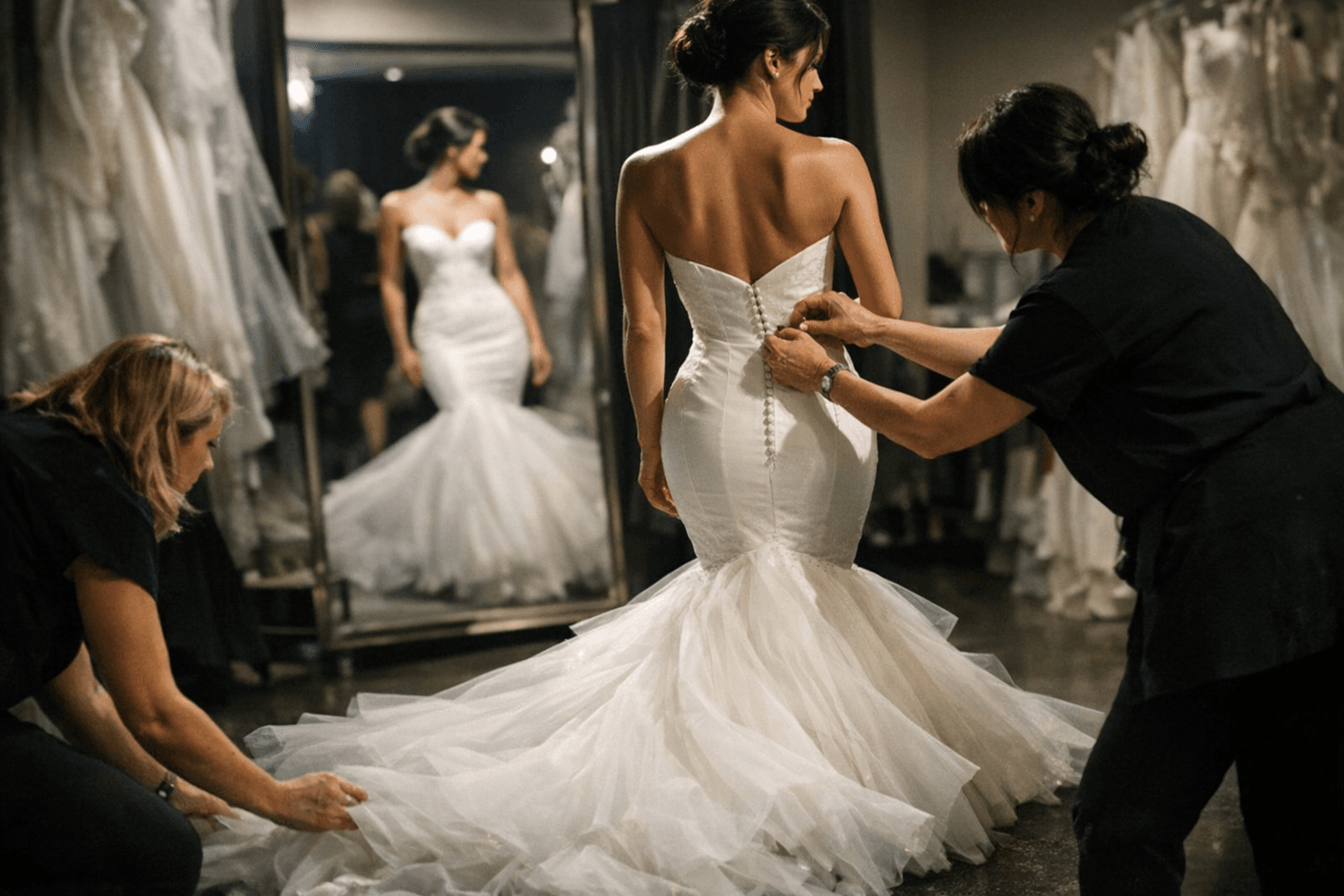
The shape is simple, but the effect is not. The Knot defines mermaid wedding dresses as fitted through the torso and to the knee, then flaring out from the knee to the floor. Kleinfeld places it in the fit-and-flare family, with the flare starting lower than a trumpet gown. That lower flare point is the whole point: it stretches the body into a long, uninterrupted line before exploding into volume at the bottom.
That is also why the silhouette has always been associated with brides who want to show off their curves. It is a dress that asks to be seen from the side, in motion, under flash, and in profile on a staircase. Kleinfeld’s inclusion of mermaid styles in its plus-size selection matters here too. The shape is not a niche fantasy for one kind of body; it is a widely stocked silhouette with real retail support, even if the taste around it stays polarized.
Why brides are reaching for the drama again
The broader mood in bridal is doing the mermaid a favor. Who What Wear says 2026 is moving toward grand, dramatic gowns after previous seasons of 1990s-inspired minimalism, and that shift is visible everywhere from the runway to the showroom floor. The mermaid fits that mood perfectly because it is built on contrast: skin-tight through the top, then suddenly expansive at the hem.
Pnina Tornai is betting on the look too, calling body-hugging mermaid dresses one of the top wedding dress trends for 2026. She also pointed out that plenty of brides still gravitate toward timeless A-line dresses, which is the real story here. The mermaid is not replacing the classic shapes. It is taking up space beside them, as the choice for a bride who wants her dress to feel like a statement rather than a compromise.
Fabric makes the silhouette either polished or punishing
This is where a lot of brides go wrong. The mermaid only looks expensive when the fabric can hold the line. House of Weddings says fitted mermaid cuts are back for 2026, often in shiny silk or tulle, and that tracks with what works visually: the fabric has to either glide or float, never sag. A shiny silk finish makes the silhouette feel sleek and almost liquid, while tulle softens the shape just enough to keep it from reading too severe.
Construction matters just as much. Clean seam placement is non-negotiable because every line in a mermaid dress gets exposed. If the seams are crooked, bulky, or placed too high, the whole effect goes from sculptural to clunky. The best versions use seams to trace the body instead of fighting it, with the flare introduced exactly where the dress should start to bloom.
Corsetry is part of the same story. It is one of the defining bridal details of the season, and on a mermaid gown it can be the difference between structured and suffocating. A well-built bodice should support the dress without flattening it, especially if the goal is that snatched, hourglass look.
The real trade-off: movement
This is the part glossed over in fantasy bridal content. A mermaid dress is gorgeous, but it asks more of the wearer than a softer A-line. Sitting down, climbing steps, and moving through a crowded reception all require more planning, because the silhouette is built for shape first and ease second.
That does not mean the dress is impractical. It means you need to choose the right version of it. A gown with a controlled flare and a fabric that has some give will feel far more wearable than one that is stiff from bust to hem. The runway version can afford to be all attitude; the real wedding version has to let you survive dinner, dancing, and the walk back down the aisle without feeling trapped in your own drama.
A bustle strategy matters here too. The train and flare need to be handled in a way that preserves the dress’s line after the ceremony. If the bustle is clumsy, the gown loses the very shape that made you choose it. The goal is not to hide the silhouette. It is to keep it recognizable once the party starts.
How to style it without overloading the look
Because the mermaid already carries so much visual weight, the smartest styling move is usually restraint with one pointed flourish. That is where Pnina Tornai’s emphasis on capes and gloves lands especially well. Those accessories can change the mood instantly, giving the dress ceremony drama without forcing you to commit to a second gown.
This season’s bridal conversation is full of maximalism, but mermaid dressing works best when the accessories are chosen with a cool head. If the dress is gleaming silk or structured tulle, let the silhouette do the talking. If you want a more fashion-editor finish, add one architectural detail, a cape for the aisle, gloves for an old-school hit, or a veil that sharpens the profile instead of softening it.
Who the mermaid really works for
The honest answer is that it works for brides who want to look deliberate. Not casual, not floaty, not “effortlessly” anything. It is for the bride who likes a tailored line, wants the body to be part of the design, and does not mind that the dress will have opinions attached to it.
That is why it keeps coming back in waves. The mermaid is not a safe bet, but it is a memorable one, and bridal fashion right now is rewarding that kind of confidence. With Spring 2026 collections in New York pushing silhouettes into more sculptural territory, the mermaid is no longer the one bride in the room with the strongest opinion. It is the dress that finally matches the moment.
This article was produced by Prism’s automated news system from verified source data, official records, and press releases, then run through automated quality and moderation checks before publishing. The system is built and supervised by the people who set the standards it runs under. Read our full AI policy.
Did this article answer your question?