Airport Retail Under Pressure as Duty-Free Sales Slow Worldwide
Passenger traffic has snapped back, but airport shops still lag. The new prize is not just sales, but discovery, image, and high-intent spending.
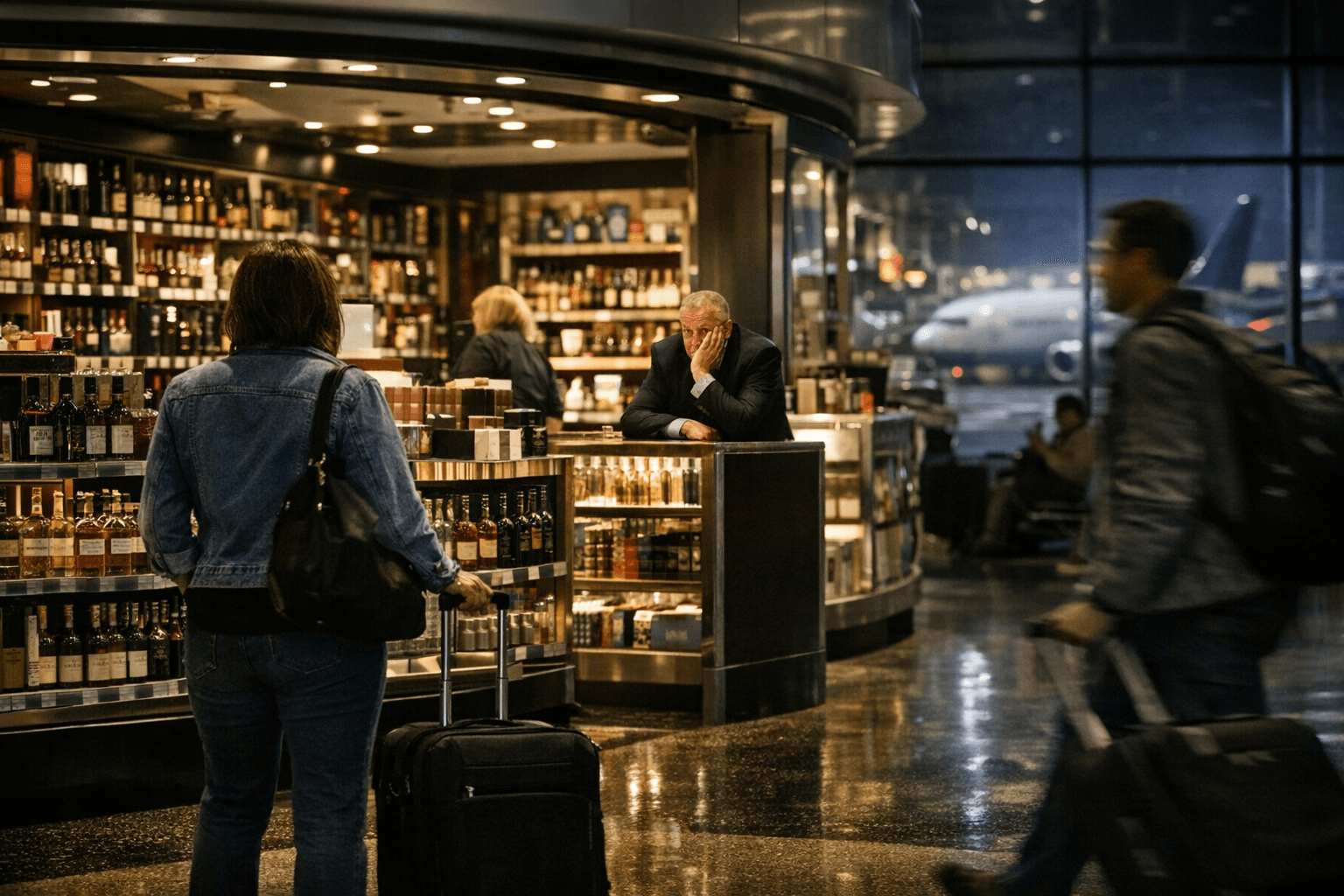
The airport is still full, but the old duty-free playbook is running out of runway
Airport retail is no longer being judged only by how much lipstick, liquor, and leather it moves across the counter. The sharper question now is what those stores are supposed to do when the terminal is crowded but the business is softer: drive transactions, build brand heat, or act as a high-traffic stage for discovery. That split is becoming the defining tension in travel retail, and it is forcing brands to choose between chasing volume and using airport space as a kind of global billboard with benefits.
The pressure starts with a simple mismatch. Airports have largely recovered their traffic, but commercial income has not fully caught up. Airports Council International World said global passenger traffic reached 8.7 billion in 2023, about 95 percent of 2019 levels, and projected 9.5 billion passengers in 2024, which would put the sector at 104 percent of 2019. Yet global airport revenues were still only US$146 billion in 2023, 11.4 percent below 2019, while non-aeronautical revenues, the bucket that includes retail, came in at US$54 billion, 17 percent below 2019.
That gap matters because airports are not just selling space, they are financing the future. ACI World says the sector will need an estimated US$2.4 trillion in capital investment by 2040 to meet demand. In that context, every square foot of retail has to work harder than before. The pressure is no longer about filling empty terminals. It is about making time in the terminal productive.
What brands are really asking airport shops to do
This is where the strategy splits. Some brands still treat duty-free as a transaction machine, the place where a traveler can be nudged into a last-minute buy with strong merchandising, travel-friendly formats, and sharper assortments. Others are using the airport more like a luxury media platform, where the goal is to be seen by a captive, affluent audience at the exact moment it is receptive to newness.
The most interesting operators are now trying to do both. They want conversion, but they also want discovery, because airports concentrate attention in a way few retail channels can. A traveler may not need a new fragrance or a new bottle of whisky, but in the terminal they are primed to browse, compare, and be persuaded. That makes airport retail less like a conventional store and more like a hybrid of shop, showroom, and brand statement.
Industry figures such as Justin Erbacci, Nigel Keal, and Piret Mürk-Dubout sit close to that strategic shift, because the debate is no longer about whether travel retail matters. It is about how the channel should perform in an era when footfall alone is not enough. The winning formula is increasingly selective: sharper product curation, more premium storytelling, and formats that feel worth stopping for rather than simply passing through.
Europe shows the channel is not failing everywhere
The slowdown is real, but it is not uniform. Europe’s travel retail market remains a useful counterpoint, because it shows how strong the channel can still be when demand, pricing, and passenger mix line up. The European Travel Retail Confederation said European airport duty-free sales reached a record €9.5 billion in 2024, up 9.6 percent year on year.
Even there, the details tell a more complicated story than headline growth suggests. ETRC said unit sales lagged value growth, while spend per passenger rose 1.3 percent versus 2023 and 7 percent versus 2019. That points to a market being helped by inflation and by passengers spending more per trip, not simply by a surge in volume. In other words, the business is still selling, but the shape of that selling has changed.
The maritime side tells an even more cautious story. ETRC said Nordic and Baltic ferry duty-free sales reached €686.4 million in 2024, down 5.2 percent from 2023 and 24.7 percent below 2019. That gap between airport and ferry performance matters. It shows travel retail is not one single market moving in lockstep. Airports, ferries, and other channels are being pulled by different consumer patterns, different routes, and different recovery speeds.
Why the channel still matters to airports and operators
If the numbers look mixed, the argument for the channel is still strong. The Duty Free World Council says duty- and tax-free retail is integral to aviation and maritime, supports infrastructure development, enhances the traveler experience, and generates jobs. That is not just industry cheerleading. It is a reminder that travel retail sits at the intersection of commerce and public infrastructure, which is exactly why it continues to attract so much strategic attention.
Operators are still betting on that mix, even as the model changes. Avolta won retail space at JFK Airport and opened duty-free stores across five Tunisian airports. It also added airport food and beverage and concessions contracts in Frankfurt Airport, Oslo Gardermoen Airport, Sacramento International Airport, Shenzhen Bao'an International Airport, Milan Malpensa Airport, and Milan Linate Airport. The geography of those wins is the point: the operator is not retreating from airports, it is diversifying its bet across major hubs and local gateways.
That expansion says something important about where the opportunity now sits. Airports still matter to brands because they deliver concentrated, high-value attention, but the old pure-volume logic is weaker than it used to be. The new airport store has to earn its rent in more ways than one. It has to sell, yes, but it also has to signal status, create memory, and make a traveler feel like they found something worth carrying on board.
The new travel retail brief
For brands, the smartest airport strategy is no longer simply to push more units through the till. It is to decide whether the store is meant to convert, to seduce, or to do a little of both. The terminal is becoming a more expensive, more selective stage, and the labels that win there will be the ones that understand that visibility is valuable only when it still leads somewhere.
Travel retail is not disappearing. It is being edited.
This article was produced by Prism’s automated news system from verified source data, official records, and press releases, then run through automated quality and moderation checks before publishing. The system is built and supervised by the people who set the standards it runs under. Read our full AI policy.
Did this article answer your question?


