Fashion Industry Accelerates Circular Shift Amid New Regulations and Infrastructure Expansion
Digital Product Passports, France’s Environmental Cost and California’s SB 707 are forcing brands to centralize product data, scale take-back programs and overhaul supply chains.

Regulators from Brussels to Sacramento have stopped asking and started mandating. The EU’s Digital Product Passport and Ecodesign for Sustainable Products Regulation, France’s Environmental Cost rule, the EU Deforestation Regulation and the Corporate Sustainability Due Diligence Directive now require item-level environmental data and chain-of-custody evidence, and California’s Responsible Textile Recovery Act SB 707 has been law since September 2024. Heuritech lays it out bluntly: "With landfill waste projections rising, the fashion industry faces a make-or-break moment in 2026: embracing circular economy principles and sustainable production methods is no longer optional, it’s required."
Where the rules bite, measurable improvements are appearing. A mid-February 2026 analysis noted that gains show up where brands adopt circular business models that prioritize resale, repair and recycled concepts. The wider market is already shifting: Business Of Fashion projections cited by Lectra expect the second-hand market to expand two to three times faster than first-hand goods between 2025 and 2027, and platforms such as Vinted in Europe and The RealReal in the U.S. are capturing that demand. Heuritech points to Patagonia, Stella McCartney and Circle Sportswear as examples running recycled collections and take-back programs that lengthen product lives.
The technical and operational lift is brutal and specific. Fairlymade’s roadmap tells brands to map raw materials, identify high-risk inputs, and force supplier disclosure for origin data. Companies must standardize product data fields across design, sourcing and production, centralize that information in integrated IT systems - traceability platforms, ERP and PLM - and link everything to sustainability metrics and Digital Product Passports. As Lectra puts it: "Digitalization is no longer optional – it is now a survival tool." These are not optional PR checkboxes; ESPR, DPP and France’s rules demand item-level lifecycle metrics and compliance records.
U.S. policy is accelerating state-level responsibility. California’s SB 707 started the clock in September 2024 and Washington and New York are actively exploring similar textile EPR schemes. The industry convened under AMCIRC for a webinar on the 2026 outlook, where the policy shift was framed as structural. "Textile EPR doesn't just check a regulatory box. It forces companies to build the foundation for a more resilient, circular business," concluded Kontovrakis, and AMCIRC founder Rachel Kibbe warned that "Companies don't just need supportive policies. They need support navigating policy and a collective seat at the table."
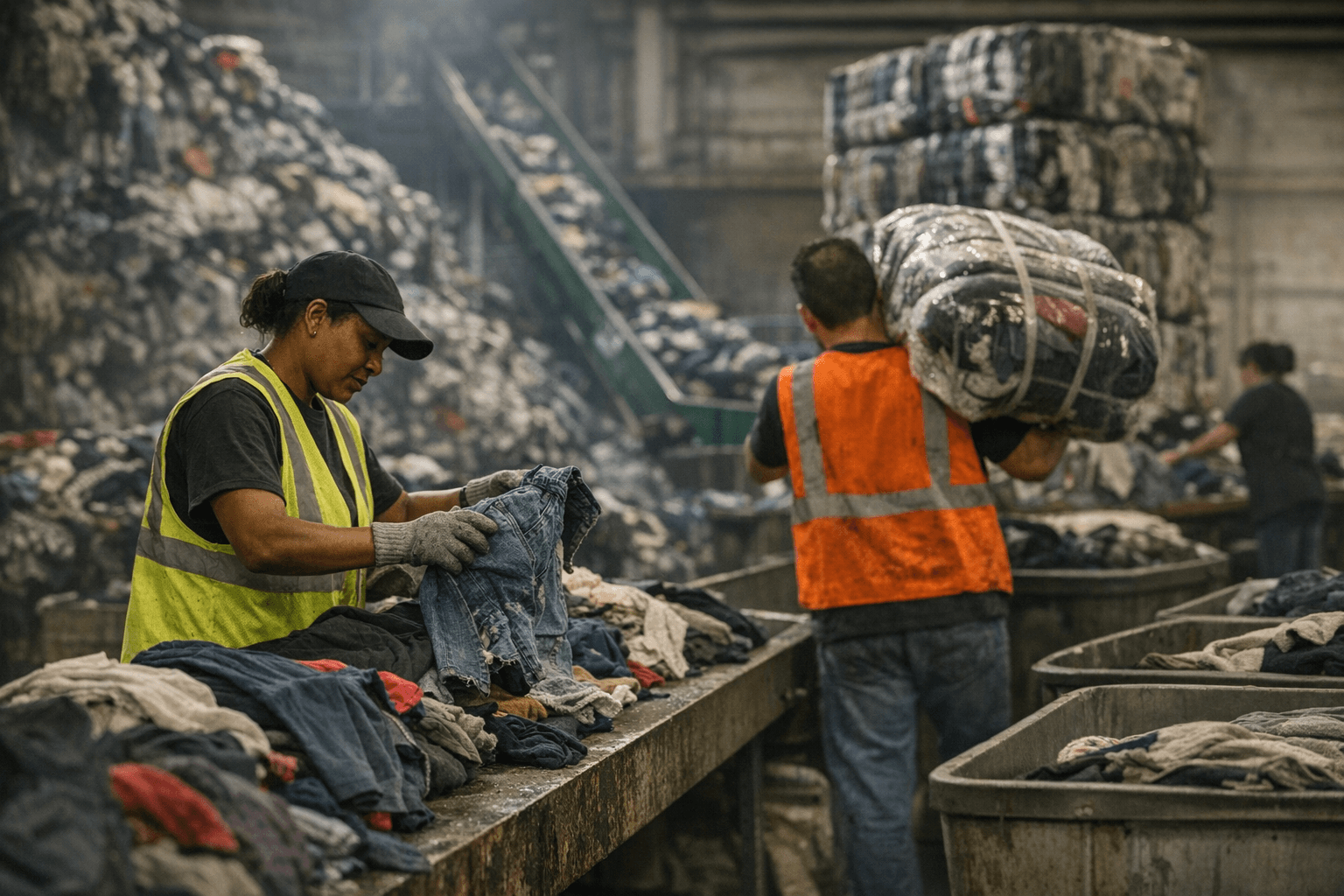
Design and retail practice are following the law and consumers’ patience. Nomorenobody captures the new buyer questions - "Who made my clothes?", "What is this fabric made from?", "Will I actually wear this 30 times?" - and prescribes practical fixes: fabrics that survive repeated washing, strong seams, quality zips and buttons, repairable constructions, spare parts, take-back programmes, resale sections and rental services. Those measures feed directly into regulators’ durability and repairability expectations and into the cost-per-wear argument brands must now defend.
Hardware and research still lag the rhetoric. Heuritech and Lectra both call for investment in closed-loop systems, fiber-to-fiber recycling, biodegradable fabrics and AI-powered logistics, plus nearshoring to blunt climate-driven volatility. Upcycling and recycling face material-quality and traceability bottlenecks that will require capital and standards harmonization to scale.
The practical verdict is unforgiving and timebound: between 2025 and 2028 the industry must build traceability platforms, integrate ERP and PLM systems, launch verified take-back and resale channels, and invest in recycling technology or face escalating compliance costs and market displacement. The regulatory tide is real; brands that treat circularity as engineering work instead of marketing will survive this pivot.
This article was produced by Prism’s automated news system from verified source data, official records, and press releases, then run through automated quality and moderation checks before publishing. The system is built and supervised by the people who set the standards it runs under. Read our full AI policy.
Did this article answer your question?


