Generative AI Copyright Tensions Could Reshape Fashion's Design Protections
Copyright law was never fashion's strongest shield, and generative AI is exposing exactly why. Harvard's Rebecca Tushnet says it may be the wrong weapon entirely.
Why Copyright Was Never Fashion's Strongest Armor
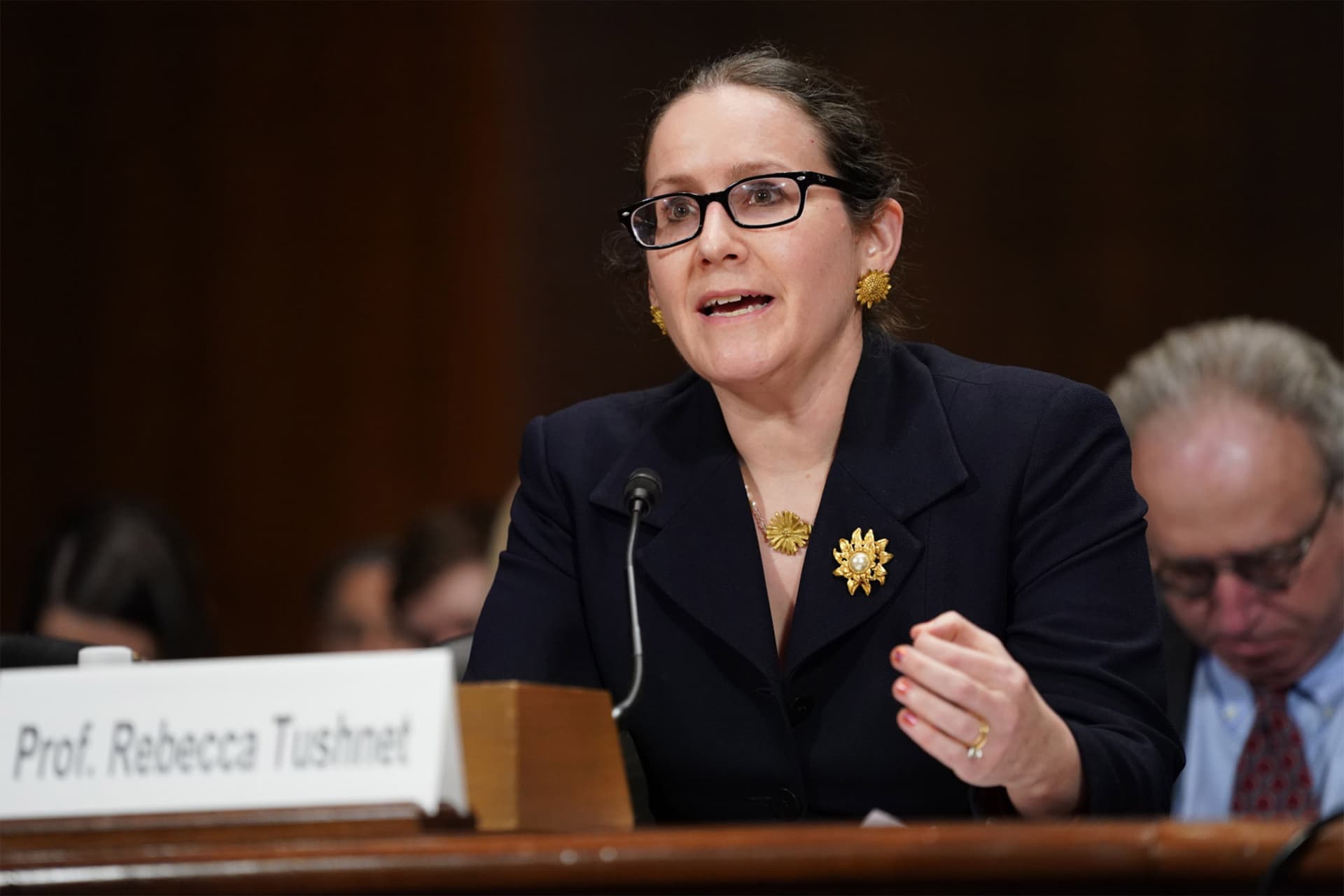
Copyright law was always a leaky umbrella for fashion designers. Now, with generative AI able to study thousands of garments and produce novel but derivative silhouettes in seconds, the gaps are becoming craters. Harvard Law professor Rebecca Tushnet, the Frank Stanton Professor of the First Amendment and a leading expert on copyright and trademark law, made the case plainly in a March 31 interview with Harvard Magazine: copyright law is ill-suited for settling disputes about generative AI. That assessment should rattle every creative director, independent designer, and image-driven platform currently feeding runway archives into an AI tool.
The problem isn't just theoretical. More than 70 infringement lawsuits have been filed by copyright owners against AI companies, centered on whether training large language models on copyrighted material constitutes fair use. The fashion industry is watching those cases closely, because the outcomes will determine whether a brand's design archive is raw training data for a competitor's AI or protected intellectual property.
The Fair Use Labyrinth
Tushnet's argument isn't that AI companies are blameless; it's that copyright doctrine, as currently written, is a blunt instrument for a precise problem. The basic idea of fair use is that some unauthorized uses of copyrighted works are beneficial for society, such as parody, satire, and academic commentary. "Big data" uses are also often considered fair because they generate new insights and have different purposes from any given individual work. Her analogy is instructive: you can use Google Books to track the rise of a concept across decades, and that analytical use doesn't threaten the market for the original books. Some AI training works the same way.
But the line isn't drawn at the training stage alone. "If the training produces infringing copies as outputs every time it's used, that's clearly not fair; if a model never produces infringing copies as outputs when it's used, then that's a case for fair use," Tushnet explained. For fashion, this distinction is loaded: a model trained on Valentino archive images that consistently spits out near-identical lace gown prints lands in very different legal territory than one that learns aesthetic principles and generates something categorically new.
Courts are beginning to navigate this spectrum, and the signals are genuinely mixed. In June 2025, two summary judgment decisions held that using books to train general-purpose generative AI models constituted fair use where no evidence of infringing outputs was shown. In contrast, a third decision held that it was not fair use to use non-fiction content to train a directly competitive non-generative AI model. The competitive-use distinction matters enormously for fashion: an AI trained on a brand's design history specifically to power a rival design tool reads very differently than a general-purpose image model that ingested everything on the internet.
There is also the question of who actually benefits when copyright claims succeed. Tushnet says that rejecting fair use would redirect money toward large copyright owners, rather than individual creators. For an independent knitwear designer whose work ends up in a training dataset, a courtroom victory against a major AI company may produce a settlement that flows mostly to large rights-holding conglomerates, leaving the small creator no richer and no better protected.
The Structural Problem: Fashion's Copyright Floor Is Already Low
Even before AI entered the picture, copyright offered fashion designers fragile protection. Despite fashion's cultural and economic significance, U.S. law offers only fragmented protection through copyrights, trademarks, trade dress, and patents. Copyright law is significantly constrained by the useful article doctrine and the separability requirement articulated in Star Athletica v. Varsity Brands, meaning copyrights only protect separable artistic elements rather than garments as a whole. A printed textile can be copyrighted; the cut of the dress it covers generally cannot. AI doesn't create this gap; it just makes it wider and easier to exploit at scale.
The authorship problem compounds things further. The appeals court ruling in the Thaler case firmly denies any path to copyright protection for works generated wholly by machines, while humans who use AI tools to develop designs may retain copyright. That means a designer who uses AI as a collaborator, contributing meaningful creative direction, likely holds rights. One who simply prompts a model and ships the output does not. The creative brief matters more than it ever has.
The Alternatives That Actually Protect Designers
Because copyright's reach is structurally limited, fashion's real protection has always lived elsewhere, and the AI era makes those alternatives more valuable, not less.
*Trademark and Trade Dress.* Trademarks and trade dress, which do not require human authorship or inventorship, may provide alternative means of protecting distinctive, brand-identifying features. Christian Louboutin's red sole, Burberry's plaid pattern, the Hermès Birkin's silhouette: these are protected because they function as source identifiers, not because they are artistic works. When an AI generates something confusingly similar to a brand's signature aesthetic, trade dress law becomes the sharper tool. The catch is that trademark and trade dress protections are typically only effective for well-established brands, and they primarily safeguard brand identifiers. An emerging designer without years of market presence has almost nothing to anchor a trade dress claim.
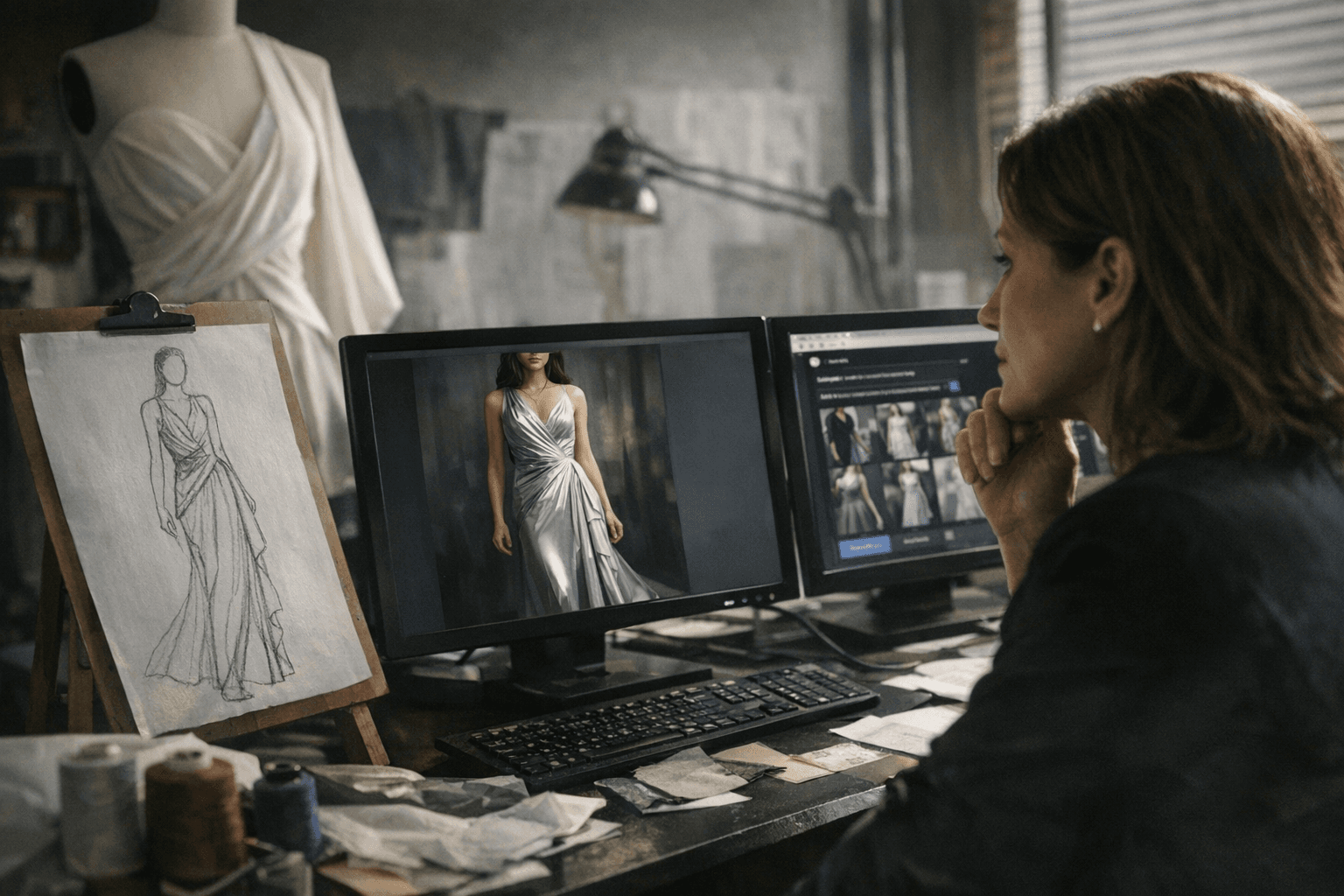
*Right of Publicity.* This doctrine is gaining force fast in fashion specifically because AI-generated imagery is becoming indistinguishable from photography. Rights of publicity violations occur when AI-generated images closely resemble real people without consent. Fashion brands cannot use AI to create realistic images of celebrities or models wearing their products without permission. New York codified this concern into law: the New York Digital Replica Law, effective January 1, 2025, goes after "rights-grab" contracts, voiding digital replica agreements that allow a replica to be used instead of work the person would have done in person, or that fail to give a reasonably specific description of the intended use. And New York's AI Transparency in Advertising and Synthetic Performer Disclosure Law takes effect June 9, 2026, requiring disclosure when commercial ads use AI-generated synthetic performers.
*Contracts and Platform Terms.* When copyright doctrine fails at the edges, contract law fills the space. Licensing agreements, model releases, and photographer contracts increasingly need explicit clauses governing whether work can be used in AI training datasets. Platform terms of service, often overlooked by smaller brands, determine whether images uploaded to a marketplace or social platform can be harvested for model training by the platform or third parties.
The Brand and Designer Playbook
The legal landscape is unsettled, but the practical steps are not. Every fashion brand and independent designer using or exposed to generative AI tools needs to operate with a clear internal framework:
- Audit your AI vendor contracts. If you are licensing an AI design tool, your contract should specify whether the vendor can use your inputs, brand assets, or outputs to train or improve their models. Vague language in this area is a rights transfer in disguise.
- Establish human authorship trails. Document the creative decisions you make when working with AI, including prompts, edits, curation choices, and revisions. This paper trail is what separates a copyrightable design from an unprotectable machine output.
- Register your trade dress proactively. The brands with the most durable AI-era protection are those whose visual signatures are already registered and enforced. Signature color combinations, distinctive hardware shapes, proprietary prints: get them on record now, before an AI-generated lookalike forces you to prove distinctiveness in court.
- Know what your platform licenses. When you post runway images, campaign photography, or product shots on any social or marketplace platform, you are agreeing to terms that may permit broad AI-related uses. Read the current versions of those agreements; many were updated quietly in 2024 and 2025.
- Use training-data-transparent AI tools. Adobe's Firefly, trained primarily on Adobe Stock and licensed content, represents one model for ethically sourced AI generation. When choosing AI partners, prioritize vendors who disclose their training data provenance and indemnify users against infringement claims arising from outputs.
- Clarify attribution in creative briefs. When commissioning AI-assisted work from freelancers, photographers, or agencies, specify in writing who holds what rights, how AI tools were used, and whether the resulting assets can appear in AI training pipelines downstream.
What Comes Next
The courtroom picture will clarify in 2026, with several significant summary judgment and appellate decisions expected. But designers and brands who wait for legal certainty before building their protection strategy will find themselves perpetually a ruling behind. The designers who emerge from this period strongest will be those who treated trademark registration, contract precision, and trade dress development not as legal expenses but as design assets, because in the AI era, they are exactly that.
This article was produced by Prism’s automated news system from verified source data, official records, and press releases, then run through automated quality and moderation checks before publishing. The system is built and supervised by the people who set the standards it runs under. Read our full AI policy.
Did this article answer your question?


