H&M and Stella McCartney Launch Insights Board to Make Sustainability More Actionable
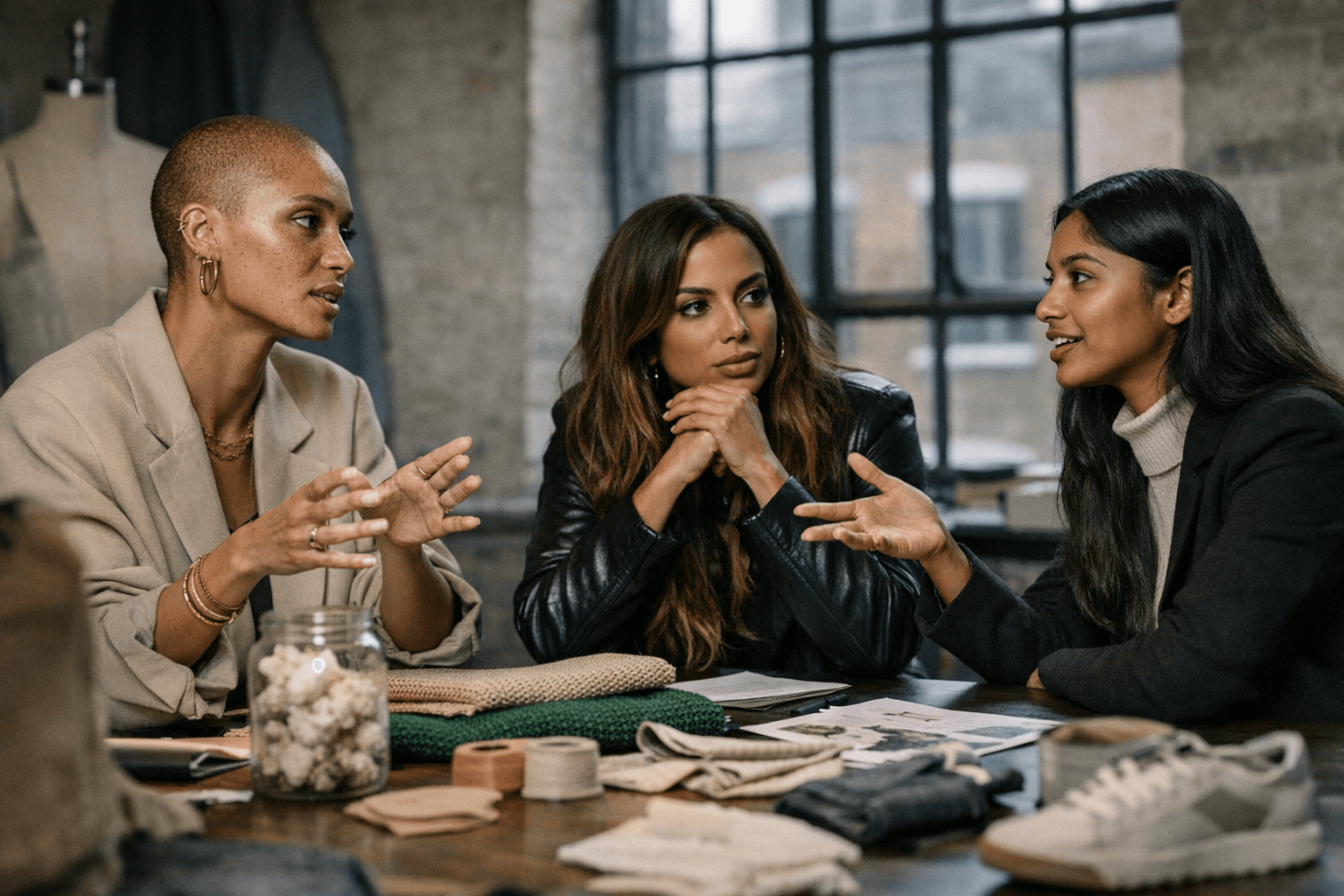
H&M and Stella McCartney assembled Adwoa Aboah, Anitta, and AI innovator Kiara Nirghin in London to tackle fashion's most stubborn problem: sustainability claims nobody believes.

The conversation around sustainable fashion has shifted decisively, and the central question is no longer whether brands should talk about it but whether anything they say holds up at the rack. H&M and Stella McCartney's answer, as of March 24, is structural: an Insights Board convened for its first in-person meeting in London, pulling together five culturally loaded voices and tasking them with making sustainability fact-based, accessible, and genuinely hard to spin.
The board's composition alone signals what H&M and McCartney are trying to fix. Kiara Nirghin, a South African tech entrepreneur who builds AI tools specifically for climate solutions, sits alongside Susie Lau, the British fashion editor whose Susie Bubble blog spent two decades holding the industry accountable. Adwoa Aboah, model, actress, and founder of the Gurls Talk mental health nonprofit, brings an advocacy lens. Brazilian singer and activist Anitta brings a global pop platform. Model Amelia Gray, a fixture at Miu Miu and Givenchy, rounds out a group that conspicuously avoids the corporate sustainability team look. Fashion industry strategist Julie Gilhart moderated. Stella McCartney participated directly alongside H&M's own topic experts.
What they discussed is where the real test begins. The inaugural London session focused on the need for "relevant, accessible and transparent communication" about product materials and brands' sustainability performance. The board landed on a pointed conclusion: fact-based communication, grounded in genuine and tangible commitments rather than aspirational language, is what actually differentiates a brand in a consumer's eyes. That is a direct indictment of how most mass-market fashion, including H&M itself, has historically positioned its green credentials.
Susie Lau framed the board's mandate without softening it: "Fashion thrives on dialogue, critique and curiosity. What draws me to the Insights Board is the chance to question assumptions and explore how sustainability can move beyond slogans and become something embedded in the culture and everyday practices of fashion." That framing is the right one, but it immediately raises the usability problem this initiative has to solve. A shopper standing at a rail in an H&M store on a Tuesday afternoon does not have access to an Insights Board. What she has is a hang tag. The credibility gap lives in that distance, and the board's work only matters if it closes it.
The spring collection launching in May is the first concrete pressure test. That capsule, the second H&M x McCartney collaboration, was first announced in December 2025 and features organic, recycled, and next-generation materials alongside lower-impact fibers. It will be the most visible proof point for whether the Insights Board's emphasis on transparent material communication actually translates into something a customer can read, verify, and act on at point of sale. Fiber percentages, certifications, and sourcing claims will need to stand up to scrutiny in a regulatory environment that has grown sharply less tolerant of vague green language, particularly across Europe.
McCartney put the board's ambition plainly: "Fashion has an opportunity to lead with honesty, transparency and a willingness to challenge itself." For a Swedish retailer with a stated target of 100 percent sustainable materials by 2030, that honesty has a number attached to it, and a deadline. The Insights Board is a credible step toward accountability; the spring collection will be the first measure of whether the talk produces anything a shopper can actually hold.
This article was produced by Prism’s automated news system from verified source data, official records, and press releases, then run through automated quality and moderation checks before publishing. The system is built and supervised by the people who set the standards it runs under. Read our full AI policy.
Did this article answer your question?


