How to read laundry symbols and make clothes last longer
Read the label before you wash: those tiny symbols tell you how to protect fit, color, and fabric, and gentler care can keep clothes going longer.
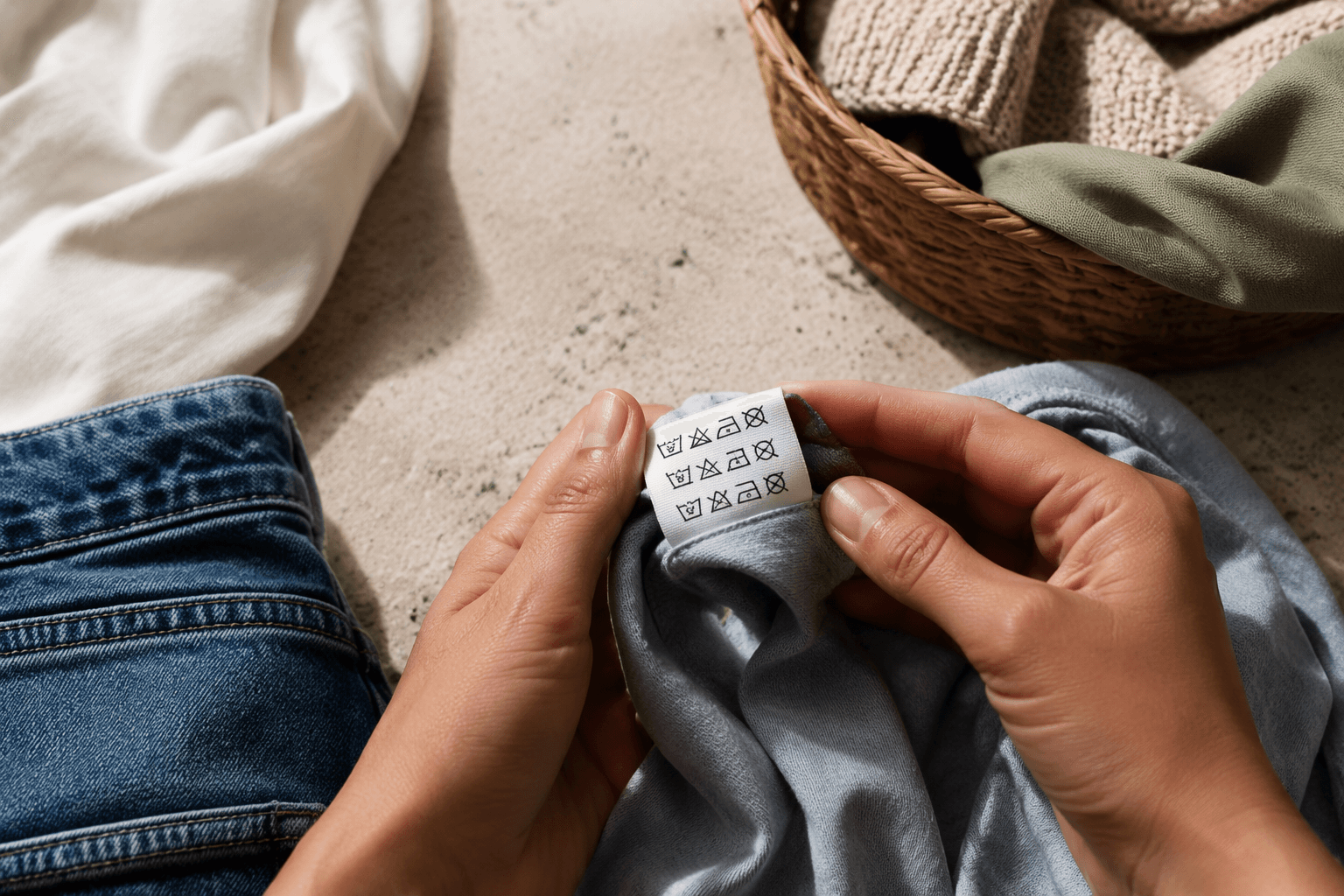
A care label can save silk from heat, denim from shrinkage, and a tailored jacket from losing its shape, if you know how to decode it. Once you learn the system, the symbols read less like jargon and more like a practical style manual.
The five symbol families
Laundry symbols fall into five main families. The wash tub is about washing and water temperature, the triangle is about bleaching, the square with a circle inside covers tumble drying, the iron icon uses dots to show heat level, and the circle is for dry cleaning. Additional lines or slashes make the instruction gentler or more restrictive, which is why the same-looking tag can mean very different care depending on the marks around the icon.
Wash tub: water, machine, and temperature
The wash tub tells you whether a garment can go in the machine at all, and if it can, how hot the water should be. That matters for clothes with stretch, structure, or delicate surface finishes, because heat and agitation can tighten fibers, fade dye, and distort a shape that looked perfect on the hanger. If a label calls for cold water, take it seriously; cold and cool settings are usually the safest way to protect color and reduce wear on fabric finish.
Follow the most restrictive instruction on the label, not the most convenient one. If a top looks machine-washable but the tag warns against a hot cycle, choose the colder setting. It is the easiest way to avoid shrinkage, pilling, and that slow, expensive collapse of fit that makes a good piece look tired too soon.
Triangle: bleach, brightness, and damage control
The triangle is the bleach symbol, and it is one of the easiest to misread because people often treat bleach as a universal brightener. It is not. When the triangle is crossed or marked to forbid bleach, the label is protecting fiber and color from a treatment that can weaken cloth, dull blacks, and turn rich shades uneven.
Bleach can be especially unforgiving on dyed fabrics, embellished pieces, and anything with mixed materials, where one part of the garment may react differently from another. If you want a shirt to stay crisp without turning chalky, the triangle is the symbol that tells you when to skip the harsh stuff entirely.
Square with a circle: what the dryer can and cannot do
The square with a circle inside is the tumble-dry symbol, and it tells you whether a garment can handle the heat and tumbling of a machine dryer. This is one of the most common places people accidentally damage clothes, because dryer heat can shrink cotton, flatten texture, and punish stretch fibers that need a gentler finish. When the label points you toward low heat or air drying, it is usually because the garment will keep its shape better that way.
Line drying and air drying are especially useful for knitwear, rayon blends, and structured pieces that do not like being tossed around. Labels also flag “do not wring” as a crucial instruction for delicate knits or tailored garments, since twisting wet fabric can stretch seams, warp shape, and leave permanent marks. If the piece has weight, drape, or shoulder structure, letting it dry calmly is often the difference between polished and misshapen.
Iron: the heat setting your fabric can tolerate
The iron icon uses dots to indicate heat level, and that tiny detail is what keeps a blouse glossy rather than scorched. More dots mean more heat tolerance; fewer dots mean you need a cooler touch. It matters because synthetics, silk, and blended fabrics can shine, melt, or flatten under the wrong setting.
The best iron routine starts with restraint. Use the lowest heat that will smooth the wrinkle, and when a garment feels fragile, press rather than drag the iron across it. That keeps the surface finish cleaner and helps preserve the crisp line of tailoring without flattening the fabric’s natural texture.
Circle: when the garment needs a professional hand
The circle is the dry-cleaning symbol, and it usually appears on garments that rely on a more controlled cleaning process than a home wash can provide. That does not mean every dry-clean-only piece is precious in the same way, but it does mean the fabric, construction, or decoration is less forgiving of water, heat, or agitation. Think outerwear, formal tailoring, and garments with delicate trims or layered construction.
Care labels are designed to explain the best cleaning procedure for a specific combination of fabric, thread, decoration, and construction technique. That is why the label on a soft knit, a sharp blazer, and a beaded dress will not read the same way, even if all three look equally polished on a rack.
Why the label is also a shopping tool
Care labels do more than rescue laundry. The care label influences the purchase decision of four out of five consumers, according to the University of Tennessee Agricultural Extension Service, and a consumer study found that 67 percent of respondents used care-label information when buying apparel and 82 percent used it when laundering. Another study found that 56 percent of people do not always understand clothing care symbols, which helps explain why so many good clothes are lost to one bad wash.
If you know a silk shirt will need cool water and a jacket will need dry cleaning, you are shopping with the life of the garment in mind, not just its first wear.
The rules behind the tag
The care label system in the United States is not a style-world invention; it is regulation. Every garment sold in the United States must have a care label that explains how it should be cleaned. As of July 1, 1997, care labels could include symbols or pictures; the University of Tennessee records that through 1998 written instructions were still required with symbols optional, and after 1998 either written instructions or symbols could be provided.
The modern symbol language has deeper roots. GINETEX dates its care-labelling system to 1963, and the three-symbol row was first registered with WIPO in 1969. The international ISO 3758 standard now underpins care-label symbols in many markets, which is why the same visual shorthand shows up across borders even when the text around it changes.
Why gentler care extends the life of clothes
A July 2016 technical brief from The Sustainability Consortium and the American Cleaning Institute made the case for cold-water washing in everyday U.S. laundry, and Electrolux Group found in a seven-year research program that clothes including jeans and T-shirts can last more than 50 percent longer with gentler wash conditions.
Cold water, lower heat, air drying, and gentler cycles all protect the things you can feel in a garment: the softness of a knit, the density of denim, the drape of a dress, the clean line of a blazer shoulder. They also reduce waste by delaying replacement.
Where care labels are headed next
The American Apparel & Footwear Association has petitioned the FTC for online or digital garment care instructions, with support from brands including Ralph Lauren and Patagonia.
This article was produced by Prism’s automated news system from verified source data, official records, and press releases, then run through automated quality and moderation checks before publishing. The system is built and supervised by the people who set the standards it runs under. Read our full AI policy.
Did this article answer your question?