Lagos Maps Textile Waste Flows to Build Circular Fashion Economy
Lagos is turning textile waste into data, with Project Irapada mapping where castoff clothes go and how a circular fashion economy could actually work.
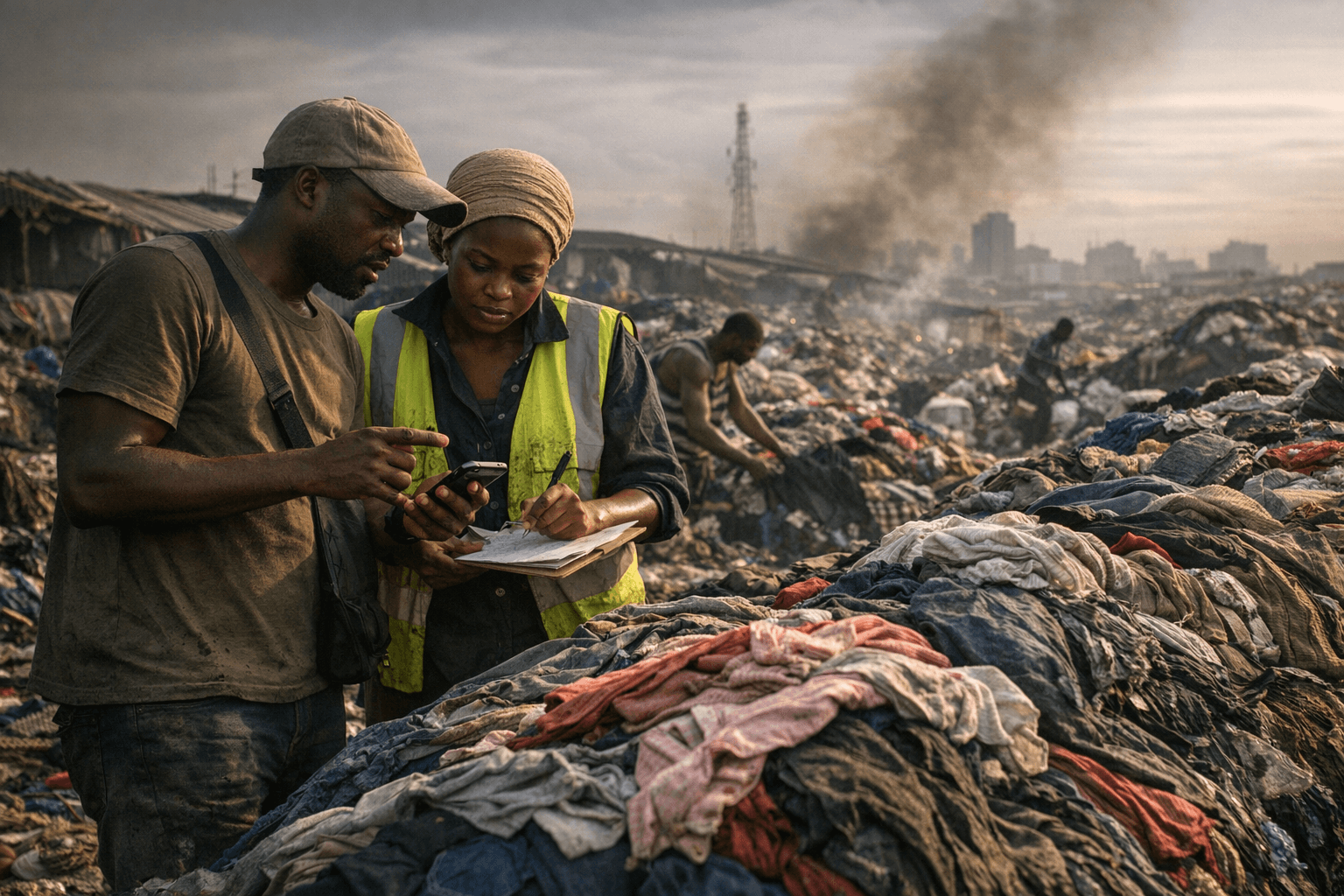
Lagos is the place to watch
Lagos has stopped being just the city where fashion gets loud. It is becoming the place where fashion gets accountable. The clearest example is Project Irapada, which Style House Files describes as the first systematic mapping of textile-waste flows in Lagos, using field surveys, waste audits, and stakeholder interviews to trace how fabric moves through markets, garment factories, and households.
That matters because Lagos is not dealing with a neat, boutique-sized sustainability problem. It is dealing with volume, pressure, and waste that has to go somewhere. Omoyemi Akerele, who founded both Lagos Fashion Week and Style House Files, has pushed the project as infrastructure-building, not slogan-making. That is exactly the right frame. If you do not know where the waste originates, how it travels, and where it ends up, you are just performing green language on top of a broken system.
What Project Irapada actually does
The power of Project Irapada is that it treats textile waste like a real supply chain, not a vague environmental afterthought. The study combines field surveys, waste audits, and stakeholder interviews to estimate the volume, distribution, and management of textile waste across the city. That means it is trying to answer the practical questions that usually get skipped in fashion sustainability conversations: who is handling the castoffs, which neighborhoods absorb the load, and where the bottlenecks sit once clothes are no longer sellable or wearable.
The launch happened during Woven Threads VII in Lagos on April 10, 2026, and the broader programme ran from April 10 to 12. That timing is not accidental. It put the project in front of the city’s fashion gatekeepers, waste managers, and policy crowd at the exact moment the conversation was shifting from abstract concern to operational design.
Akerele’s point is the one that should stick: Lagos needs a clearer picture of where textile waste originates, how it flows through the city, and where it ends up. That is the difference between a talking point and a system. One is branding. The other is strategy.
The numbers are the wake-up call
The scale of the waste problem in Lagos is what makes this more than a fashion-week side project. LAWMA has said textile materials account for around 8% of waste, and a March 31, 2025 statement put Lagos’s textile waste at about 1,040 tonnes a day. Another Lagos circular-economy office estimate puts textiles at 2% of municipal waste, or roughly 2,000 tonnes. Even with those different baselines, the message is the same: the city is moving a staggering amount of fabric through its streets, drains, markets, and landfills.
That is why the initiative has to be read as policy infrastructure. Style House Files says Project Irapada is designed to build a data-led circular fashion ecosystem and provide a baseline for policymakers, industry leaders, and civil society. Baselines sound boring until you realize they decide who gets funded, who gets regulated, and what kind of infrastructure gets built next. Without a number everyone trusts, there is no serious planning.
The launch also brought in partners including LAWMA and the Bestseller Foundation, with programming developed in partnership with The Earthshot Prize during Woven Threads VII. That mix matters because it signals the issue is no longer being left to designers alone. Waste needs regulators, funders, and public institutions in the same room as the fashion people.
Why Lagos is becoming a real-world laboratory
Lagos is emerging as a test case because the city is forced to make circular fashion practical, not aspirational. In places with less pressure, circularity can get reduced to recycling campaigns, glossy resale drops, and a lot of hand-waving about responsible consumption. In Lagos, the question is more basic and more useful: how do you keep value circulating when waste streams are dense, visible, and expensive to ignore?
That is why the city’s officials have been talking about circular-fashion practices, including a proposed ban on textile waste in landfills and a wider push to turn discarded fabrics into economic value. If that sounds blunt, good. Fashion loves to romanticize sustainability, but waste policy is about logistics, enforcement, and incentives. Lagos is showing what it looks like when the conversation moves from moodboard to municipal reality.
For global brands, the lesson is hard but necessary. If you want to operate in markets like Lagos, you cannot just ship product in and chase demand. You have to think about what happens after the hangtag comes off. That means designing for repair, resale, and disassembly, and it means supporting local systems that already know how clothing moves when budgets are tight and wardrobes are worn hard.
The Africa-wide context is the real story
Lagos is not doing this in a vacuum. The wider African fashion conversation is increasingly about who carries the burden of waste and who captures the value of reuse. That is why comparisons to Ghana’s Kantamanto Market in Accra keep coming up. Kantamanto is widely described as West Africa’s largest secondhand-clothing hub and a major destination for used clothing exported from the Global North. It has long been one of the clearest places to see the secondhand economy in action, with all its creativity, labor, and pressure.
That context is crucial. Africa is too often treated like a backdrop for fashion trends when it is actually where some of the most important questions about circularity are being worked out in real time. Lagos is not just another style capital. It is a proving ground for whether fashion systems can be built around data, local knowledge, and economic usefulness instead of endless consumption.
BoF’s Worldview round-up placed Lagos alongside Saudi mall traffic, Iran’s garment factories, and South Korea’s new streetwear media scene, but Lagos cuts through because the stakes are so immediate. The city is mapping the mess before pretending to solve it. That is the move global fashion should copy. The future of circular fashion will not be won by the best sustainability language. It will be won by the places brave enough to measure the problem first, then build the system around the numbers.
This article was produced by Prism’s automated news system from verified source data, official records, and press releases, then run through automated quality and moderation checks before publishing. The system is built and supervised by the people who set the standards it runs under. Read our full AI policy.
Did this article answer your question?


