Louis Vuitton's 2030 Regeneration Plan Targets Ecosystems, Emissions, and Circular Design
Louis Vuitton's Regeneration 2030 plan sets hard targets: 1 million hectares of ecosystem restoration, a 68% cut in direct emissions, and a 30% reduction in water use.

The conversation around luxury sustainability shifted when Louis Vuitton published its Regeneration 2030 roadmap last week, a plan that moves the house from emissions mitigation toward something more ambitious and harder to fake: measurable ecosystem restoration with named numbers and named deadlines.
At the center of the plan sits a target to restore 1 million hectares of ecosystems globally by 2030. Four hundred thousand of those hectares are already covered through a five-year partnership with People for Wildlife, a conservation organization working across the Cape York Peninsula in Queensland, Australia. The remaining 600,000 hectares will require additional partnerships, still being assembled. Crucially, the Australia project is not tied to Vuitton's own raw material sourcing. As the brand's sustainability lead Capdupuy explained, it is designed to generate scientific data that can be modeled and applied to supply chain contexts elsewhere: "We are not doing that just to preserve the sourcing of any raw material. We are doing that in order to support the scientific research, to learn how we can regenerate this ecosystem."
Alongside the biodiversity commitments, Louis Vuitton set emissions reduction targets validated by the Science Based Targets initiative: 68 percent across Scope 1 and 2, and 55 percent across Scope 3 by 2030. The Scope 3 figure is where operational complexity compounds. Leather, the material most synonymous with the house, sits in that harder-to-trace supply chain category, and scaling regenerative agriculture across a global livestock network remains the plan's most demanding ambition.
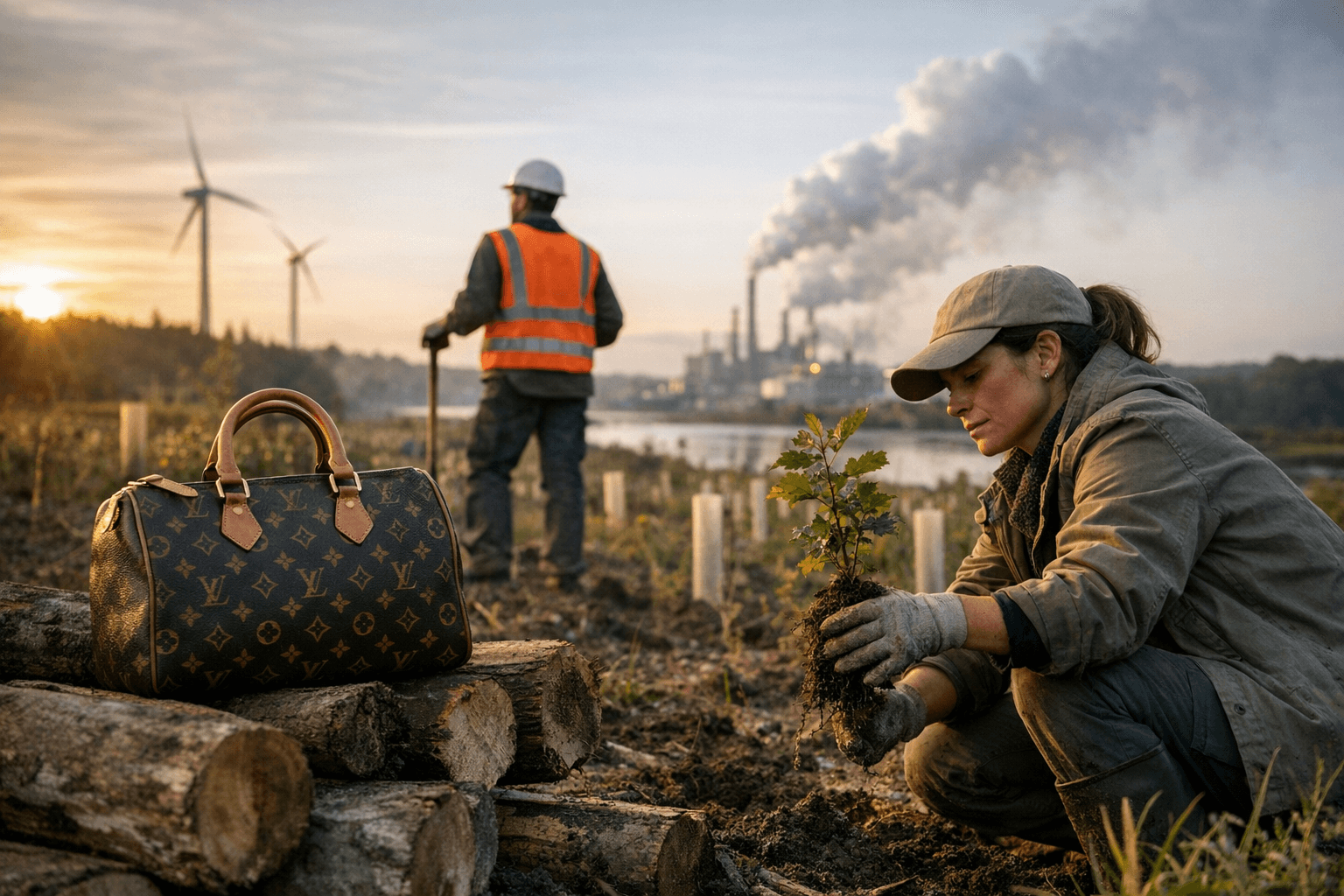
Regenerative agriculture is central to the roadmap for four key materials: leather, cotton, wool, and the alcohol used in fragrances. The company aims to source 100 percent of its alcohol from regenerative agriculture by 2026 and expand similar practices across other materials over time. The Regenerative Leather Project, launched in 2023, organizes that effort around six pillars including soil health, animal feed, and biodiversity preservation. Capdupuy framed the agricultural shift as both an ecological and a carbon strategy: "This kind of agriculture will allow us to decrease the pressure on the resources, regenerate ecosystems and capture carbon more efficiently."
Water stewardship enters Regeneration 2030 as a formal strategic priority. The house is aiming to reduce its water consumption footprint by 30 percent by 2030. The specificity matters: most luxury brands still discuss water risk in qualitative terms, and assigning a hard percentage target, the way Vuitton has done for carbon, is a more accountable posture. Whether the baseline year and measurement methodology hold up to independent scrutiny will determine how meaningful that number proves.

On circularity, Louis Vuitton currently repairs around 600,000 products per year. It added shoes and sneaker repair this year, with plans to extend repair services across all product categories by 2030. The longer-term ambition is to generate 25 percent of profits through circular services, including repairability. Packaging carries its own hard deadline inside the broader LVMH Life 360 framework: zero virgin fossil-based plastic in all packaging by 2026.
What Regeneration 2030 gets right is the grammar of accountability: the 1 million hectare figure, the 68 percent Scope 1 and 2 reduction, the 30 percent water target are numbers that can be audited and challenged year over year. What the plan does not yet fully resolve is how supplier accountability will be enforced at the farm and tannery level, where regenerative transitions are expensive and where third-party verification infrastructure remains nascent. For a house whose leather goods underpin its commercial identity, that is precisely where Regeneration 2030's credibility will ultimately be tested.
This article was produced by Prism’s automated news system from verified source data, official records, and press releases, then run through automated quality and moderation checks before publishing. The system is built and supervised by the people who set the standards it runs under. Read our full AI policy.
Did this article answer your question?


