Luxury brands’ AI campaigns spark backlash, creativity debate
AI can make luxury feel newly cinematic, but it backfires the moment the image reads as synthetic, generic, or cut loose from craft.
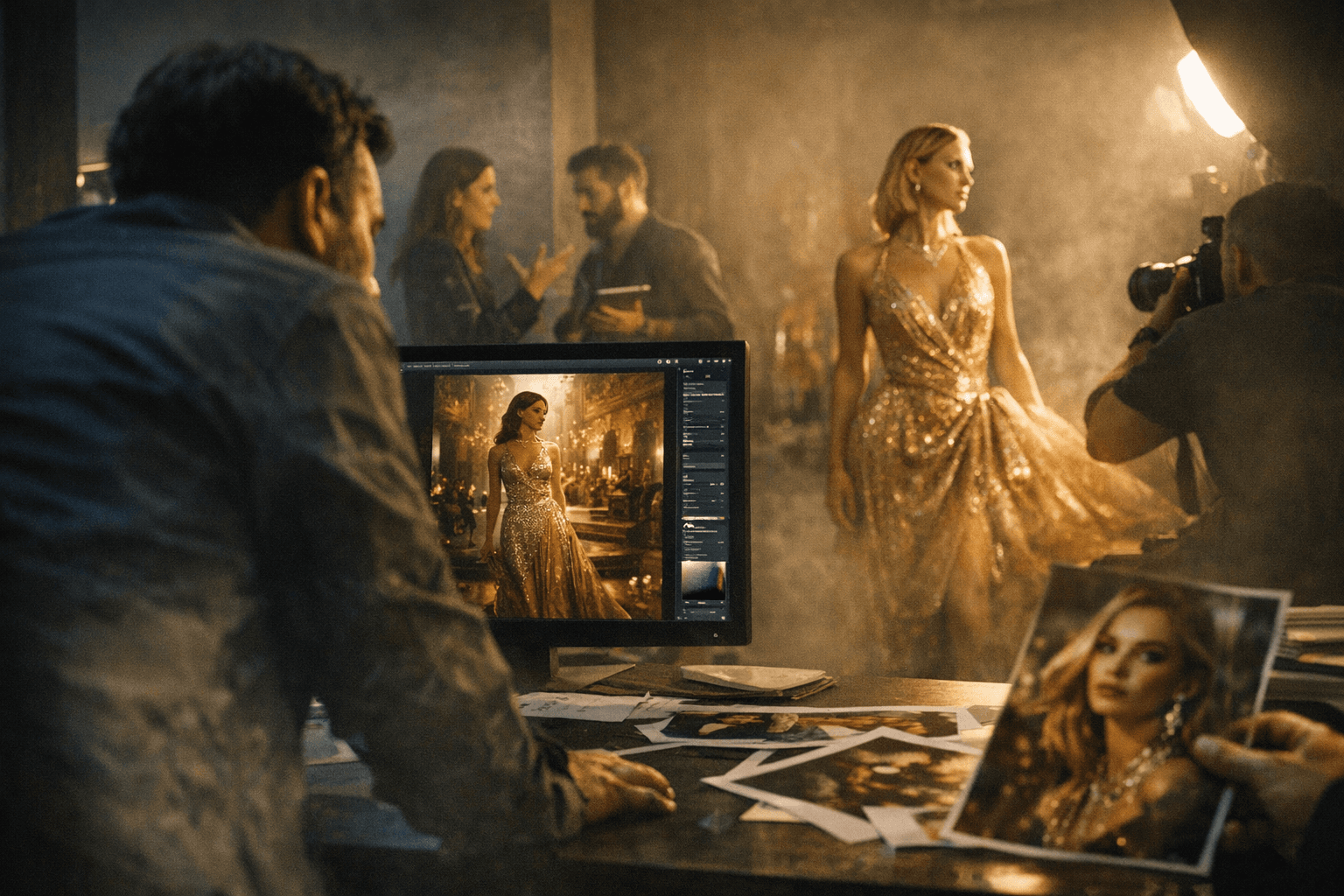
The new luxury test
Luxury’s AI problem is not whether the technology can make a striking image. It can. The real question is whether that image still feels worthy of a house that sells taste, labor, and restraint as much as product. The mixed reaction around AI campaigns has exposed a simple fault line: when the technology expands the fantasy, it looks forward-looking; when it makes a heritage brand feel cheap or interchangeable, the spell breaks.
That tension has moved from theory to daily marketing practice. WWD reported in January 2024 that brands as varied as Revolve, Sheep Inc. and Louis Vuitton were already using AI-generated images in editorial and advertising campaigns, with the technology pitched for speed, sustainability and creativity. By April 2026, The Business of Fashion was describing the debate as central to luxury marketing strategy, not a side experiment. The more brands use AI, the more audiences judge whether the result still feels hand-wrought in spirit, even if it was made with new tools.
When AI works, it enlarges the idea
The strongest AI campaigns do not try to masquerade as ordinary fashion photography. They lean into atmosphere, symbolism, or a mood that would be difficult, expensive, or environmentally wasteful to stage in real life. That is why the technology can feel most persuasive when it behaves like an extension of the designer’s imagination, not a replacement for the designer’s eye.
Etro’s spring 2024 AI-generated advertising campaign is a good example of that instinct at work. The brand’s use of generated imagery positioned AI as a visual amplifier, not a shortcut to sameness. Andrea Adamo took a similarly conceptual route during fall 2024 Milan Fashion Week, skipping the runway format in favor of an arty installation and AI-generated images. In both cases, the point was not to pretend the work was handmade in the old sense, but to create a more oblique, stylized fashion language that still felt authored.
Stella McCartney pushed the idea even further in spring 2025 with AI birds in ads built around an extinction warning. The campaign’s line, “Save What You Love,” gave the imagery a clear moral frame. That matters, because AI in luxury rarely works best as pure spectacle; it works when it is tied to a readable creative argument, whether that argument is ecological, surreal, or deliberately future-facing. A digital bird can feel luxurious if it is serving a real idea, not just occupying space.
Where audiences draw the line
The backlash begins when AI seems to flatten a brand’s point of view. Luxury consumers are not only buying a garment or a fragrance; they are buying an idea of discernment. If the campaign feels as though it could belong to any label, or if the image reads as mass-produced by default, the brand risks undermining the very scarcity it sells.
BoF’s April 14, 2026 coverage of Prada captured that tension sharply, noting that online audiences were reacting as if AI and luxury were incompatible. That response is the marketing lesson brands cannot ignore. In luxury, perception is not an accessory; it is the product. If the public senses that AI has replaced the human hand rather than served it, the campaign can start to feel detached from craftsmanship, and that detachment is often read as cheapness.
The fashion industry has already seen how quickly that skepticism spreads. WWD reported backlash to Selkie’s AI-aided Valentine designs, and also to an AI fragrance influencer launch from Slate Brands. Those reactions point to a useful distinction for editors and marketers alike: there is a difference between using AI to build a heightened visual world and using it to fabricate a voice, a model, or a pseudo-personality that feels manipulative. Luxury audiences tend to forgive abstraction far faster than they forgive fakery.
The red lines for a heritage brand
For journalists covering this space, the practical test is simple: does AI deepen the brand’s codes, or does it cheapen them? The campaigns that earn attention usually preserve some sense of authorship. The ones that draw fire tend to blur out the human choices that luxury depends on, from silhouette and fabric to casting and styling.
A useful reporting lens looks like this:
- Does the campaign have a clear creative reason for using AI, or is the technology the story itself?
- Does the imagery still communicate the house’s codes, such as its silhouettes, mood, or material language?
- Does the work feel like an extension of a designer’s vision, or like a generic image bank dressed in luxury wording?
- Is AI being used to create a world, or to bypass the people who normally make a luxury campaign legible and desirable?
That last point is where the industry keeps circling back to the same conclusion. WWD has reported that luxury leaders still insist humans must remain at the heart of the creative process. That is not nostalgia. It is a recognition that fashion sells emotional authority, and emotional authority depends on taste, judgment, and editing. AI may help produce the image, but the image still has to feel like someone chose every detail on purpose.
Why the debate matters now
This is no longer a fringe argument about novelty. AI is moving from experimental flourish into structural adoption, including in BoF’s own industry coverage. As more brands use the technology routinely, the standard for success rises. What once looked futuristic can quickly become familiar, and familiarity is dangerous in luxury if it starts to resemble generic content.
That is why the best campaigns are the ones with a strong point of view. Stella McCartney’s extinction-minded birds did not just use AI because it was available. The technology echoed the message. Andrea Adamo’s Milan presentation used generated images as part of an artistic installation, which gave the work shape and intention. Etro’s early experiment signaled curiosity rather than retreat. Each case shows the same thing: AI can be luxurious when it sharpens a brand’s imagination, but it becomes risky when it strips away the evidence of taste.
For readers, the takeaway reaches beyond fashion week. The campaigns most likely to endure are the ones that still feel touched by human judgment, even when the image itself is machine-assisted. In luxury, the future will not belong to the brands that use AI most loudly. It will belong to the brands that use it with enough discipline to keep the craft visible.
This article was produced by Prism’s automated news system from verified source data, official records, and press releases, then run through automated quality and moderation checks before publishing. The system is built and supervised by the people who set the standards it runs under. Read our full AI policy.
Did this article answer your question?


