Minimalist Spring Trends to Try: Trenches, Crops, and Retro Glam
Christie Tyler's four spring 2026 picks cost less per wear than a fast-fashion trench. The math behind minimalist dressing is finally honest.
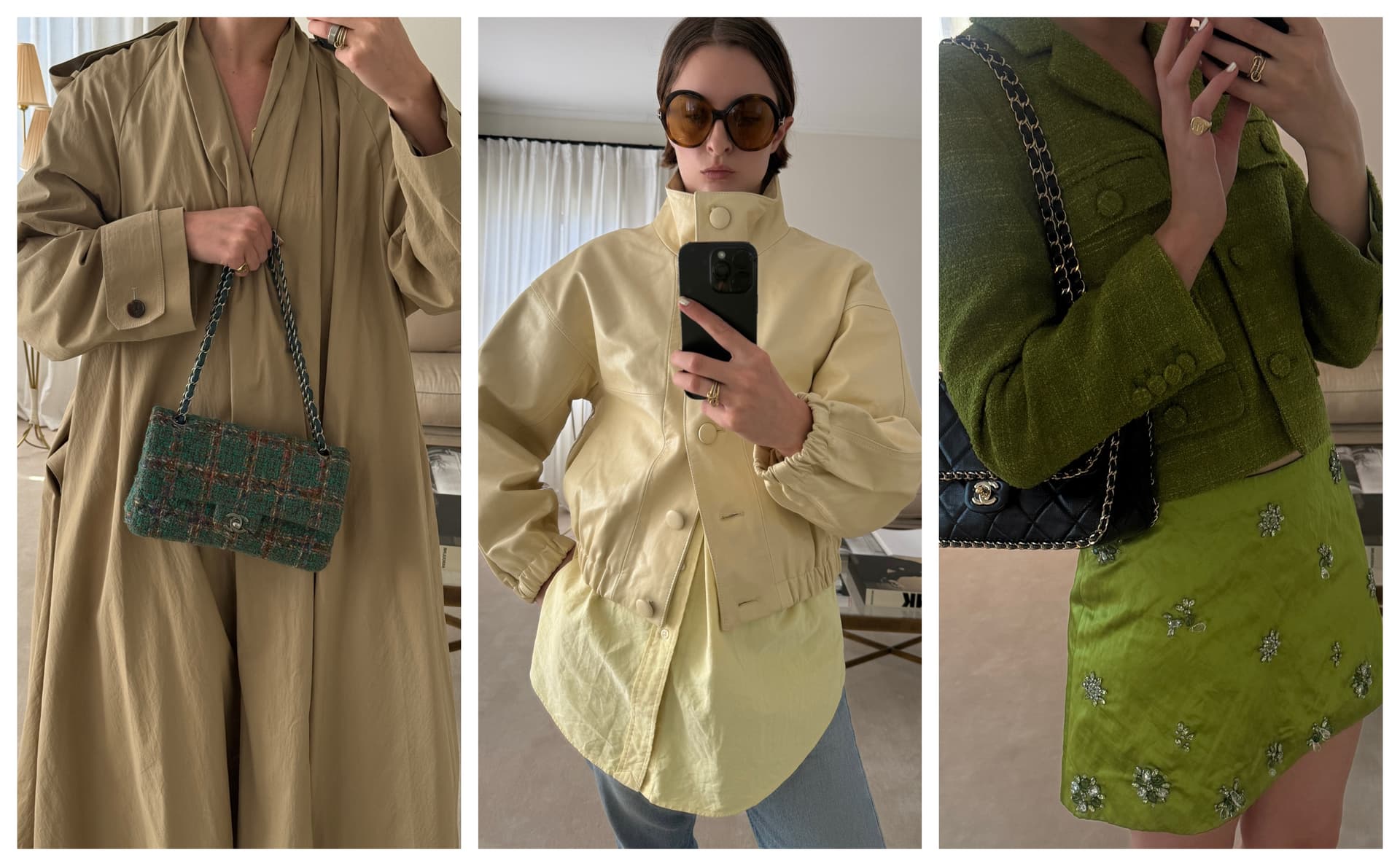
The conversation around minimalist dressing keeps circling the same problem: the trend sells simplicity while the industry keeps manufacturing reasons to buy more. Christie Tyler's spring 2026 edit for Marie Claire is a useful counterweight to that pattern. Her four picks, trench coats, cropped silhouettes, and retro-glam accents anchored by oversized sunglasses, are built around the premise that you dress for your actual life, not for a shoot. Now that Tyler is based in Los Angeles after years in New York, her approach has shifted toward layering that works for balmy west coast temperatures and a palette of butter yellow, olive green, and understated neutrals. The brands she gravitates toward, Prada, Miu Miu, and Jil Sander, all operate in clean-silhouette territory. The question worth asking about each trend isn't "is it cute?" It's whether you'll still want it in three years, and whether the brand stands behind it if you do.
The Trench: The One Outerwear Piece Worth the Investment
The trench coat has never really gone anywhere, but its 2026 iteration is specific enough to deserve attention. Across the spring/summer collections, the silhouette shifted toward drop shoulders, voluminous hemlines, and waist-cinching belts, with Chloé and Loewe both committing to classic lapels, dramatic necklines, and effortless draping. On the more directional end, Ermanno Scervino presented cinched, sculptural black trenches, and Aaron Esh added contrasting stitching to the traditionally neutral palette. These are not subtle updates. They're structural choices that distinguish a 2026 trench from the beige column that's been hanging in the back of your closet since 2019.
For Tyler, the trench is the defining layering piece for mild-climate dressing: lightweight enough for a Los Angeles morning that warms into afternoon, structured enough to carry the rest of the outfit. That's exactly the argument for spending more on one, once. A cotton gabardine trench from COS, which runs in the $250 to $350 range and offers in-store repairs at its locations, works out to well under $2 per wear across three years of regular rotation. A $60 polyester version from a fast-fashion retailer, worn one season before the lining pulls or the buttons gap, costs more per wear even if it costs less upfront. The construction tell is in the belt loops (reinforced, or stitched flat on top?) and the seam finish at the collar. Turn it inside out before you commit.
Everlane, which publishes its material sourcing and markup transparently, and COS both sit at the more honest end of the minimalist trench market. Loewe and Chloé deliver the fantasy, but the cost-per-wear case only holds at luxury prices if you're wearing them relentlessly. A $1,200 trench worn 600 times is $2 per wear. A $200 trench worn 100 times is also $2 per wear. The question is which one actually gets worn 600 times.
The Crop: Proportion as the Point
Cropped silhouettes are doing more work than their size suggests this spring. The key is proportion: a cropped top or jacket over a full-length trouser or midi skirt creates the same visual tension that structured dressing has always relied on, just with more shoulder and waist visibility than a tucked-in shirt delivers. Paired with low-rise slim trousers, the cropped silhouette reads minimal and intentional rather than casual or half-finished.
The Marie Claire styling team has been working this pairing hard. One standout combination: an off-white sheer blouse from SER.O.YA, also available in black and built to layer across seasons, worn under a cropped tweed jacket, with The Row's Peggy bag and Saint Laurent shoes as anchors. That's a considered outfit. It's also worth noting that the SER.O.YA blouse functions independently of the cropped jacket, worn alone or layered under other pieces. One item doing multiple jobs is the actual minimalist move, not buying a dedicated "transitional layer" for every temperature range.
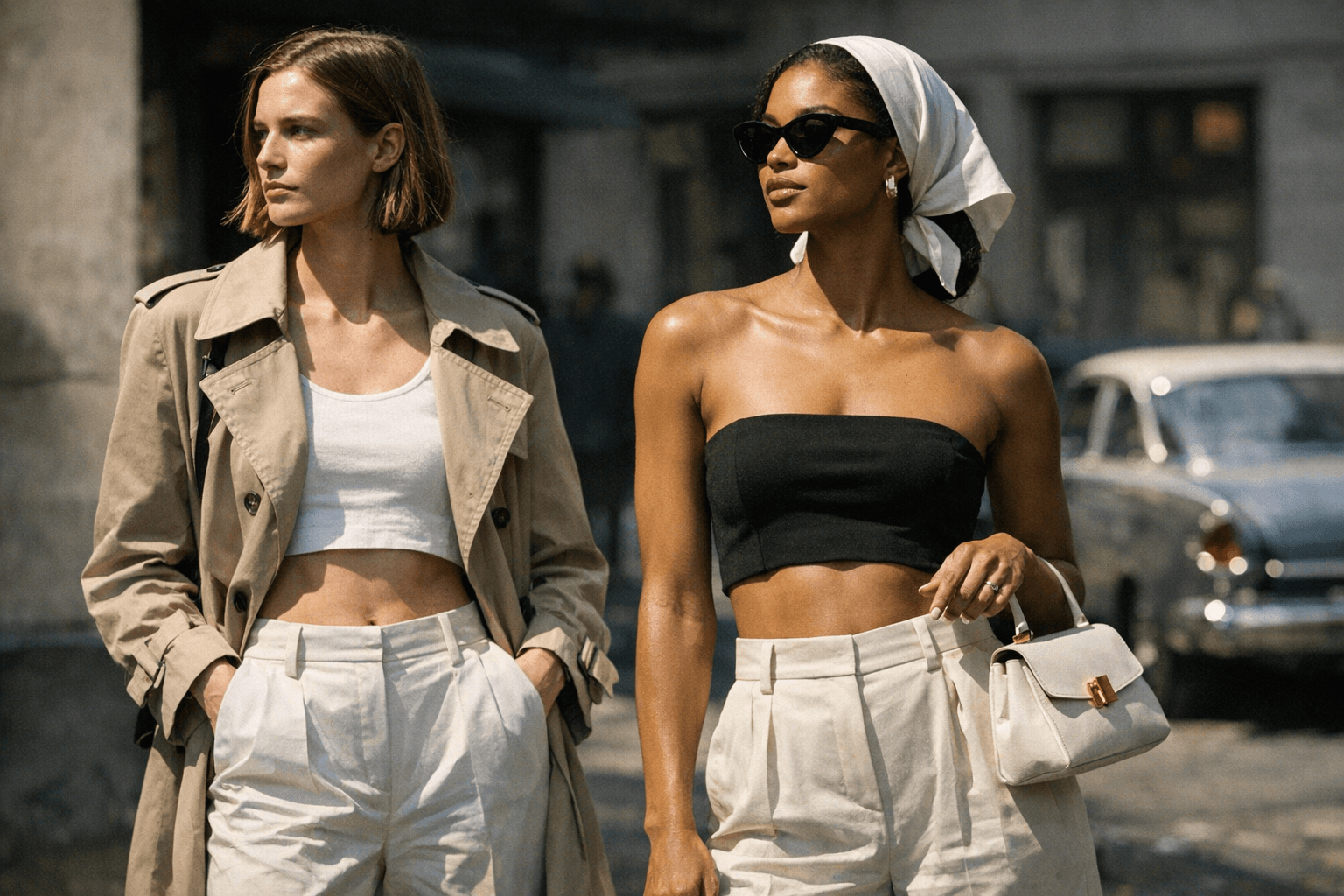
Where the cropped trend gets expensive without earning it: cropped blazers in synthetic fabrics that pill after six washes, priced at $180 because "investment dressing" is in the marketing copy. Check the fabric composition before anything else. A cropped jacket in a wool blend or structured cotton will hold its shape through actual use. Anything with more than 20% polyester in the outer shell will look tired by July. Arket consistently delivers on cropped construction at a mid-range price point, and SER.O.YA is transparent about where its fabrics come from. At the top of the market, The Row backs its price with the kind of construction that invites alteration and repair rather than replacement.
Retro Glam: The Sunglasses That Pull It All Together
The oversized sunglasses trend has been building for a couple of seasons, but spring 2026 is where it moves from directional to dominant. Tyler calls the shape "almost buggy," and that description is precise: round, face-covering frames that sit closer to the bold eyewear of the 1960s and 70s than to the slim 90s silhouette that defined the quiet luxury era. Her reference points are Michael Rider's Celine and Phoebe Philo's website, both of which have been pushing scale and drama in eyewear for the past two seasons. In the longer cultural timeline, the lineage runs through Jackie Kennedy Onassis, the Olsen twins, and Rihanna, all of whom understood that a pair of sunglasses can carry an entire outfit without requiring anything else to change.
Marie Claire fashion features editor Emma Childs has written about the underlying shift driving the trend: as the industry creeps away from quiet luxury and toward expressive personal style, statement accessories have more weight than they did in the all-neutral, everything-whispers era. Oversized sunglasses are one of the few trend pieces that genuinely justify the cost-per-wear math. A well-made acetate frame, whether from Garrett Leight, Celine, or a well-maintained vintage find, should last a decade with basic care. Store them in a hard case, clean the lenses with a microfiber cloth, get the hinges tightened once a year. That's it. Sunglasses have no seams to split and no fabric to pill.
Tyler's broader palette, butter yellow and olive green alongside restrained neutrals, is where the retro-glam elements land without tipping into costume. Both Prada and Miu Miu are doing clean silhouettes in slightly warmer, more saturated tones than the all-grey quiet luxury palette, while Jil Sander holds the minimalist discipline at the other end of the spectrum. The result is a spring wardrobe that feels alive without requiring an overhaul. Swap one piece of outerwear, add one cropped layer, and let one pair of sunglasses do the heavy lifting.
That's three categories, and the honest version of Tyler's edit asks you to pick one upgrade across them, not all four. The minimalist spring wardrobe that actually works isn't the one with the most carefully curated pieces. It's the one where every piece has already survived the cost-per-wear test before you hit checkout.
This article was produced by Prism’s automated news system from verified source data, official records, and press releases, then run through automated quality and moderation checks before publishing. The system is built and supervised by the people who set the standards it runs under. Read our full AI policy.
Did this article answer your question?


