Nicole Richie champions hands-on vintage shopping, from Bianca Jagger to Disney villains
Nicole Richie turns vintage hunting into a status skill: go in person, bring strong references, and buy pieces with enough character to outlast the moment.
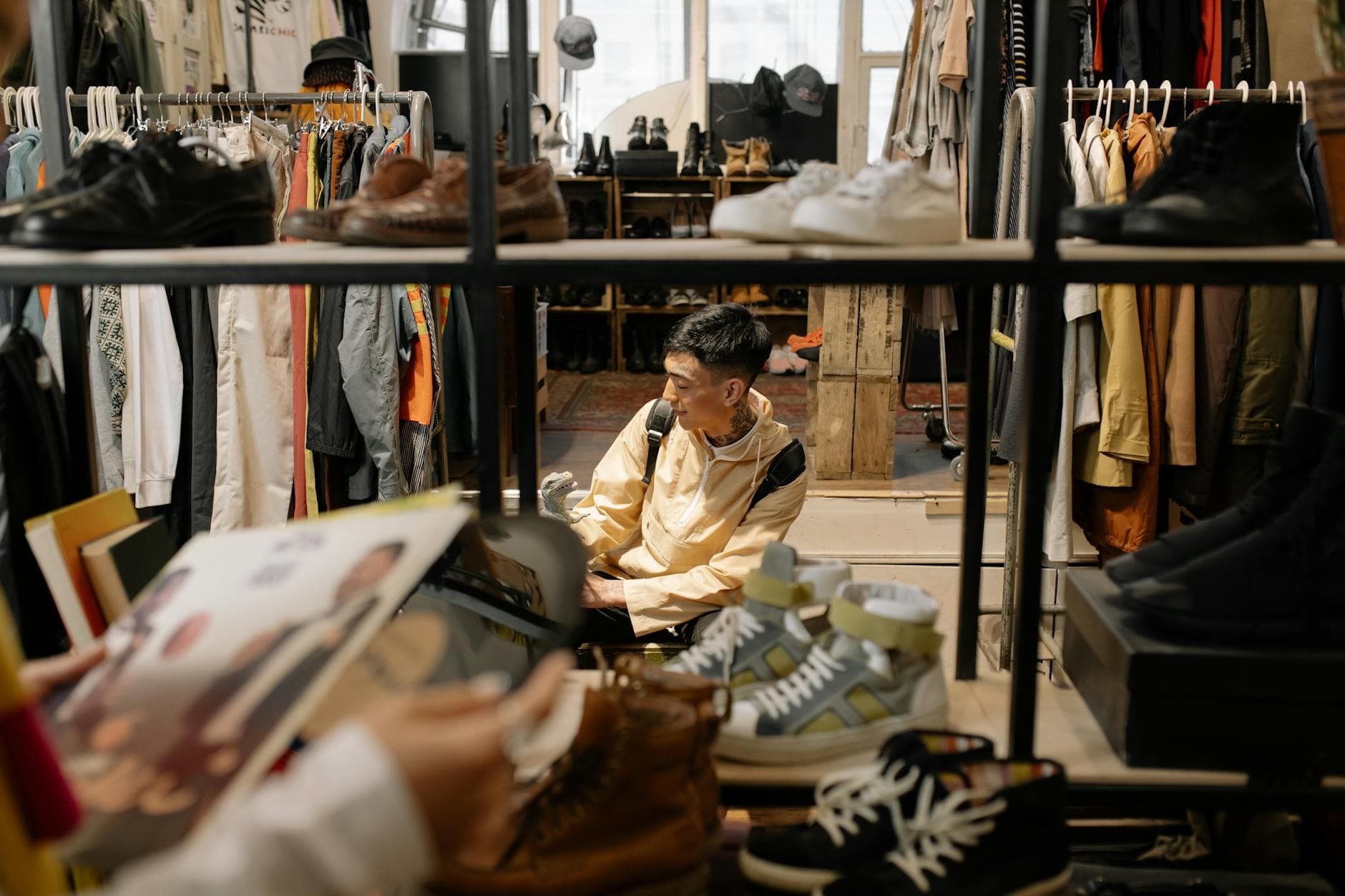
The new vintage flex is the hunt
Nicole Richie has made vintage shopping look less like resale and more like taste with muscle. Her method is tactile, selective, and a little theatrical: she wants the hunt, the dig, the rack skimmed by hand, the piece that feels right the second it lands in view. That instinct now sits at the center of a bigger fashion shift, where secondhand is no longer a backup plan but a marker of fluency, identity, and self-editing.
Her role as FASHIONPHILE’s 2025 brand ambassador sharpened that point. The partnership paired Richie with a curated edit of pre-owned luxury accessories from Chanel, Hermès, Louis Vuitton, Balenciaga, Gucci, Christian Dior, Cartier, Van Cleef & Arpels, Tiffany, and Hermès watches, which is exactly the sort of luxury language she has long spoken fluently. Richie called sustainability in fashion “not just a trend, but a responsibility,” and that line matters because it reframes vintage from aesthetic preference to fashion behavior with consequence.
Why Richie still shops in person
Richie does not browse vintage the way most people browse clothes. She favors in-person hunting over online scrolling, and she has named Los Angeles staples like Decades and Resurrection as the kind of places where the right eye can still beat an algorithm. The point is not speed. It is judgment, patience, and the ability to recognize proportion, patina, and attitude before anyone else does.
That physicality is part of why her approach feels more elevated than simple resale habit. Richie has said vintage shopping is “so emotional,” and that she likes the hunt because it is more physical, involving digging and figuring out what feels right. She grew up with that instinct reinforced early, since her mother never closed her closet to her, which explains why Richie treats wardrobes as living archives rather than sealed collections.
If you want the Richie method, start there:
- Shop in person first, especially at stores with strong edit and stock turnover like Decades and Resurrection.
- Carry references in your head, not just on your phone: Bianca Jagger for polish, Marianne Faithfull for insouciance, Disney villains for drama.
- Treat the fitting room like a proving ground. If a piece only works on a screen, it is not the one.
- Look for accessories with emotional range. Richie repeatedly makes the case that they are the outfit-maker.
Accessories are where the story gets interesting
Richie has never pretended that a great wardrobe is built only on dresses and denim. In The Good Buy, she described her style as “full witch,” talked about vintage shopping that can involve latex gloves, and made accessories sound like the real engine of an outfit. That is a very Richie idea of glamour: less about pristine perfection than about a sharp, intentional finish.
The handbag archive is especially revealing. Richie has said she does not get rid of her bags, and she keeps them in very good shape because she wears them often. She has held onto Balenciaga motorcycle bags and Fendi Spy bags, two silhouettes that make sense as style markers precisely because they carry memory. One was once ubiquitous, then overexposed, then desirable again. The other has the kind of exaggerated shape that can survive trend cycles by becoming a reference point rather than a relic.
That is the real payoff of her approach to vintage: she does not shop for nostalgia alone. She shops for pieces with enough line, hardware, and personality to come back around. She even noticed friends appreciating her Fendi Spy bags more than they used to, which is the most practical definition of a second wave: the thing you wore before everyone else decided it was cool again.
How to spot the pieces worth buying
The Richie test is not complicated, but it is disciplined. A piece has to feel specific enough to say something, yet adaptable enough to keep working after the mood shifts. That is why her eye keeps returning to accessories, bags, and objects with a recognizable silhouette. These are the pieces that survive trends because they are not dependent on a whole runway look to make sense.
When you are assessing a vintage piece, think like this:
- Does the shape read immediately? A Balenciaga motorcycle bag does. So does a Cartier bracelet or a classic Hermès watch.
- Does the material still have life in it? Richie’s world favors things that have been worn, loved, and maintained, not items that look embalmed.
- Is the piece distinct enough to anchor an outfit on its own? If yes, it earns closet space.
- Does it feel like a character, not a costume? That is the line Richie keeps crossing with precision.
The FASHIONPHILE collection made that logic explicit. Chanel, Hermès, Louis Vuitton, Balenciaga, Gucci, Christian Dior, Cartier, Van Cleef & Arpels, Tiffany, and Hermès watches are not random flexes. They are brands with enough visual language and construction credibility to hold value in a circular market, where recognition and condition matter almost as much as rarity.
Why Bianca Jagger, Marianne Faithfull, and Disney villains belong in the same mood board
Richie’s style references tell you everything about her range. Bianca Jagger brings immaculate, high-contrast glamour. Marianne Faithfull adds the undone, slightly dangerous edge. Disney villains bring the fantasy and the sly theatricality that keep vintage from feeling academic. Put them together and you get a wardrobe strategy that is not about copying the past, but translating it into attitude.
That is also why her Y2K-era fashion legacy still matters. In The Good Buy, she reflected on the era that made her a style shorthand in the first place, and she also discussed a Vera Wang figure-skating costume that changed her life. That detail could have been a costume anecdote. Instead, it lands as a reminder that fashion memory often starts with a single unforgettable shape, one that rewires the way you see yourself.
Richie also connected that legacy to growing up on tour with Lionel Richie, which helps explain the ease with which she moves between performance and personal style. On the road, clothes are not static. They have to travel, signal, and survive. That mentality runs through her vintage sensibility now, where the best pieces are the ones with enough personality to work on a stage, in a store, or in the street.
What Richie proves about vintage now
Nicole Richie’s version of vintage shopping is not about chasing scarcity for its own sake. It is about developing a collector’s eye, a cleaner point of view, and the confidence to buy what carries energy instead of just names. Her practice sits neatly inside the current luxury resale moment, but it also pushes beyond it: secondhand is no longer only a market. It is a way of dressing with memory, instinct, and authority intact.
That is why her example resonates. Vintage shopping, at its best, is not passive browsing. It is a form of style literacy, and Richie makes the case that the most desirable thing you can bring to it is discernment.
This article was produced by Prism’s automated news system from verified source data, official records, and press releases, then run through automated quality and moderation checks before publishing. The system is built and supervised by the people who set the standards it runs under. Read our full AI policy.
Did this article answer your question?


