Shanghai Luxury Shifts to Stealth Wealth and Local Labels
Shanghai’s luxury code has gone quiet. As stealth wealth rises and local labels gain heat, brands are being judged on discretion, relevance, and the experience they sell.
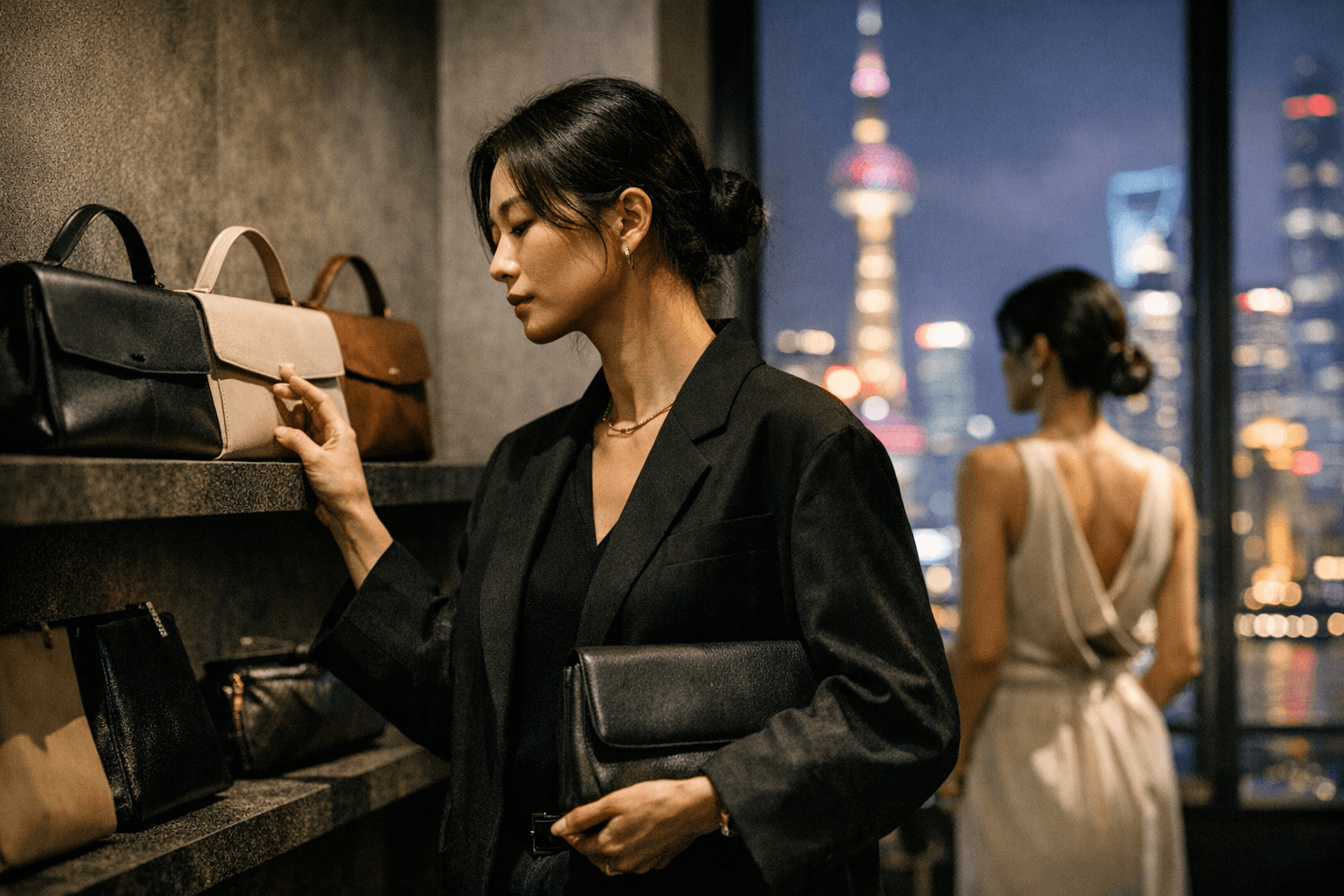
Shanghai’s luxury mood has gone quiet
The loudest thing in Shanghai right now is the silence around logos. Imran Amed’s dispatch captures a city where luxury has moved from status spending to stealth wealth, from megabrands to homegrown labels, and from fashion-first buying to a broader lifestyle appetite. That shift matters because China’s mainland luxury market fell 18% to 20% in 2024, sliding back to 2020 levels, and Bain expects it to stay flat in 2025.
The reasons are not abstract. Low consumer confidence, higher overseas spending as travel recovered, and a prolonged property crisis have all taken a bite out of domestic demand. Bain also says the global luxury consumer base lost about 20 million people in 2025, while experiences and pre-owned luxury claimed a bigger share of spending. In other words, the customer has not disappeared so much as changed her mind about what counts as value.
Stealth wealth is the new status language
In Shanghai, status is becoming quieter and more coded. The old formula, where a brand could rely on a visible monogram or a headline handbag, is giving way to clothes and accessories that telegraph discernment rather than declaration. That means cleaner lines, richer fabrics, and silhouettes that read as expensive to those who know how to look, but do not perform for the room.
This is where fashion gets interesting. Stealth wealth is not just a mood board word; it changes what gets designed. Brands need sharper tailoring, more considered materials, and a better eye for pieces that can move from office to dinner, from gallery opening to airport lounge, without shouting for attention. In a market that is leaning into restraint, a bag with a giant logo can feel less like aspiration and more like a relic.
Local labels are no longer a side story
Shanghai’s fashion ecosystem is also re-centering around its own talent, and that matters as much as the slowdown. Spring 2025 Shanghai Fashion Week placed a clear spotlight on homegrown designers, while labels such as Shushu/Tong kept pulling attention. Shushu/Tong marked its 10-year anniversary in 2025 and closed out the autumn 2025 season, proof that a local brand can now anchor the conversation rather than decorate its margins.
That rise is cultural as much as commercial. Shanghai has become a place where local labels can build identity through point of view, fit, and atmosphere, not just through price tags. Designers such as Samuel Gui Yang, Mark Gong, Jacques Wei, Oude Waag, Xuzhi, Comme Moi, and Ao Yes have all helped make the city feel like a real fashion capital again, one where the most persuasive thing on the rack is often a strong idea, not a famous crest.
For Western houses, that changes the field. A Chinese customer who is curious about emerging local brands is not waiting to be impressed by a European logo anymore. She is comparing how the garment falls, how it ages, how it works with the rest of her life, and whether the brand understands the city she actually lives in.
Retail has to look and feel different now
The merchandising playbook is changing with the spending pattern. If more of the luxury budget is flowing toward experiences and pre-owned pieces, the store can no longer behave like a trophy room lined with identical it-bags. It has to feel edited, service-led, and lifestyle-coded, with a sharper sense of why someone should stay longer than it takes to make a transaction.
That means luxury floors in Shanghai need more than product density. They need curation that makes a case for wardrobe utility, local relevance, and emotional pull. A polished interior, a familiar sales ritual, and a wall of monogrammed everything are no longer enough. The new store is less about spectacle and more about confidence, comfort, and a point of view that matches how people actually want to live.
The same logic is reshaping assortment. Expect less reliance on obvious logo plays and more emphasis on wearable tailoring, nuanced accessories, and pieces that work across settings. The smartest shops will also make room for the experience economy that Bain says is absorbing more spending, whether that means better hospitality, quieter appointment spaces, or cross-category edits that blur fashion, beauty, and lifestyle.
Why foreign luxury houses can no longer wait it out
China still accounts for around a third of global luxury goods sales, which is exactly why brands cannot afford to treat the market as a temporary dip. Western houses once assumed the Chinese consumer would return to the old script as soon as growth stabilized. That is no longer a safe bet, and it is why the pressure on brands is now strategic, not cyclical.
Kering’s Luca de Meo made that reality hard to miss when he said Gucci must rebuild in China after years of complacency. The message is clear: the market is not waiting for old habits to become fashionable again. Foreign brands need China-specific assortments, more local sensitivity, and a sharper grasp of why status now looks more restrained, more personal, and more experience-driven.
- quieter branding and better fabric hand
- silhouettes that travel easily between work, dining, and social life
- local labels with a distinct Shanghai point of view
- retail spaces built around service and atmosphere, not just volume
For readers, the practical shift is visible in the pieces worth noticing on the floor. Look for:
Shanghai is not rejecting luxury. It is refining it. The city now rewards taste that feels lived-in, intelligence that feels local, and spending that buys more than recognition. That is a tougher standard for the old guard, but it is also a more interesting one for fashion.
This article was produced by Prism’s automated news system from verified source data, official records, and press releases, then run through automated quality and moderation checks before publishing. The system is built and supervised by the people who set the standards it runs under. Read our full AI policy.
Did this article answer your question?


