Four Seasons I Brings Quiet Luxury Aesthetic to the High Seas
The Four Seasons I set sail March 20 with a Funnel Suite priced at just under $200,000; here's the capsule wardrobe its Prosper Assouline-directed interiors demand.
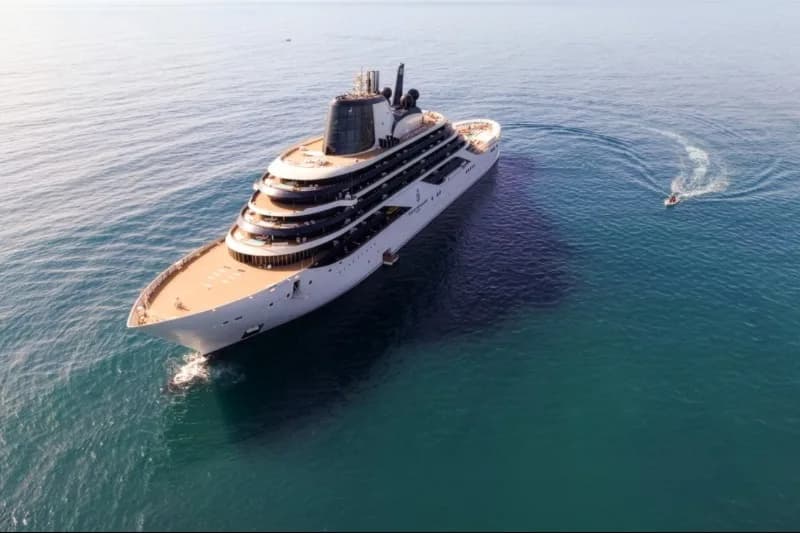
The Funnel Suite aboard Four Seasons I carries a per-voyage rate of just under $200,000. That figure is not incidental; it is a dress code. When the 679-foot ship set sail on March 20, timed with characteristic precision to the brand's 65th anniversary and the opening of the first Four Seasons hotel on the first day of spring in 1961, it carried with it an aesthetic vocabulary that runs from Prosper Assouline's honey-colored interiors directly onto what guests should be wearing on deck.
Built by Italian shipbuilder Fincantieri and designed by Tillberg Design of Sweden, with social spaces handled by London-based Martin Brudnizki Design Studio and creative direction from Assouline, the ship accommodates just 200 guests across 95 all-suite cabins, each with floor-to-ceiling windows and terrace decks. There are no interior cabins. The one-to-one guest-to-staff ratio is what makes Four Seasons I structurally different from anything else at sea, but the aesthetic logic Assouline brought to the project is what makes it matter for how you dress. His design brief was precise: "I want oxygen." Free space, air between furnishings, visual legibility. The wardrobe follows the same principle.
By day on deck, reach for linen that breathes the way Assouline's spaces breathe. The interior palette runs to warm honey tones, soft stone, and textured natural fabrics, the exact register of unbleached cotton, ecru voile, and warm white canvas that reads as intentional at sea rather than underprepared. Wide-leg linen trousers with a crisp cotton shirt in bone or pale sand sit correctly against that backdrop. For the transverse marina, the floating dock that opens on both sides of the ship for kayaking, paddleboarding, and direct water access, cover-ups matter more than swimwear itself. A structured cotton caftan or dense terry cover-up keeps the look Riviera rather than resort-pool. Rubber-soled driving moccasins or a low espadrille in natural jute handle the deck without marking it.
The design of Four Seasons I draws direct visual references to the Christina O, Aristotle Onassis's legendary superyacht, and that reference functions as simultaneously aesthetic and etiquette instruction. The women who sailed on the Christina O did not wear resort wear; they wore restraint. The evening register on Four Seasons I, which runs 11 restaurants and lounges from a champagne-and-caviar bar to the rotating Michelin-star chef-in-residence program at Sedna, demands soft tailoring rather than black tie. The Sedna roster includes Christian Le Squer of Le Cinq at the George V in Paris and Guillaume Galliot of Caprice in Hong Kong. Against that level of culinary ambition, a fluid wide-shouldered blazer in ivory linen over wide-leg trousers, or a minimal silk slip dress that moves from aperitifs to dinner without a bag-change, is the correct register. The dining is Michelin-caliber; the dress should match the intention without announcing it.

Shoe logic on a yacht is simple but rarely stated clearly: flat or near-flat leather-soled sandals for dinner, rubber-soled or crepe-soled loafers for deck and marina access. The 66-foot saltwater pool, among the longest at sea, carries the feeling of a hotel terrace, and the cotton-knit midi or toweling cover-up that works poolside at any Four Seasons property translates directly here.
Captain Kate McCue, the first American woman to captain a mega-ship, left Celebrity Cruises to take the helm of Four Seasons I, a biographical detail that signals the cultural register the ship is actually targeting. This is not a cruise. It is a hotel that moves, which means the rules of hotel-polished dressing apply: pressed, natural-fiber, and understated, with one considered accessory where a logo would otherwise be.
This article was produced by Prism’s automated news system from verified source data, official records, and press releases, then run through automated quality and moderation checks before publishing. The system is built and supervised by the people who set the standards it runs under. Read our full AI policy.
Did this article answer your question?