Lululemon Gives Weak Sales Outlook, Adding to Company’s Troubles
Lululemon forecast a second straight year of profit declines as Americas revenue fell 4%. Here's what that means for your closet — and when to actually spend.
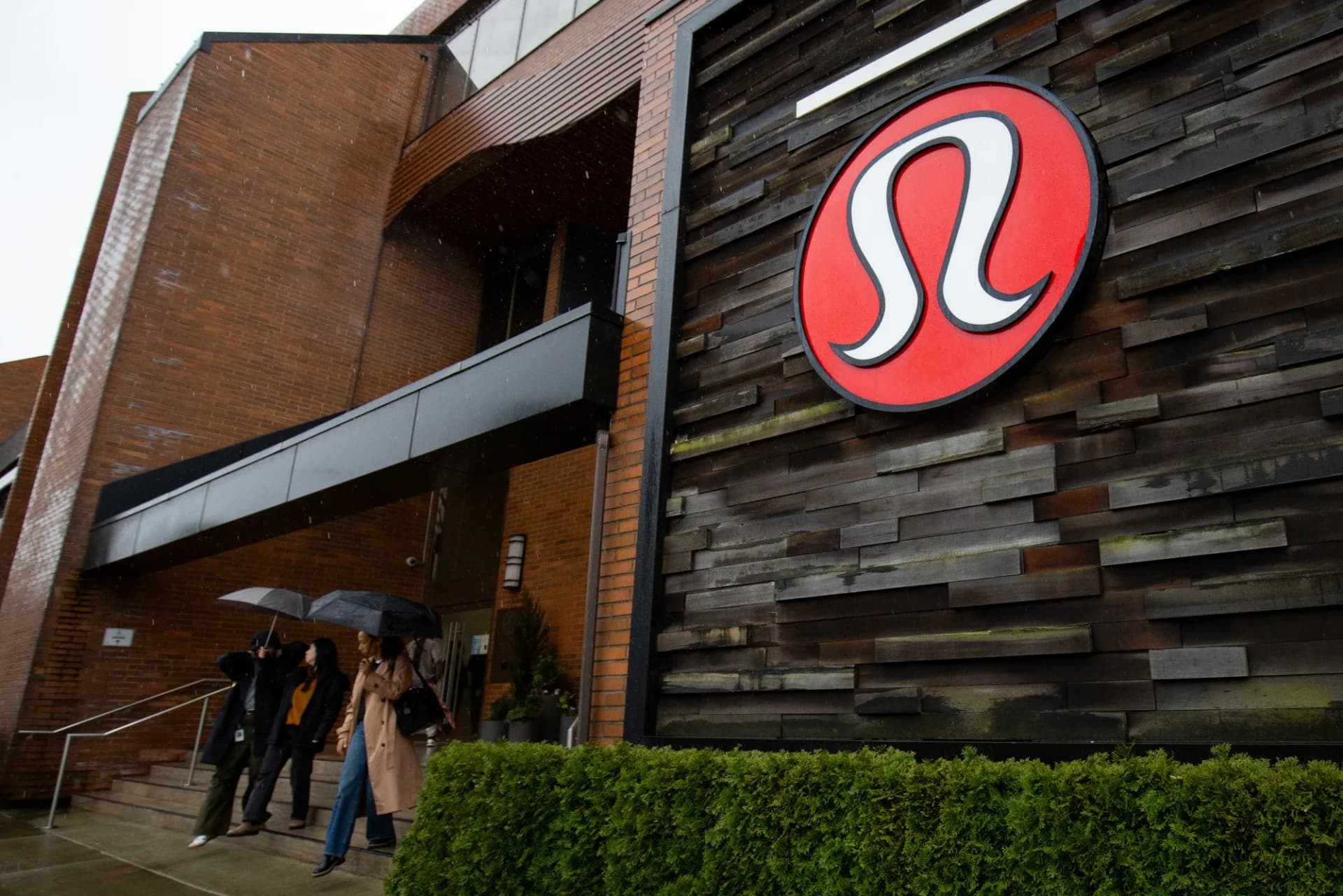
Lululemon forecast a second consecutive year of profit declines when it reported its latest earnings update on March 17, and if you follow the brand at all, the timing carries a very specific kind of information. Not just about a company navigating a difficult cycle, but about your next purchase, and whether to make it now or wait.
The business case for caution is substantial. Management guided for North America revenue to decline 1% to 3% in 2026. The company topped Wall Street's expectations for its fiscal fourth quarter, but the guidance for the year ahead disappointed: midpoint sales figures missed the Bloomberg consensus, Americas net revenue fell 4% in Q4, and management acknowledged both pressure on full-price selling and higher markdown activity. Lululemon has been navigating higher tariffs and a proxy fight with founder Chip Wilson, while simultaneously searching for a new chief executive. A veteran apparel executive was added to the board, and the company is pursuing product refreshes and changes to in-store experience to reignite demand.
The share price moved higher intraday despite the soft numbers, which speaks to how low expectations have fallen.
Here is what the markdown situation actually means for you. The company has been leaning on discounts to move inventory, which hurt margins. Now it's pulling back on promotions to protect its premium brand image, and that transition creates a narrow window. If you want Lululemon at a discount, the time is now, not six months from now when the new CEO is installed and the brand is in full image-rehabilitation mode. No matter who the new CEO is, Lululemon will need at least a year of time and effort to return its U.S. business to sustainable sales growth, which means the promotional activity will taper before the product fully turns around. Buy the proven core styles — the Align leggings, the Scuba half-zip — while markdowns persist on last-season colorways. Skip anything labeled a "refresh" or debut silhouette until the new leadership has a real track record.
The deeper question, though, is whether Lululemon is the right investment at all for a wardrobe built on longevity. Tariffs are the biggest near-term cost pressure, with the company expecting a gross tariff impact of $380 million in 2026. Even after mitigation efforts, the net impact is expected to hit $220 million. That kind of cost pressure rarely stays invisible to the consumer indefinitely. Fabric weights and construction quality are frequently where the savings appear, quietly, between one product generation and the next.
This is the moment to think about what Carolyn Bessette Kennedy understood intuitively: activewear is not a style category, it is a fabric category. The silhouette does the work only when what surrounds it is immaculate.
A pair of clean black leggings worn with a camel coat, a slim-cut white poplin shirt half-tucked at the hem, and a pair of cognac loafers is not a "look." It is a framework. The leggings simply become a trouser alternative — slim, elongating, practical — and the heritage pieces do all the communicating. The logic holds equally for a midlayer half-zip in oatmeal or slate, worn under a structured trench with narrow-cut trousers and white leather trainers. The activewear disappears into the outfit; only the proportion remains. The mistake most people make is styling athletic pieces against other athletic pieces. One item from the gym, surrounded by three from the wardrobe, always wins.

Which brings us to the three brands worth knowing if the Lululemon situation has you reconsidering your loyalty.
Reigning Champ, the Vancouver-based label, is the purist's answer. The brand's midweight terry fabric — dense, flat, with a faint vintage weight — is the kind of material that holds a silhouette after repeated washing rather than pilling into softness. Flat-lock stitching and quality ribbing are visible evidence of the made-in-Canada craftsmanship, and the branding is genuinely minimal: a small embroidered wordmark, nothing louder. The hoodies and zip-throughs in particular have the drape of something you might have inherited.
Adanola is a Manchester-based label founded in 2015 that rose to prominence during the pandemic on the strength of its bestselling Ultimate Leggings. By 2023 the brand achieved a 311% revenue increase, reaching £57.4 million, driven almost entirely by word of mouth rather than logo visibility. The brand is known for minimalist activewear pieces and collegiate-style basics, and the color palette — usually restricted to neutrals, slate, and deep earthy tones — makes their pieces genuinely interchangeable with tailored wardrobe staples. The leggings have a compressive, high-rise fit and no front seam, which is the technical detail that separates a polished silhouette from a casual one.
Tracksmith occupies a different register: it is a running-heritage brand with the visual language of a prep school athletics department, and its pieces look almost aggressively correct next to a navy blazer or a wool coat. The brand's base layers and midlayers come in quiet colorways with minimal graphics and a collegiate spirit that reads as considered rather than branded. Nothing about the product announces itself.
Analysts have cited competitive pressure from newer athleisure brands as a structural challenge for Lululemon, and the brands above are part of that competitive field. But the more useful framing for a reader building a lasting wardrobe is simpler: the era of the branded athletic kit as a status signal is contracting. What replaces it is fabric quality, construction integrity, and the discipline to keep the logo quiet. Lululemon may still earn a place in that wardrobe, especially at a markdown. But it will need to earn it on merit, not momentum.
Know something we missed? Have a correction or additional information?
Submit a Tip