12 Outfit Formulas Built Around Sustainable Basics for Every Occasion
Sustainable dressing doesn't mean sacrificing style; these 12 outfit formulas prove that organic, recycled, and natural-fiber basics can carry you anywhere.

The most elegant argument for sustainable fashion isn't a lecture about landfill statistics. It's an outfit that looks so effortlessly right that no one thinks to ask where it came from. The formulas below are built around that premise: that organic cotton, reclaimed denim, recycled nylon, merino wool, and linen aren't compromise materials. They're the foundation of a wardrobe with genuine longevity, both ethical and aesthetic.
Each combination below considers fabric behavior, occasion context, and the logic of getting dressed with intention. Sustainable basics reward thoughtful styling, and these twelve formulas show exactly how.
The Off-Duty Classic: Organic Tee + Reclaimed Denim + Leather-Alternative Sneakers
This is the formula that proves sustainable dressing doesn't need a manifesto. An organic cotton tee, ideally in a weight around 180gsm for structure without stiffness, tucks cleanly into reclaimed or deadstock denim. The leather-alternative sneaker, whether plant-based or recycled synthetic, completes the trio without the ethical overhead of conventional leather. The secret is proportion: a slightly relaxed tee with a straight-leg jean reads current without trying too hard.
The Sharp Commute: Recycled Nylon Shell + Merino Knit + Tailored Trousers
Recycled nylon, spun from ocean plastics or post-consumer waste, has evolved well beyond performance wear. A slim-cut shell in a muted tone, paired with a fine-gauge merino knit underneath and a pair of tailored trousers, works as hard in a Monday morning meeting as it does on a windswept walk between appointments. Merino's natural temperature regulation means this layering system functions across seasons, and its wrinkle resistance makes it the most travel-intelligent fiber in any sustainable wardrobe.
The Warm-Weather Staple: Linen Shirt + High-Quality Chinos + Sandals
Linen's reputation for wrinkling has always been slightly overstated. A good-quality linen shirt in a medium weight, worn open over a fitted organic cotton tank or buttoned to the collar with one undone, sits beautifully with high-quality chinos cut in a slim or tapered line. Natural leather sandals or cork-soled alternatives anchor the look without weight. This formula earns particular credit in summer because linen becomes more beautiful with wear, softening and gaining character in a way synthetic fabrics simply cannot replicate.
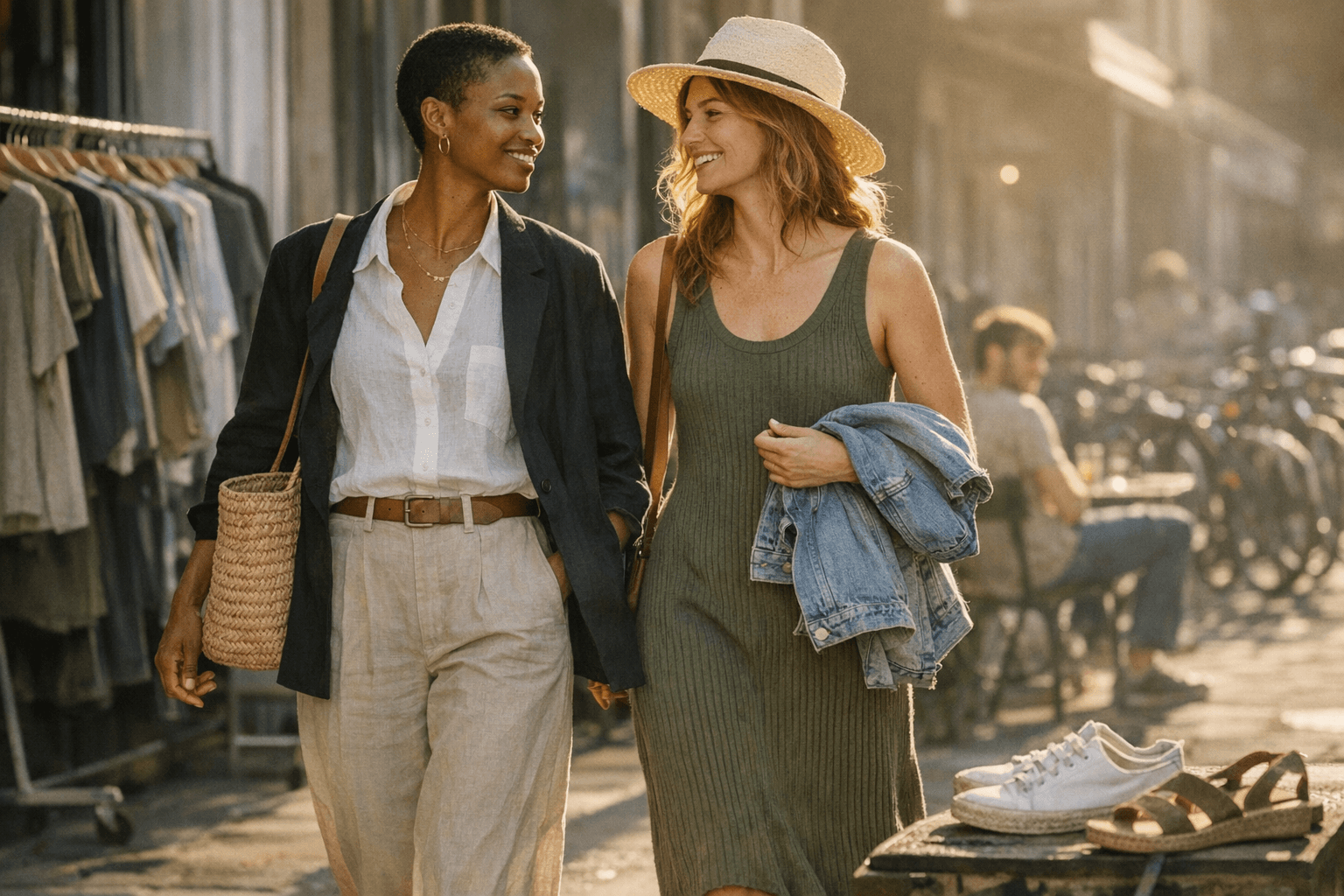
The Weekend Market Run: Organic Cotton Sweatshirt + Wide-Leg Linen Trousers + Canvas Tote
Casual dressing is where sustainable basics genuinely shine. A heavyweight organic cotton sweatshirt, the kind with a slightly brushed interior, pairs unexpectedly well with wide-leg linen trousers in a complementary neutral. The canvas tote is less accessory and more functional commitment to the formula's ethos. Roll the sweatshirt cuffs once, let the trousers break slightly at the ankle, and the result reads as intentionally relaxed rather than underdressed.
The Elevated Evening: Silk-Alternative Blouse + Recycled Cashmere Trousers + Low Block Heels
Peace silk, Tencel, or deadstock silk pieces have reached a point of refinement where the hand-feel rivals conventional alternatives. A fluid blouse in one of these fabrics, tucked loosely into recycled cashmere or wool-blend trousers, is evening-appropriate without the formality of a full suit. Low block heels in a natural material, suede, cork, or plant-based leather, keep the look grounded. The palette does the heavy lifting here: a cream-on-ivory combination or a tonal caramel head-to-toe feels luxurious rather than austere.
The Smart-Casual Meeting: Organic Oxford Shirt + Merino Cardigan + Tailored Chinos
The business-casual formula that never overcorrects. An organic cotton Oxford in a crisp white or chambray blue, layered under a fine-gauge merino cardigan in charcoal or camel, and worn with well-cut chinos in a dark neutral hits every mark without a blazer in sight. Merino cardigan weight matters here: too light and it reads weekend, too chunky and it overbalances. A mid-gauge in a tightly knit structure is the sweet spot.
The Country Weekend: Waxed Organic Canvas Jacket + Merino Turtleneck + Reclaimed Denim
Waxed canvas, particularly when made from organic cotton base fabric, is one of the most genuinely durable outer layers available. Paired with a ribbed merino turtleneck and broken-in reclaimed denim, this formula handles everything from a muddy trail to a pub lunch without a single compromise. The waxed canvas jacket improves with age, developing a patina that synthetic alternatives simply cannot produce. It is a garment designed to outlast fashion cycles entirely.
The City Layering Formula: Recycled Wool Coat + Organic Tee + Straight-Leg Denim + Leather-Alternative Boots
A well-constructed recycled wool coat is often the single most transformative sustainable investment a wardrobe can hold. Worn over the simplest organic cotton tee and straight-leg reclaimed denim, tucked into leather-alternative boots made from apple waste leather or mushroom-based materials, the coat carries the entire outfit. The formula works because the coat's quality signals intention, and the simplicity beneath it lets the fabric speak without competition.
The Summer Event: Deadstock Floral Dress + Linen Blazer + Strappy Sandals
Deadstock fabric, material that would otherwise go to waste, has become the basis for some of the most interesting event dressing available. A floral dress cut from deadstock print fabric, layered with a tailored linen blazer in a solid neutral, threads the needle between dressed-up and considered. Strappy sandals in natural leather or a plant-based alternative finish the combination without overcomplicating it. The linen blazer is doing structural work here, transforming a summer dress into something that reads across occasions.
The Transitional Layer Formula: Hemp Overshirt + Organic Long-Sleeve + Recycled Denim Shorts
Hemp fabric has undergone a genuine rehabilitation over the past decade. Modern hemp shirting is soft, breathable, and considerably more durable than cotton, requiring less water in production and no pesticides. An overshirt in hemp worn open over an organic cotton long-sleeve, paired with recycled denim shorts for late summer or early autumn, bridges seasonal transitions without requiring an entirely new wardrobe. Hemp also takes natural dye beautifully, which means the color depth in these pieces tends to be richer than mass-market alternatives.
The Formal Occasion: Recycled Wool Suit + Organic Cotton Poplin Shirt + Plant-Based Derby Shoes
Suiting built from recycled wool, where post-consumer wool fibers are processed back into yarn without the environmental cost of virgin production, has reached tailoring standards that compete directly with conventional options. A single-breasted two-piece in a charcoal or deep navy recycled wool, worn with a crisp organic cotton poplin shirt and plant-based derby shoes, is complete and correct for most formal occasions. The fit remains the dominant factor, as it always has been in suiting. A well-cut recycled wool suit outperforms a poorly cut conventional one without question.
The Active-to-Casual Transition: Recycled Polyester Base Layer + Organic French Terry Hoodie + Tencel Joggers
The performance-to-street transition formula works because each material is pulling its weight. A recycled polyester base layer, made from post-consumer plastic bottles, manages moisture effectively during activity. An organic French terry hoodie adds warmth and texture when you stop moving, and Tencel joggers, made from wood pulp through a closed-loop process that recaptures solvents, offer a drape and softness that elevates the combination above conventional activewear. It is the rare formula that functions at 7am on a run and at noon in a coffee shop without asking anything of you in between.
The thread connecting all twelve formulas is that sustainable materials, properly sourced and thoughtfully styled, do not ask you to dress around their limitations. They invite you to dress with more consideration: of fabric behavior, of longevity, of the simple pleasure of wearing something that was made well and will last.
This article was produced by Prism’s automated news system from verified source data, official records, and press releases, then run through automated quality and moderation checks before publishing. The system is built and supervised by the people who set the standards it runs under. Read our full AI policy.
Did this article answer your question?


