Resale goes mainstream as secondhand shopping cuts fashion emissions
Resale is now a style habit, not just a bargain. The brands that matter will treat second-hand as discovery, community, and emissions strategy.
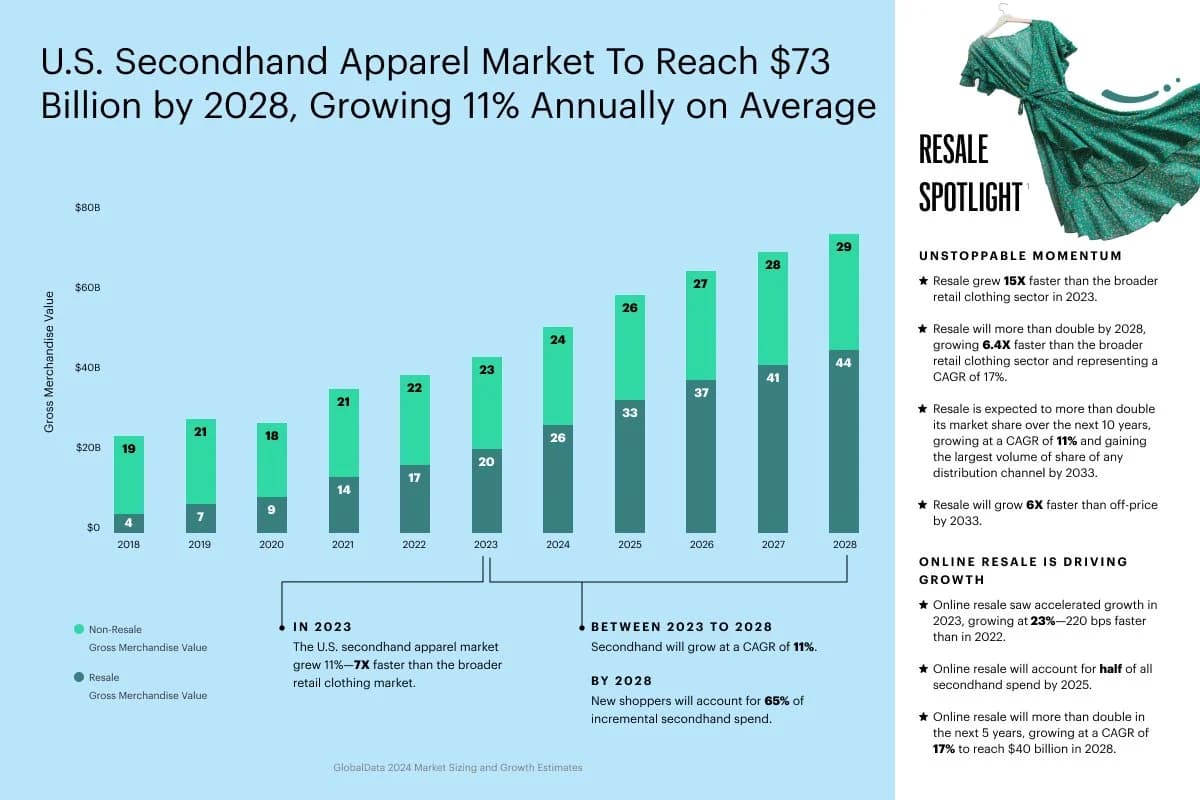
Resale is no longer the side door to fashion. It is part of the front window now.
What changed is not just price, but behavior. Second-hand has become a way to signal taste, hunt for something rarer, and take part in a shopping culture that feels more social than transactional. That is why resale is moving from practical substitute to identity, entertainment, and community, and why brands can no longer treat it as a leftover channel for unsold stock.
The numbers back up that shift. ThredUp’s 13th Resale Report found that 39% of younger shoppers made a second-hand apparel purchase on a social commerce platform in the past 12 months. It also found that 48% of consumers believe personalization, improved search, and better discovery make shopping second-hand as easy as shopping new. Built on market sizing from GlobalData, a survey of 3,034 U.S. consumers over 18, and a survey of 50 top U.S. fashion retailers and brands, the report projects the global second-hand apparel market will reach $367 billion by 2029.
That is the number fashion executives should stare at. Not because resale will replace new clothing, but because it is becoming a parallel shopping habit with its own expectations. If shoppers can scroll, filter, and discover in the resale market with the same ease they expect from a new-season site, traditional brands must compete on navigation, not just novelty. The old idea that second-hand is only for the budget-conscious is already too small.
The climate case is real, but the math matters.
The strongest reason resale matters is not aesthetic, it is operational. When a used purchase replaces a new one, the emissions savings can be substantial. WRAP’s report Displacement Rates Untangled found that for every 5 preloved items bought, 3 displace new purchases, a UK weighted average displacement rate of 64.6%. That matters because resale is not automatically green; its impact depends on whether it genuinely prevents a new item from being bought.

WRAP is blunt about why the methodology matters. Its approach was first introduced in 2012, and the group updated it because inconsistent calculations can mislead consumers and make environmental gains look bigger or smaller than they really are. That is the useful correction here. The resale story is durable, but the most exaggerated version of it is not: buying second-hand is not a magic act, it is a behavior change with measurable results when it replaces a new purchase.
The savings can be striking. WRAP says buying a preloved pair of jeans online instead of a brand-new pair could save over 30kg of CO2e, while repairing a cotton T-shirt instead of buying new could save over 7.5kg of CO2e. Those are the kinds of figures that turn sustainability from a slogan into a fitting-room decision. Denim, in particular, is where resale feels most persuasive: the fabric wears in beautifully, softens with age, and often looks better after a few lives than it did on the hanger.
Vinted’s Impact Report gives the behavior side of the same story. In 2023, members helped avoid 679 kilotonnes of CO2e by buying second-hand instead of new. The platform said 65% of members had at least a quarter of their wardrobe made up of second-hand pieces, 84% said second-hand quality was the same as or better than new, and 53% said they were spending less on fashion since they started shopping there. Even more telling, 81% said they would not have resold their items without Vinted. That is not a niche habit. That is wardrobe infrastructure.
There is one more detail worth holding onto: in Vinted’s 2023 report, 20% of members said they would still buy second-hand even if it cost the same as new. That is the clearest sign that resale is no longer just a bargain hunt. It is becoming a preference.
Policy is forcing the issue, especially in Europe.
Fashion’s resale boom is not happening in a vacuum. The European Environment Agency estimated that the European Union generated 6.95 million tonnes of textile waste in 2020, or about 16kg per person. It also found that 4.4kg per person was collected separately for reuse and recycling, while 11.6kg per person ended up in mixed household waste. That gap is the problem in plain view: clothing is being discarded faster than the system can sort, recover, and reuse it.

The pressure is only rising. From 2025, EU member states must establish separate collection systems for used textiles under the Waste Framework Directive, and the European Environment Agency says more than half of EU-27 member states already require separate textile collection. But collection alone is not a solution. The agency warns that without more sorting and recycling capacity, collected textiles can still be incinerated, landfilled, or exported. In other words, policy can widen the funnel, but the industry still has to build the pipes.
The scale of the challenge keeps growing, too. The EEA says EU textile consumption rose from 17kg per person in 2019 to 19kg per person in 2022. That is the real backdrop to resale’s rise: more clothing entering wardrobes, more clothing leaving them, and more pressure on brands to account for what happens after the first sale.
What this means for brands, and for the way you buy.
Brands should stop thinking of resale as a charitable extra and start treating it as part of the product life cycle. If shoppers now see second-hand as identity, entertainment, and community, then brands need to design for a longer public life: clearer product descriptions, stronger durability, repair-friendly construction, and resale systems that make used items easier to find, trust, and circulate. The market is telling fashion that discovery matters as much as design.
A few shifts are hard to ignore:

- Buy new more selectively. Choose pieces that can survive repeat wear, repair, and resale, because the most sustainable garment is the one that stays in use.
- Treat repair as part of ownership, not a compromise. WRAP’s T-shirt figure shows that fixing what you already have can be a meaningful emissions win.
- Look for brands that make resale legible. If personalization and search are making second-hand feel as easy as buying new, the brands that win will meet shoppers with the same clarity.
- Expect more wardrobe mixing. Vinted’s numbers show that second-hand is no longer an occasional add-on. For many buyers, it is already a quarter of the closet or more.
The durable forces behind resale are easy to name: climate awareness, better digital discovery, platform design, policy pressure, and the simple pleasure of finding something with a little history. The overhyped part is the idea that resale is only a recession story or a sustainability badge. It is bigger than that now. Fashion has entered a market where the second life of clothing is shaping the first, and the brands that ignore that shift will look behind the curve very quickly.
This article was produced by Prism’s automated news system from verified source data, official records, and press releases, then run through automated quality and moderation checks before publishing. The system is built and supervised by the people who set the standards it runs under. Read our full AI policy.
Did this article answer your question?


