Africa pushes certified cotton sourcing to win textile value chains
Africa is trying to turn certified cotton into a sourcing advantage, after UNCTAD found more than 90% of its lint still leaves the continent raw.

Can Africa build a cotton chain that is certified, traceable and compliant enough for global brands to source without reaching for Asia? That is the wager behind a Nigeria-based push from the International Trade and Research Centre, which is working in Abuja with policymakers and business to keep more value from sustainable and organic cotton inside Africa instead of shipping it out as raw fibre.
The pitch is not sentimental, it is strategic. ITRC says the continent already has several of the ingredients a serious textile hub needs: renewable energy potential, growing manufacturing capacity and regional demand that could deepen under the African Continental Free Trade Area. But the organisation also says compliance readiness across Africa’s cotton, textile and apparel sector is uneven, which is exactly where the deal can stall. Brands may want lower-footprint sourcing and cleaner paperwork, but they still need predictable standards, traceability and trade rules they can trust.
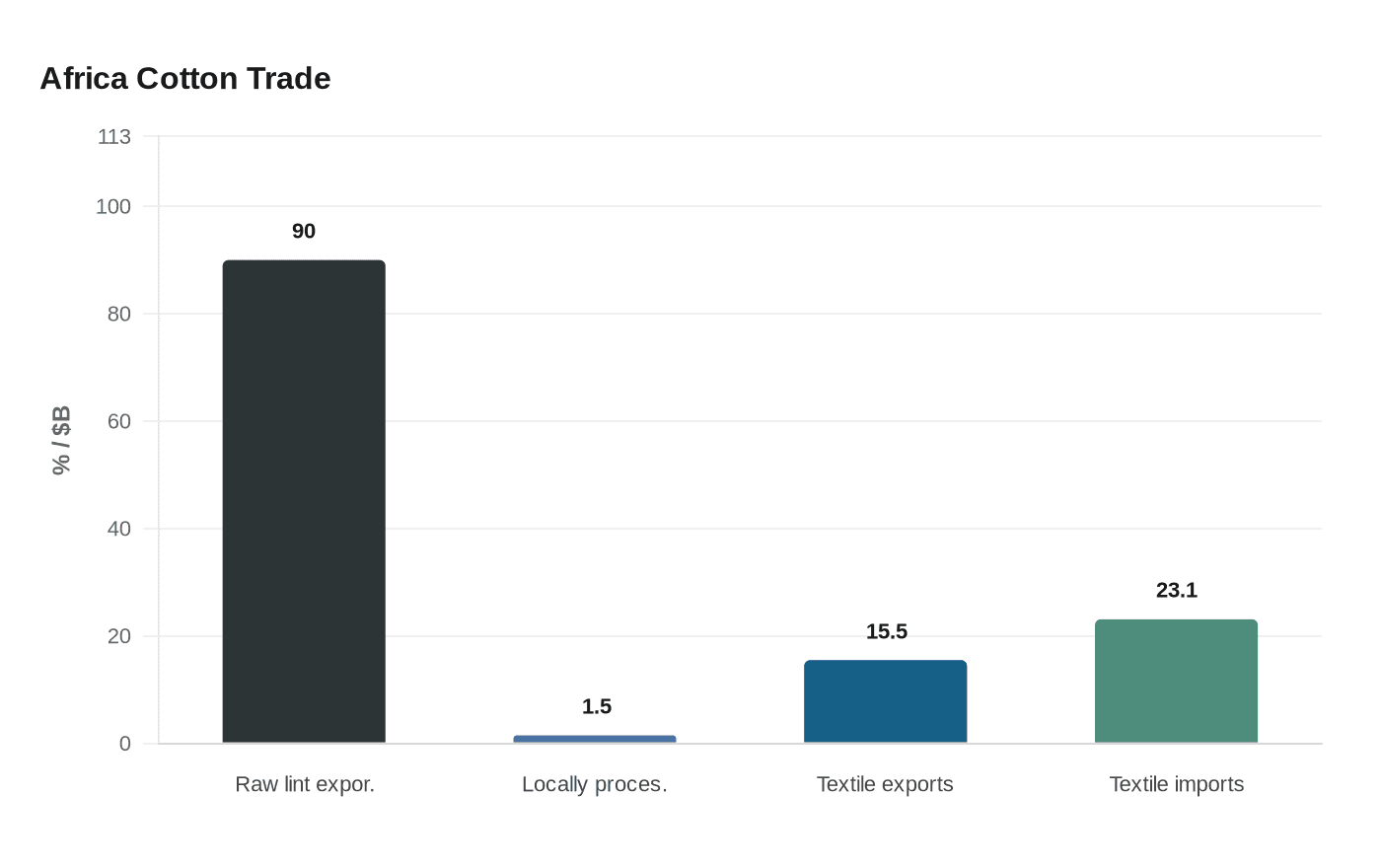
The scale of what is being left on the table is hard to ignore. UNCTAD has said sub-Saharan African countries exported more than 90% of the raw cotton lint they produced in 2018, earning about US$15.5 billion from more than 1.5 million metric tonnes of lint. In French-speaking Africa, the picture was even starker: of 1,272 million metric tonnes of lint produced in 2018, only 19,000 tonnes, or 1.5%, was processed locally. That is the difference between a commodity sale and a working industrial base.
The continental trade numbers show why the argument matters. The International Trade Centre says cotton is produced in 37 of Africa’s 54 countries, while Africa exports textile products worth US$15.5 billion a year and imports textiles, apparel and footwear worth US$23.1 billion. In other words, the continent is already plugged into the market, but on terms that still favour others finishing the fabric, taking the margin and claiming the jobs.
AfCFTA has put cotton, textiles and apparel regional value chains on its industrialisation agenda, but one bottleneck remains decisive: rules of origin for textile and apparel products. Without those, the promise of a made-in-Africa, from-fibre-to-garment supply chain stays fragmented. UNCTAD has described integrated cotton-to-textile value chains in Africa as largely inactive or absent in earlier assessments, which is why this new push is being framed less as regional development and more as a supply-chain power shift. If Africa can prove its cotton is certified, compliant and commercially reliable from field to finished piece, it could finally stop exporting the material and importing the value.
This article was produced by Prism’s automated news system from verified source data, official records, and press releases, then run through automated quality and moderation checks before publishing. The system is built and supervised by the people who set the standards it runs under. Read our full AI policy.
Did this article answer your question?