Open Supply Hub Spotlight links fragmented fashion supply chain data
Fashion’s sustainability problem is not a shortage of data, but a shortage of connections. Open Supply Hub’s new Spotlight layer tries to make factory-level proof visible across labor, emissions and traceability records.

The sharpest sustainability question in fashion is no longer whether the data exists. It is who can make environmental scores, labor audits and traceability records speak the same language before a green claim reaches a hangtag or a board deck.
Open Supply Hub answered that question with OS Hub Spotlight, launched on April 29, 2026 as a new integration layer built to connect siloed datasets to production facility profiles rather than replace the partner systems behind them. The platform says it launched with 10 founding partners: amfori, Climate TRACE, the International Accord, Labor Solutions, the Living Wage Institute, the Social and Labor Convergence Program, Ulula, WageIndicator Foundation, Worldwide Responsible Accredited Production and Worldly. Open Supply Hub says its map already covers more than 1 million production locations worldwide, giving the new layer a scale that few fashion-facing data tools can match.

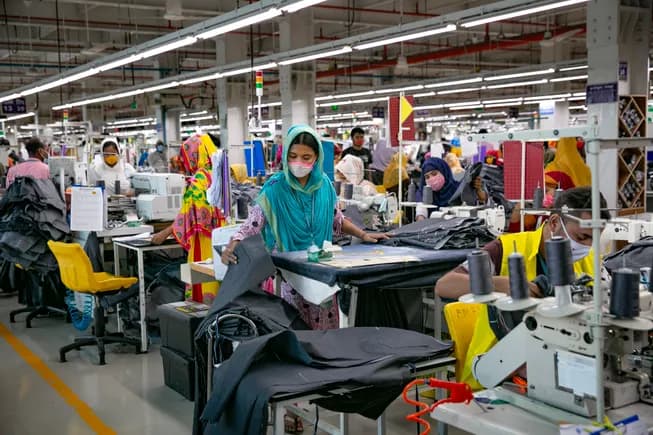
That matters because the industry’s information problem is rarely a total absence of evidence. More often, the evidence sits in separate drawers. A factory can be visible in one system for social compliance, appear in another for emissions, and vanish in a third when a brand tries to trace product-level sourcing. In that kind of fragmentation, a polished sustainability story can survive even when the joined-up record would raise harder questions about wages, carbon intensity or subcontracting. Spotlight is designed to expose those mismatches at facility level, where the mess is most concrete and the decisions are most expensive.
The regulatory pressure is no longer abstract either. The European Union’s Corporate Sustainability Due Diligence Directive entered into force on July 25, 2024, and the Corporate Sustainability Reporting Directive entered into force on January 5, 2023. The CSRD can reach an undertaking’s whole value chain, including its own operations, products and services, business relationships and supply chain. That scope pushes fashion far beyond glossy sustainability statements and toward auditable proof that can stand up to scrutiny from investors, regulators and buyers.
The textile sector has already started to map the gaps. In January 2025, Policy Hub, the Social and Labor Convergence Program, Fair Wear Foundation and amfori published a Handbook for Due Diligence Implementation in the Textile Sector to help the European Commission develop comprehensive guidelines. The handbook explicitly identifies areas where further clarification is still needed for textiles, which is another way of saying the industry still lacks a common operating picture.
That is the real shift Spotlight represents. The next fight in sustainable fashion is not over whether information exists, but over who owns the layer that can verify it, standardize it and connect it at the factory gate. In a market increasingly ruled by legal exposure and commercial proof, the brands that can join the dots will have the most credible claims, and the weakest ones will be the easiest to read.
This article was produced by Prism’s automated news system from verified source data, official records, and press releases, then run through automated quality and moderation checks before publishing. The system is built and supervised by the people who set the standards it runs under. Read our full AI policy.
Did this article answer your question?