Climate stress reshapes cotton’s water use and soil carbon storage
Heat and drought are testing cotton’s climate math: dryland soils lose carbon faster, and even better cotton claims look shakier when the sink weakens.
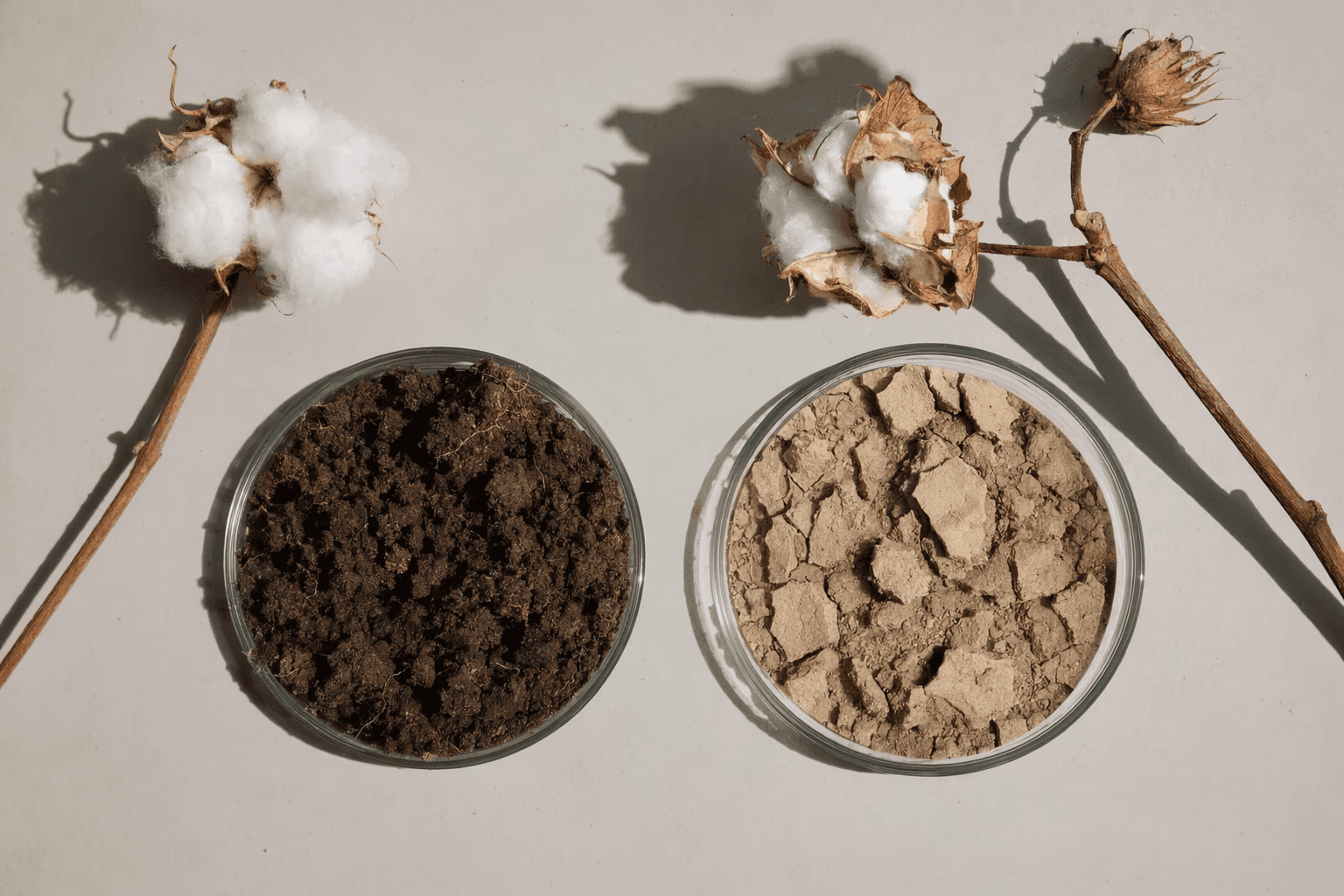
Cotton’s climate story is getting harder to sell on soft optimism. As heat, drought and disease intensify, the fiber’s water use and carbon balance are shifting in ways that could weaken dryland soils’ ability to function as a carbon sink, complicating the climate claims attached to “better” cotton and forcing brands to look more closely at where and how their cotton is grown.
The stakes are not small. Cotton supplies roughly a quarter of global textile fibers, which means any wobble in its environmental accounting lands across shirts, denim, bedding and the entire basics aisle. The Food and Agriculture Organization of the United Nations defines a sink as a process that removes greenhouse gas from the atmosphere, and that is exactly the role cotton soils are being asked to play more credibly as climate stress deepens.
Recent science makes that job look more fragile. A 2024 paper in Nature Communications found drought may worsen dryland soil carbon loss under warming, while a 2025 study showed cotton-growing areas are increasingly exposed to compound drought-and-heat events. In practical terms, that puts semi-arid production zones under the most pressure. Dryland cotton-growing regions, including parts of the Texas Rolling Plains, face a harder equation: less moisture in the soil, more evaporative stress, and less room for any carbon-capturing gains that brands may assume are built into their supply chains.
That is where farming practice starts to matter as much as geography. Research and simulation work in the Texas Rolling Plains suggest cover crops and no-till can improve soil carbon sequestration, water storage and yield resilience in semi-arid cotton systems. Water management is emerging as the key lever tying together carbon storage, nitrogen cycling and yield, which means sourcing from irrigated fields or from farms using conservation practices may look less risky than leaning on broad certification language alone. A “better” label is not the same thing as a climate-proof one if the soil beneath it is losing its capacity to hold carbon.
The industry is already responding. In September 2025, the International Cotton Advisory Committee introduced a cotton carbon-footprint application designed to help farmers, researchers and policymakers estimate net emissions and compare the carbon-capture potential of different agricultural methods. The group, which says it is the only intergovernmental commodity body recognized by the United Nations to represent the global cotton and textile industry, now sits close to the center of how cotton’s climate claims may be measured.
The numbers are shifting, and so should sourcing assumptions. Better Cotton-licensed U.S. growers recently cut emissions 54 percent versus regional averages in a regenerative agriculture pilot, rising to 77 percent when carbon removals were included. That kind of result points to where the next premium will live: not in vague sustainability language, but in farms that can keep soil alive, hold water longer and defend their carbon math under stress.
This article was produced by Prism’s automated news system from verified source data, official records, and press releases, then run through automated quality and moderation checks before publishing. The system is built and supervised by the people who set the standards it runs under. Read our full AI policy.
Did this article answer your question?