AI-Powered DETEX System Sorts Textiles by Fabric Type at German Institute
German researchers built DETEX, an AI sorter using dual 13-megapixel cameras to identify fabric type automatically, targeting recycling's most stubborn bottleneck.
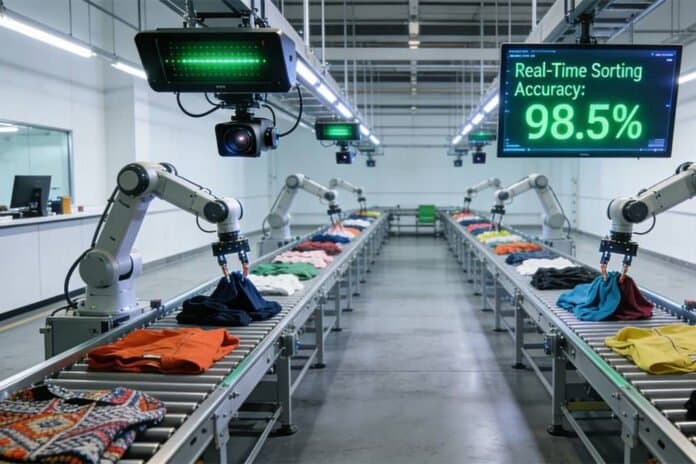
One of textile recycling's most persistent problems has never been collection. It has been knowing what you are actually holding. A polyester-cotton blend looks nearly identical to pure cotton on a conveyor belt, and sorting by hand is slow, inconsistent, and expensive at industrial scale. DETEX, an AI-based prototype developed at the Recycling Atelier of the Augsburg Institute for Textile Technology in Germany, was built to close that gap.
The system pairs dual 13-megapixel cameras with trained neural networks capable of identifying both garment type and fabric composition without human intervention. Developed within ITA's dedicated Recycling Atelier in Augsburg, DETEX represents a concentrated technical effort to automate the classification step that currently bottlenecks most post-consumer textile recycling streams.
Fabric identification matters because recycling pathways diverge sharply by fiber content. Mechanical recycling works well for single-fiber textiles but degrades blended materials into low-grade output. Chemical recycling processes are fiber-specific by design. When sorting is unreliable, recyclable material ends up misrouted, downcycled, or landfilled. An automated system that correctly classifies composition before a garment reaches the recycling line could meaningfully improve material recovery rates across the board.
The dual-camera configuration at the heart of DETEX suggests the system captures multiple angles or spectral readings simultaneously, giving its neural networks richer data than a single lens would provide. The 13-megapixel resolution at each camera allows the system to resolve surface texture and weave structure with enough detail to distinguish fiber types that are visually similar at lower resolution.
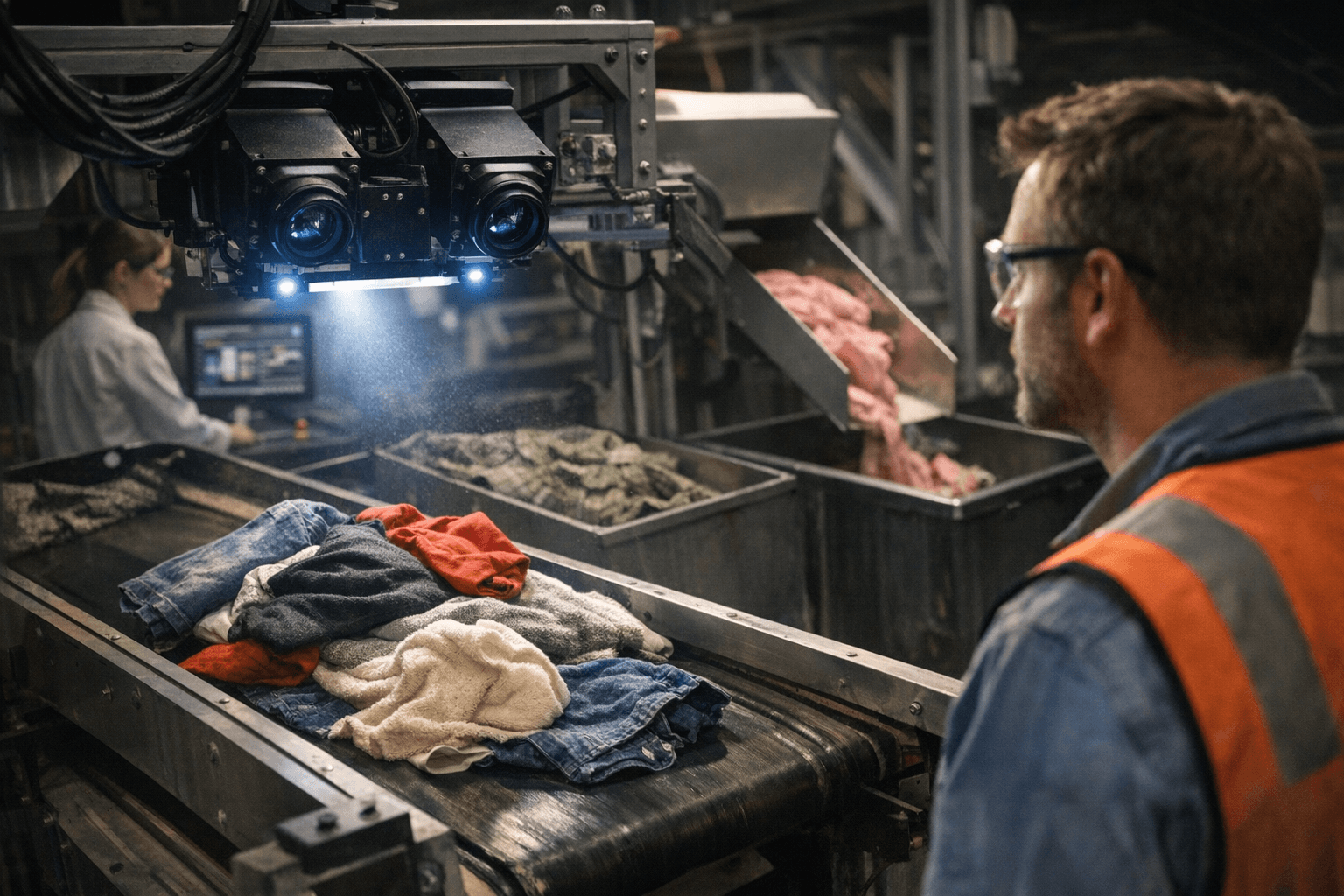
ITA's Recycling Atelier positions the institute as a dedicated research environment for post-use textile processing, distinct from design or production-focused labs. That framing matters: sorting technology developed inside a recycling-specific atelier is more likely to be calibrated to real-world material conditions, including the worn, faded, and structurally compromised garments that make up most post-consumer textile waste, rather than to pristine fabric samples.
Whether DETEX moves from prototype toward industrial deployment will depend on classification accuracy rates, processing speed per unit, and whether the system can handle the full diversity of what consumers actually discard. Those figures were not yet publicly detailed as of mid-March 2026. What the ITA has established is a working prototype architecture, and in a sector where automation of this step has remained largely aspirational, that is a concrete foundation.
This article was produced by Prism’s automated news system from verified source data, official records, and press releases, then run through automated quality and moderation checks before publishing. The system is built and supervised by the people who set the standards it runs under. Read our full AI policy.
Did this article answer your question?


