Apparel Emissions Rise 7.5% to 944 Mt CO2e, Polyester Growth Drives Increase
apparel emissions rose 7.5% to 944.24 Mt CO2e in 2023, the first major uptick since 2019, driven largely by polyester growth and textile processing.
“The emissions curve is bending the wrong way,” the H&M Foundation declared after the Apparel Impact Institute’s 2025 study, which estimates apparel sector greenhouse gas emissions at 944.24 million tonnes CO2e for 2023, a 7.5 percent increase from 2022 and the first significant rise since Aii began tracking in 2019.
The Apparel Impact Institute built its 2023 estimate using Textile Exchange fiber weights from the Materials Market Report 2024 and GHG impact data from the Higg Material Sustainability Index. Aii notes the 944.24 Mt figure equals 1.78 percent of global annual GHGs based on EDGAR’s 2023 global total of 53 Gt, and the report published in 2025 reflects that 2023 data with the expected publication lag.
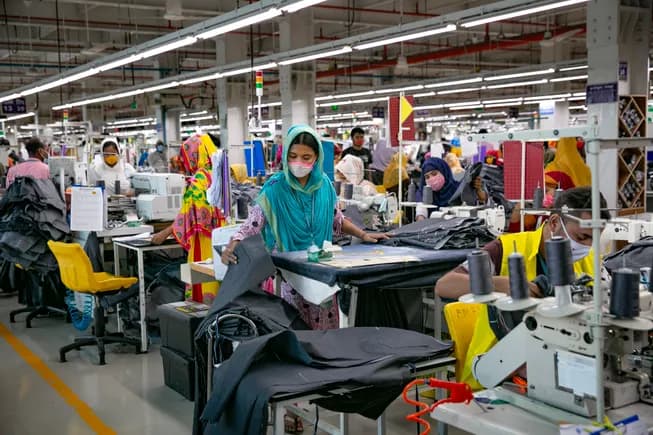
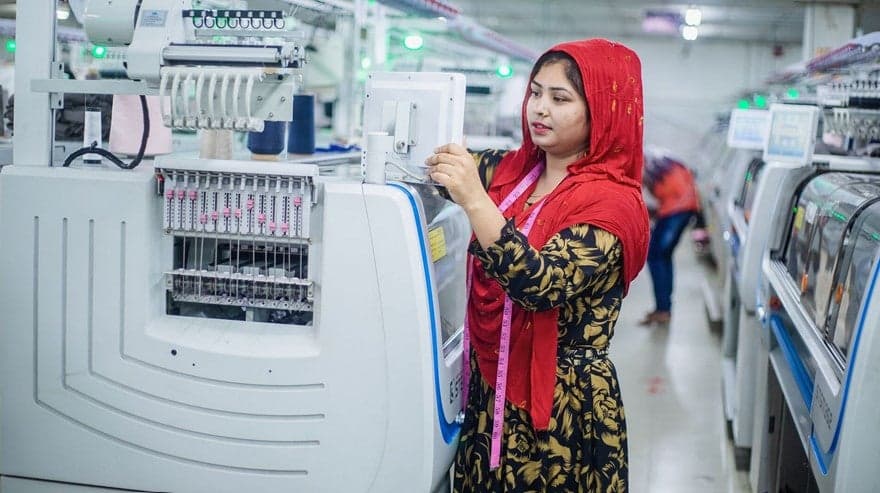
Growth in polyester and higher overall fiber consumption are named as the primary drivers of the uptick. Aii and the H&M Foundation point to volume growth outpacing efficiency, noting that textile processing - Tier 2 manufacturing - accounts for roughly 55 percent of the apparel sector’s emissions while raw material production contributes about 22 percent, a value chain split nearly unchanged from 2022. Lewis Perkins, President and CEO of the Apparel Impact Institute, said bluntly: “If the apparel sector is serious about climate action, we have to tackle thermal energy.”
The material glut is visible in Textile Exchange’s figures: material production reached approximately 132 million tonnes in 2024 across all markets, which the organisation frames as the equivalent of four tonnes of fiber produced every second. Textile Exchange CEO Claire Bergkamp said, “The data we’ve released today makes clear the scale of the challenges ahead,” and she urged scaling gains in certified raw materials and cutting reliance on virgin fossil-based polyester to meet the Climate+ Dashboard goal of a 45 percent reduction in material-related GHGs by 2030 from a 2019 baseline.
Industry funding and programmes are stepping up. Since 2022 H&M Foundation and Aii have collaborated through the Fashion Climate Fund, with H&M Foundation committing an additional SEK 24 million over 2025–2028 to continue supporting Aii’s work on renewable electricity, energy efficiency, and the phase-out of coal in manufacturing. The H&M Foundation analysis explicitly warns that “efficiency gains and targeted interventions are being outpaced by volume growth.”
In the UK, WRAP’s Textiles 2030 annual progress update for 2022-23 shows modest movement: signatory companies cut their collective carbon footprint by 2 percent relative to 2019 but saw an 8 percent rise in water footprint, with cotton fiber production accounting for 84 percent of that water burden. PULSAR joined Textiles 2030 as the first Professional Clothing Supplier to help accelerate circularity for protective clothing.
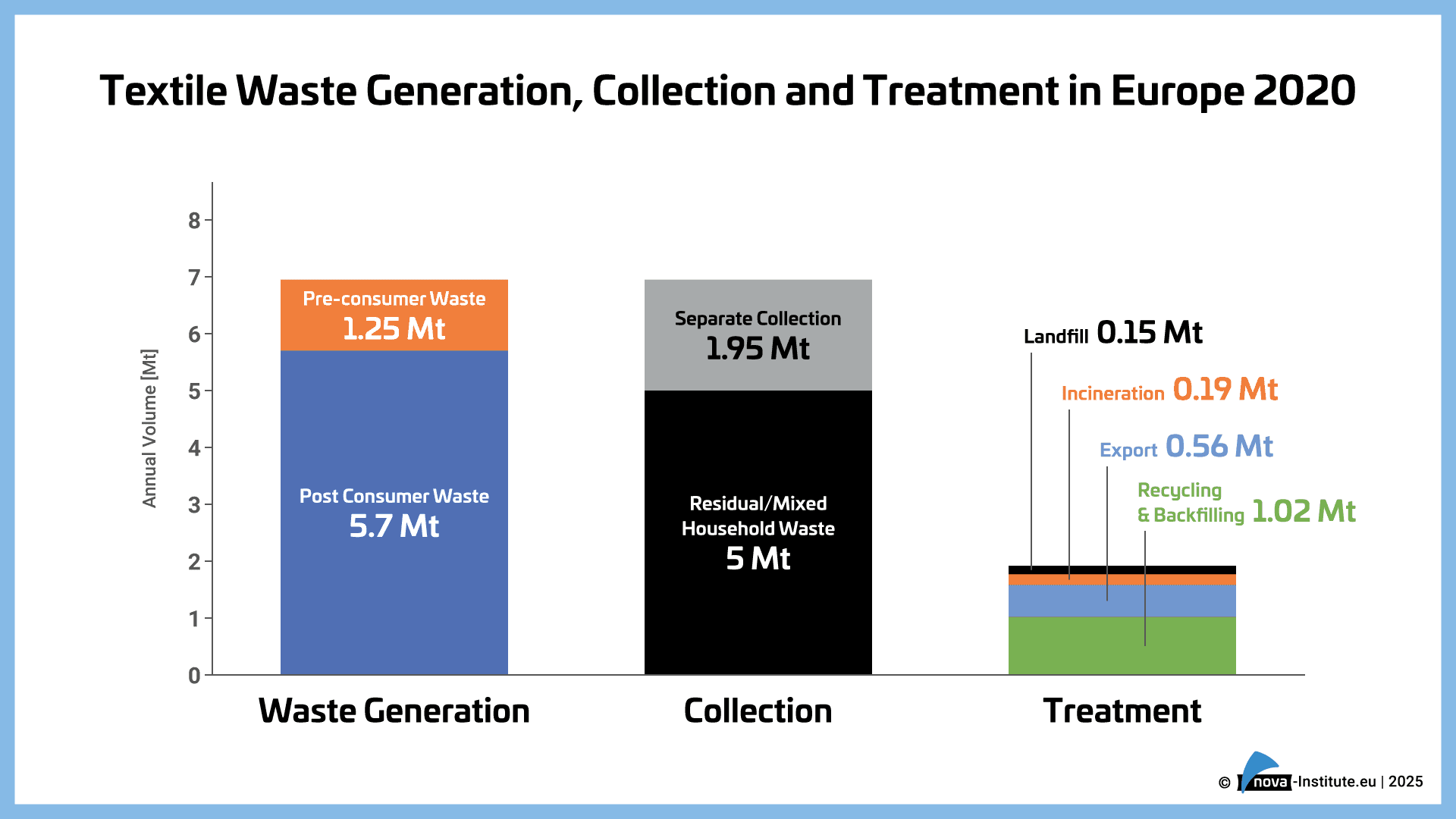
Waste and reuse remain part of the picture. EPA municipal solid waste data from 1960 to 2018 shows textile generation rising to 17.03 million U.S. tons in 2018, representing 5.8 percent of total MSW that year, while the agency notes reused textiles are not included in the initial generation estimate and eventually enter the waste stream.
Data gaps persist even as warnings stack up: Aii acknowledges limitations in data sources and the lag between measurement and publication, and Textile Exchange is still refining its estimate that 40 to 75 percent of total fiber volume serves apparel, home textiles, and footwear. Claire Bergkamp’s closing admonition frames the practical challenge ahead: “The challenge now is to take this progress to scale.” That scaling will need to target thermal energy in Tier 2 manufacturing and the runaway growth of polyester if the sector is to reverse the 2023 trend.
This article was produced by Prism’s automated news system from verified source data, official records, and press releases, then run through automated quality and moderation checks before publishing. The system is built and supervised by the people who set the standards it runs under. Read our full AI policy.
Did this article answer your question?