Arunachal Pradesh Fashion Week 2026 Champions Artisans, Boosting Local Economy
Arunachal Fashion Week 2026 opens March 14 with a "Night of Opulence" blending indigenous weaves and modern design, marking five years of the Artisans' Movement.
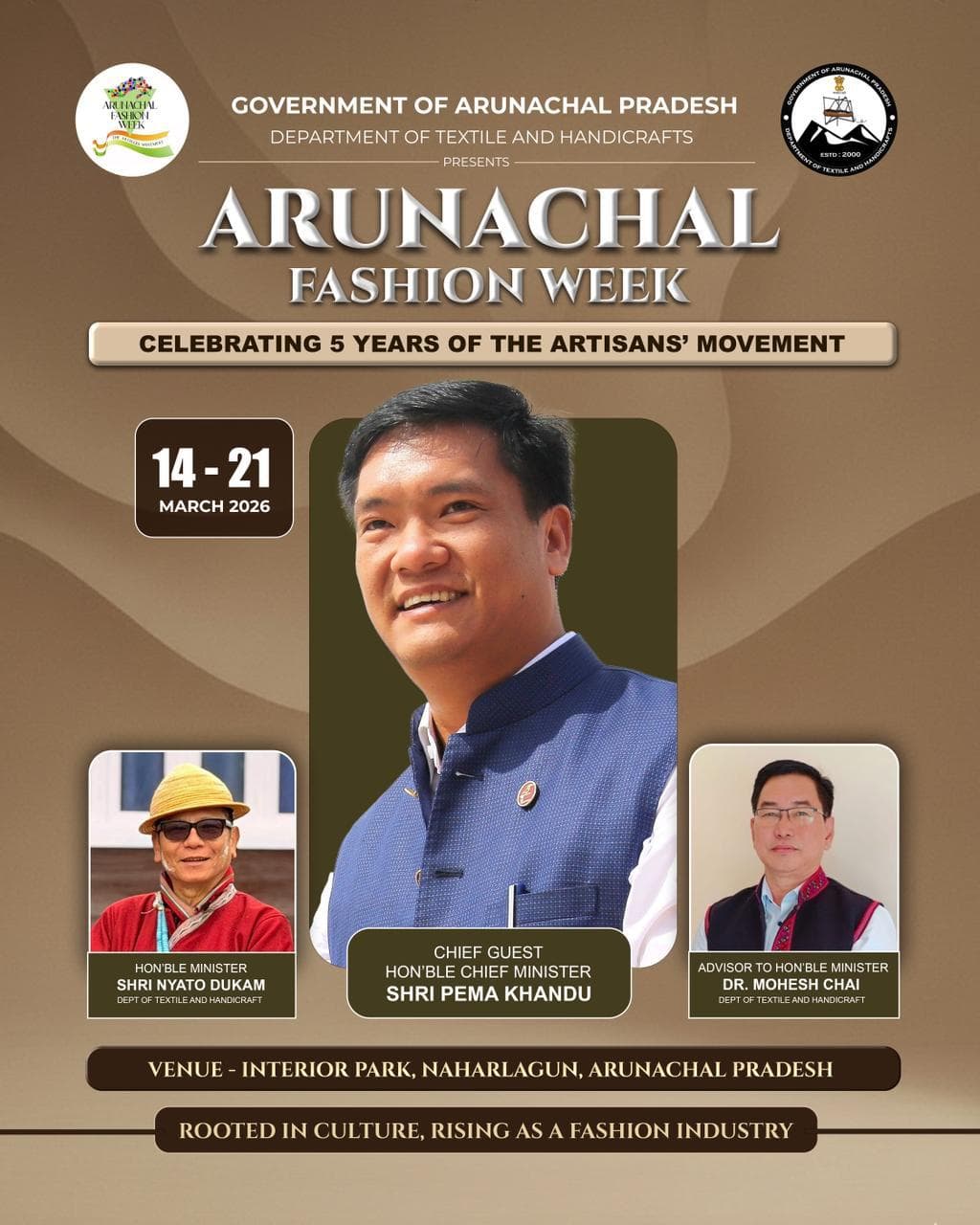
Five years of the Artisans' Movement culminates at Interior Park, Naharlagun this week, where Arunachal Fashion Week 2026 runs March 14 through 21 under the banner "The Artisans' Movement" with Chief Minister Pema Khandu opening the inaugural ceremony on Saturday night.
The opening is themed "Night of Opulence," spotlighting indigenous weaves alongside modern designs in what the Department of Textile and Handicrafts is positioning as the region's most ambitious textile showcase yet. The following day shifts focus to cultural heritage, built around designer-artisan partnerships that bring traditional textiles directly onto the runway. It is also a double anniversary: 2026 marks 11 years since the first Northeast India Fashion Week launched in Itanagar in April 2015, at a time when the region had no structured fashion platform at all.

Textile and Handicrafts Minister Nyato Dukam put the economic stakes plainly: "Arunachal Pradesh possesses a rich textile heritage that reflects the identity, craftsmanship, and cultural depth of our indigenous communities. The department remains committed to strengthening this sector through structured showcasing, modernisation, and enhanced market access. Arunachal Fashion Week provides an organised platform that connects tradition with innovation, ensuring visibility and opportunity for artisans and emerging designers. This eight-day edition reflects our continued commitment to positioning textiles and fashion as meaningful contributors to the state's economic and creative growth."
From March 16 to 20, Interior Park converts into a public marketplace: runway shows run alongside sales counters, handloom displays, furniture exhibits, and structured buyer-artisan meetings designed to move indigenous textiles from cultural artifact into active commerce. The closing ceremony on March 21 hands out awards across four categories covering top models, designers, weavers, and young talents.
Yana Ngoba Chakpu, who founded the Artisans' Movement five years ago, called this edition a milestone for sustainability and youth involvement. Chief Operating Officer Meena Noshi focused on the pipeline it builds, emphasising opportunities for emerging talent and positioning fashion as a viable career path in the state.
The event draws in designers, indigenous weavers, youth professionals, creative entrepreneurs, and policy stakeholders, with buyer-artisan meetings structured to generate real market linkages rather than symbolic exposure. The week arrives as demand for sustainable indigenous textiles rises nationally, and the Department of Textile and Handicrafts is clearly betting that Naharlagun can establish itself as a credible node in India's creative economy. What began as a pioneering platform in 2015 with no regional competition has, over a decade, grown into a functioning industry interface. The question this edition answers is whether that interface can convert cultural visibility into sustained economic momentum for the weavers at its center.
This article was produced by Prism’s automated news system from verified source data, official records, and press releases, then run through automated quality and moderation checks before publishing. The system is built and supervised by the people who set the standards it runs under. Read our full AI policy.
Did this article answer your question?