Bangladesh garment study links respectful supervisors to lower worker turnover
Respectful supervisors may be the cheapest fix in Bangladesh's garment supply chain, cutting turnover while worker committees and tighter monitoring sharpen the effect.
In Bangladesh’s garment factories, the quietest upgrade may turn out to be the most valuable: training supervisors to treat workers with respect, fairness, and basic propriety. A study of 1,377 workers across 107 factories found that supervisor interpersonal justice lowers workers’ turnover intention, especially when worker participation committees and stricter monitoring are in place.
That matters because the industry still runs on scale and pressure. Bangladesh’s ready-made garment sector employs more than four million people, mostly women, and the textile and apparel sector brought in $38.48 billion in export earnings in 2024. In a business built on deadlines, margins, and constant buyer scrutiny, supervisor behavior is not a soft issue. It is a management lever, and the study argues it should move out of the CSR corner and into core sourcing strategy.
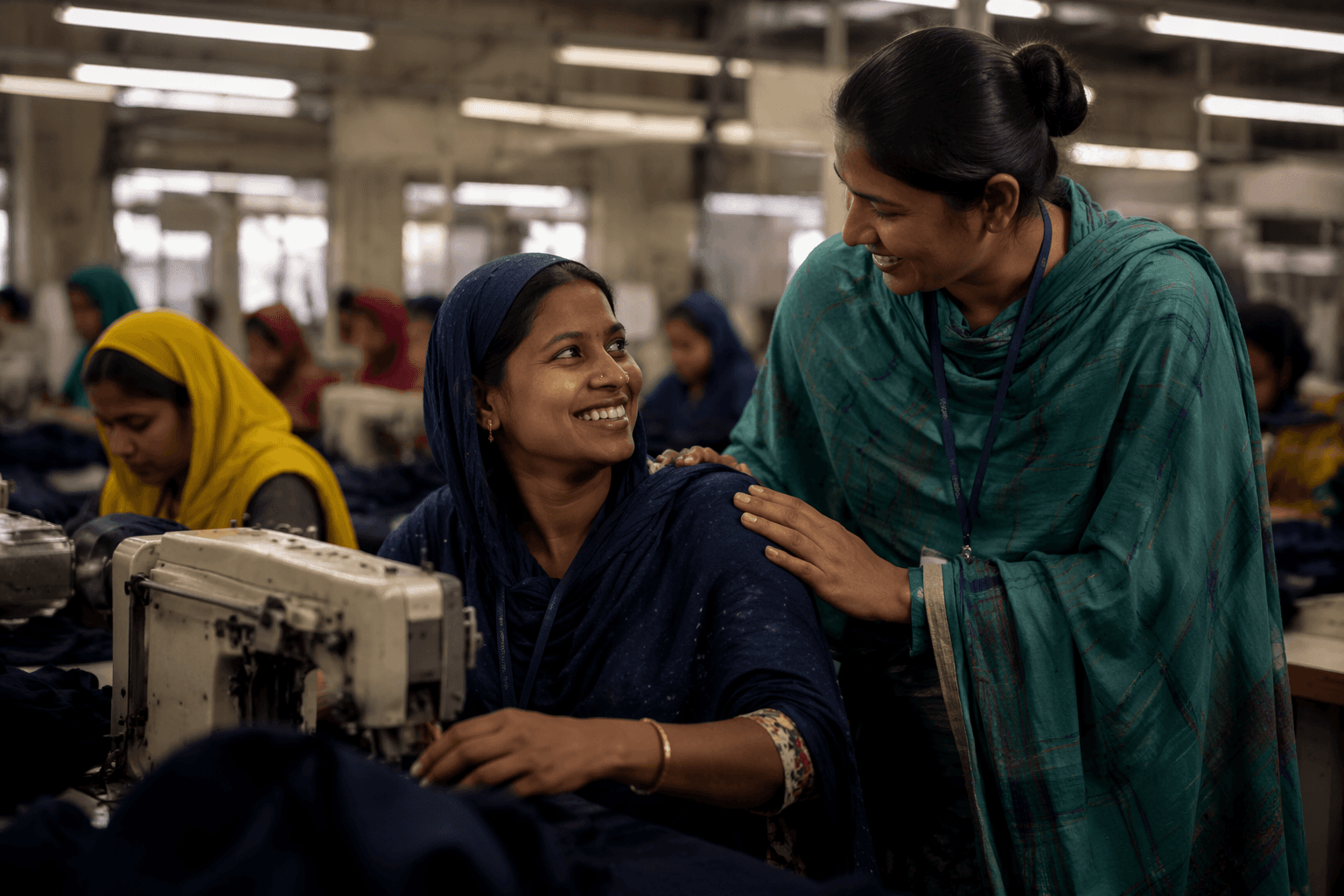
The logic is straightforward. A line supervisor who gives instructions without humiliation, listens without favoritism, and enforces rules without theatrics can stabilize a floor in ways that glossy sustainability pledges cannot. The effect appears stronger where worker participation committees exist and where external monitoring is tougher, including under the Bangladesh Accord. In a country where only 7.2 percent of RMG workers are unionised, and where employers with more than 50 workers are legally required to establish Participation Committees, the mechanics of voice still matter as much as the message.
That tension runs through Bangladesh’s post-Rana Plaza labor debate. More than 1,100 people, mostly garment workers, died when Rana Plaza collapsed on April 24, 2013, and the disaster remains a grim reminder that workplace governance is not just about walls and wiring. It is also about who stands on the factory floor between ownership and labor, and whether that person is trained to manage people as carefully as they manage output.
The practical question is who pays. If brands want supervisor training to last, they cannot treat it as a one-off social project. It has to sit inside supplier requirements, priced into orders and audits as part of the cost of doing business. Better Work Bangladesh, launched in 2015, now works with about 488 factories and around 1.4 million workers, 49 percent of them women, and says participating factories have posted 50 percent higher export revenues and volumes than non-participating factories. Its GEAR programme has trained over 600 female sewing operators and promoted nearly 400 women into supervisory roles, while a 2024 GIZ study found that training supervisors in soft and technical skills improved productivity by up to 22 percent. That is the real shift here: from polished promises at the top to a better-managed floor below.
This article was produced by Prism’s automated news system from verified source data, official records, and press releases, then run through automated quality and moderation checks before publishing. The system is built and supervised by the people who set the standards it runs under. Read our full AI policy.
Know something we missed? Have a correction or additional information?
Submit a Tip