Bestseller's Bangladesh Pilot Turns Factory Waste Into Million-Euro Opportunity
Bestseller's Bangladesh factory waste pilot generated €1,071,826 in economic value by teaching manufacturers to sell sorted textile scraps at premium prices.
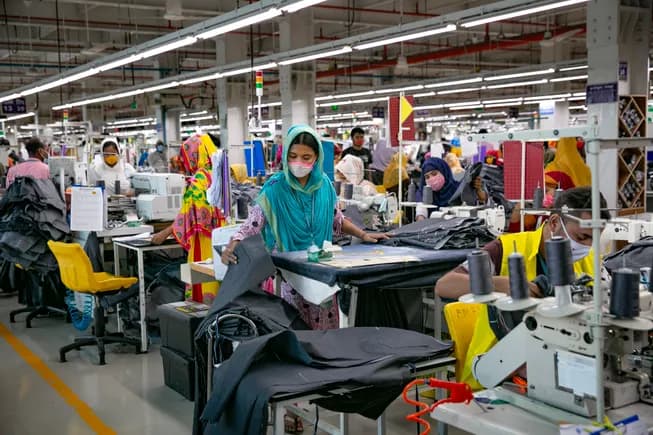
When Bestseller set out to prove that Bangladesh's factory floors were sitting on untapped commercial value, the Danish fashion group didn't start with recycling technology. It started with a sorting bin.
The company's Switch to Upstream Circularity pilot, delivered under the UNIDO-led SWITCH to Circular Economy Value Chains initiative and supported by the Global Fashion Agenda, BGMEA, and Reverse Resources, focused on something deceptively simple: getting manufacturers to segregate their post-industrial textile waste before it left the factory. The results, now compiled as the pilot concludes, put a precise number on what better sorting is worth. Across all participating actors, the project generated an estimated EUR 1,071,826 in economic value, calculated from waste volumes shipped by manufacturers against global market prices for selected fiber compositions.
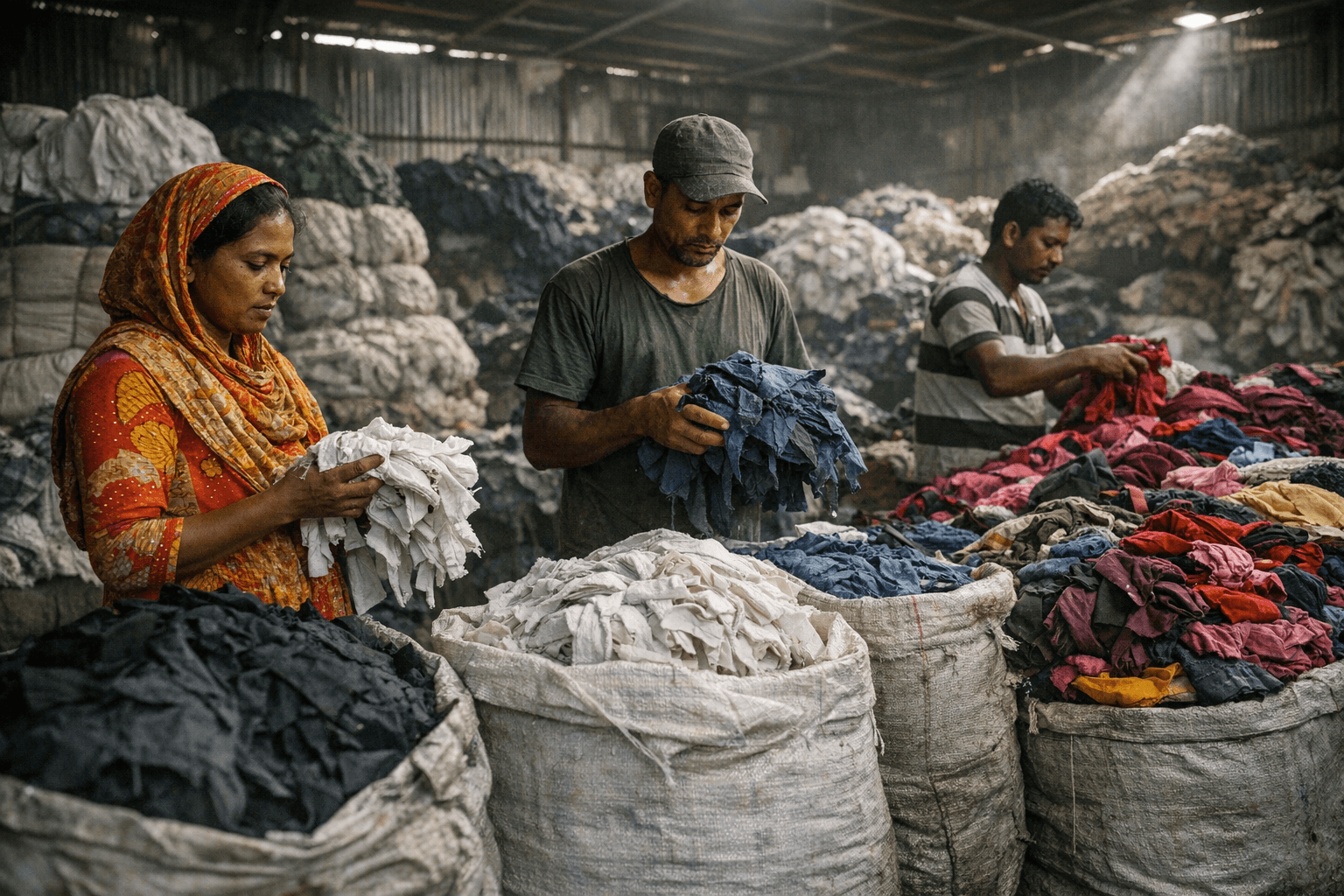
Seven of the participating manufacturers reported direct financial benefits from selling that segregated waste to handlers at higher market prices than unsorted scraps would fetch. The commercial logic is straightforward: a bale of clean, single-fiber offcuts commands a fundamentally different price than a mixed bag of blended remnants.
The ecosystem that formed around this insight grew significantly during the pilot's run. Supplier engagement expanded from seven to 20 manufacturing facilities. Waste handler participation jumped from two to 27, and 26 recyclers joined the network, creating what the Global Fashion Agenda described as "a more connected ecosystem capable of supporting textile-to-textile recycling." Sixteen workshops and roundtables, eight event presentations, and 21 targeted training sessions pushed industry knowledge across the sector, reaching nearly 5,000 fashion stakeholders in total. Twelve participating manufacturers indicated plans to invest further beyond the pilot's conclusion, though the specifics of those commitments were not fully detailed in project materials.
The pilot also produced a business case template and toolkit designed to help other manufacturers replicate the commercial model without having to rebuild the logic from scratch.
Bangladesh's readiness to absorb these lessons is not incidental. The country holds more than 240 LEED-certified green garment factories, more than any nation on earth, including 62 of the world's 100 highest-rated facilities, with over 500 more working through the certification pipeline. Nearly 1,300 factories used Cascale's Higg Facility Environmental Module in 2023, posting stronger environmental performance than global averages. Cascale has described the country as standing at "a turning point, leveraging past progress to chart a path toward a sustainable, inclusive, and competitive future."
A parallel pilot in Bangladesh is tackling the water side of the same manufacturing footprint. A modular wastewater treatment and recycling system, tested first at Zaber & Zubair Fabrics and now moving to a denim washing facility operated by Designer Fashion of the Bengal Group, is working through operational costs of $0.12 to $0.30 per cubic metre for 70 percent water recycling with 30 percent brine management. Scaling the system to a 100 cubic metres per hour plant would require capital expenditure of between $0.9 million and $2 million. The company behind the technology, QStone, projects it could generate up to $700 million per year in Bangladesh alone. Results from ongoing denim washing trials were expected within one month of the project's reporting. "The beauty of this system is it provides transparent, independently verified proof of sustainability without interfering with existing business relationships between brands and factories," said Tielman, a project spokesperson, in comments to industry media.
Both initiatives sit within a broader national push that now has institutional architecture behind it. BGMEA signed a partnership agreement with Cascale in 2024, and in 2025, the International Apparel Federation and the International Textile Manufacturers' Federation launched the Apparel and Textile Transformation Initiative, with Bangladesh and Turkiye as its pilot countries. BGMEA and BKMEA lead the Bangladesh chapter.
The Bestseller pilot's core finding is one the rest of the industry can price: waste that is identified, sorted, and attributed correctly stops being a cost center and starts functioning as a revenue line. Bangladesh now has the data to prove it.
This article was produced by Prism’s automated news system from verified source data, official records, and press releases, then run through automated quality and moderation checks before publishing. The system is built and supervised by the people who set the standards it runs under. Read our full AI policy.
Did this article answer your question?