Bezos Earth Fund backs $34 million push for low-impact fashion fibers
The Bezos Earth Fund put $34 million behind fibers that could cut fashion’s waste, water use and microplastics, but the real test is whether labs can scale.

$34 million will not remake fashion overnight, but it can buy something the industry badly lacks: time and proof. The Bezos Earth Fund’s latest grants targeted the unglamorous middle ground between chemistry and commerce, backing fibers meant to look and feel like rayon, silk and cotton while shrinking the climate, waste and microplastics burden built into today’s wardrobes.
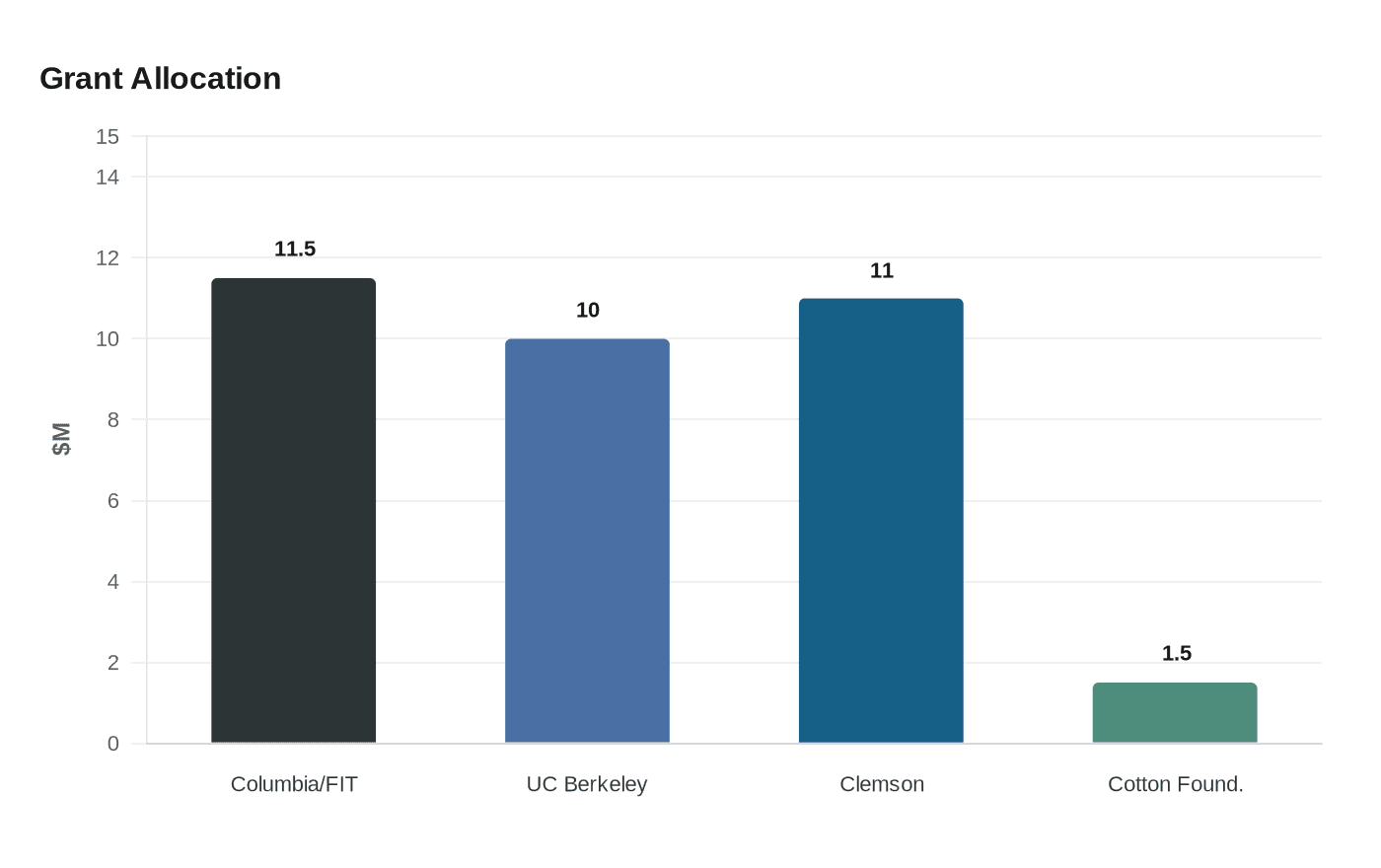
The money was split across four bets. Columbia University and the Fashion Institute of Technology received $11.5 million for PRISM, short for Precision, Regenerative, Intelligent, Scalable Materials, a five-year program to grow bacterial cellulose fiber from bacteria fed on agricultural waste. The goal is a fiber that needs no land, can compost at end of life and avoids the microplastic pollution that trails so many synthetic clothes. UC Berkeley got $10 million to develop biodegradable fibers inspired by spider silk, using proteins pulled from compost and industrial waste in a “waste to weave” process led by materials scientist Ting Xu. Clemson University received $11 million to reimagine cotton through gene editing, synthetic biology and advanced breeding, while the Cotton Foundation got $1.5 million to help restore a non-GMO cotton seedbank that scientists and farmers can keep drawing from.

That spread tells you where the fund sees the bottlenecks. Not inspiration. Infrastructure. A fiber can be beautiful in a lab and still fail if it cannot be controlled, predicted, scaled, spun and finished like a material mill buyers trust. Columbia and FIT are trying to solve exactly those problems, and that matters because the closest route to adoption is usually the one that fits into existing supply chains with the fewest new machines, new standards and new headaches. Bacterial cellulose and reengineered cotton are the most likely near-term candidates for brand adoption. Spider-silk-inspired materials may be more radical, but they also face a longer climb.
The numbers behind the urgency are hard to ignore. Berkeley cited research estimating 92 million tons of textile waste annually worldwide, rising to 134 million tons by 2030. It also pointed to a United Nations Environment Programme report saying 11% of plastic waste comes from clothing and textiles. Against that backdrop, the Bezos Earth Fund’s fashion push looks less like a side project than a systems play: if these fibers cut dye baths, reduce water and chemical inputs, or eliminate microplastic shedding at scale, the gains would be measurable in the places fashion hurts most.
Tom Taylor, president and chief executive of the Bezos Earth Fund, framed the grants as part of a broader climate and nature agenda. Lauren Sánchez Bezos described the work as fiber grown from bacteria, cotton engineered to come out of the ground in color, and silk-like materials made from compost. The cleanest verdict will come later, not in a press release but on the mill floor, where the question is whether these fibers can move from promising prototypes to the racks shoppers actually wear.
This article was produced by Prism’s automated news system from verified source data, official records, and press releases, then run through automated quality and moderation checks before publishing. The system is built and supervised by the people who set the standards it runs under. Read our full AI policy.
Did this article answer your question?


