Debrand transparency report reveals where 1,089 tonnes of textile waste went
Debrand mapped 1,089 tonnes of textile waste, and only a sliver made it into true circular loops. Most of it still moved into recycling channels or disposal.
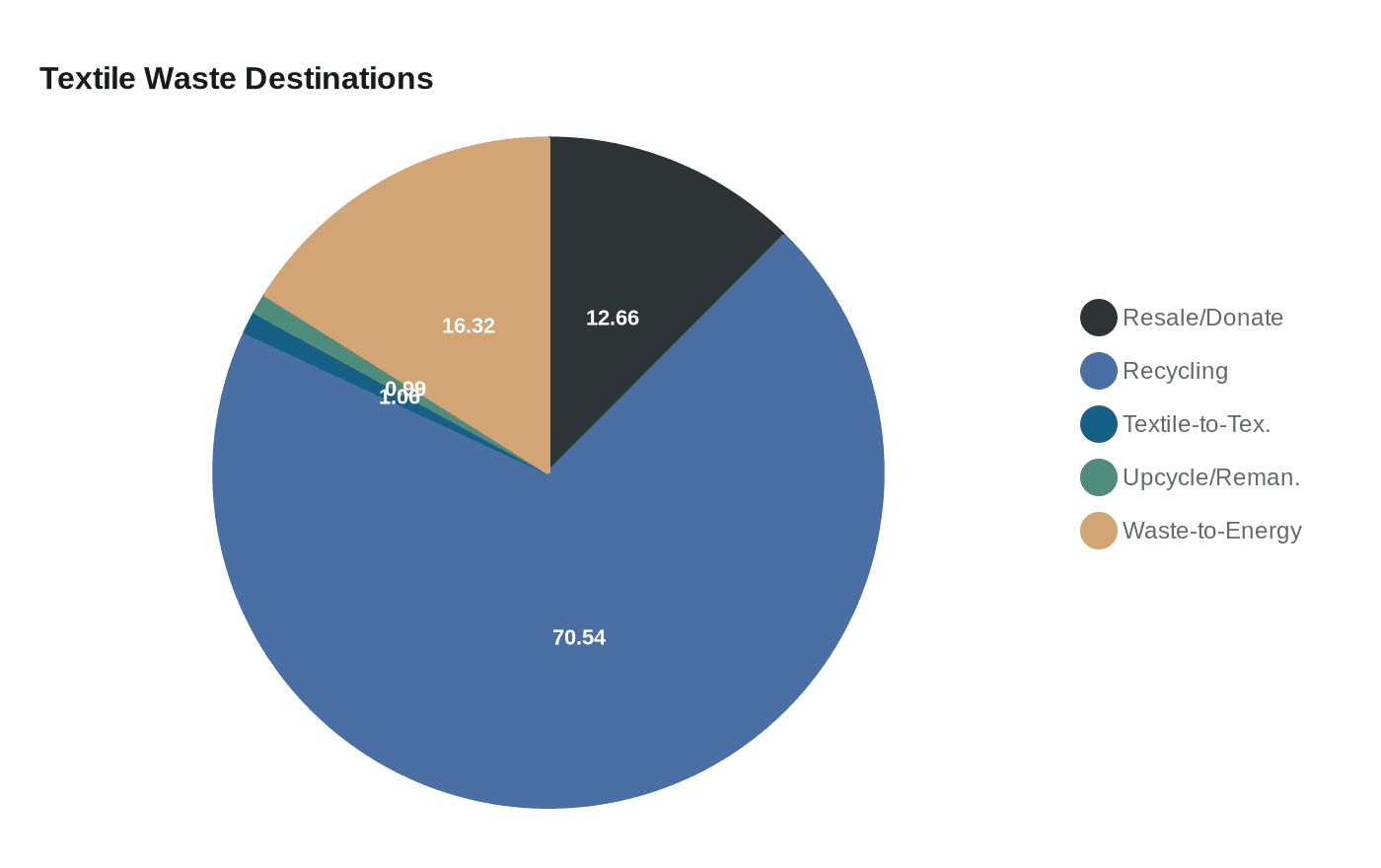
Debrand’s first transparency report puts a hard number on a category fashion usually hides behind buzzwords: 1,089 tonnes of apparel, footwear and accessories moved through its system, and only a small slice came back as real reuse. The cleanest outcome was 322,171 pounds, or 12.66 percent, sent to resale and donation. After that, the picture gets murkier fast.
More than 1.7 million pounds, or 70.54 percent, went into recycling channels, but that figure includes a lot of material that is not yet the kind of closed-loop, textile-to-textile turnaround the industry likes to advertise. Just 27,904 pounds, 1.06 percent, went to textile-to-textile recycling pilots, and 25,269 pounds, 0.99 percent, went to upcycling and remanufacturing. Another 415,000 pounds, 16.32 percent, ended up in waste-to-energy and alternative fuel pathways, the fashion equivalent of sweeping the mess under a different rug.
That split is the real story here. Resale and donation are the only pathways that feel recognizably circular in the everyday sense: garments stay in circulation, someone else wears them, the life of the piece stretches. Upcycling has its place too, especially when a deadstock fabric gets turned into something sharper, stranger, and more desirable than the original. But the bulk of Debrand’s volume still moves into channels that sound circular and often function more like managed exit routes.
Amelia Eleiter has been blunt about why the company is publishing the numbers. “In an industry as oversimplified and misunderstood as fashion, we believe real progress starts with clarity,” she said. That matters because the sector is under real pressure. The U.S. Government Accountability Office said in December 2024 that U.S. textile waste rose by more than 50 percent between 2000 and 2018, with fast fashion, weak local collection systems, and immature recycling technology all feeding the pile.
Debrand is trying to position itself as part of the missing infrastructure. It opened a 32,000-square-foot textile sorting facility in Columbus, Ohio, in July 2024, says its operational footprint grew by about 894 percent in capacity between 2019 and 2025, and now runs owned facilities in Surrey, British Columbia, and Delaware, Ohio, alongside two Waste Management sites. Eastman also said it was working with Debrand to collect 5,000 pounds of pre- and post-consumer apparel waste for molecular recycling into Naia Renew fibres.
The sharpest detail in the report is also the least flattering for the industry: less than 1 percent of the volume came from pre- and post-consumer recycled textiles. Debrand says public announcements and partnerships point to as much as 500,000 metric tons a year of advanced recycling capacity eventually coming online. Until that infrastructure actually exists at scale, most textile waste will keep ending up in pathways that look a lot less like circularity than they do like highly organized disposal.
This article was produced by Prism’s automated news system from verified source data, official records, and press releases, then run through automated quality and moderation checks before publishing. The system is built and supervised by the people who set the standards it runs under. Read our full AI policy.
Did this article answer your question?