Recycled Polyester Leggings Promise Less Sustainability Than They Claim
Recycled polyester leggings can feel like a clean swap, but most are still made from bottles, not old clothes. The real bottleneck is textile-to-textile recycling at scale.
The bottle-blind spot
A black legging can look like the cleanest thing in your closet: sleek, compressive, and reassuringly stamped with recycled credentials. But the sustainability story is thinner than the fabric suggests. The recycled-polyester halo effect works because the label sounds circular, even when the material flow is still mostly one-way, from plastic bottles into clothes and then into waste.
That matters because polyester is not a niche fiber. It remains the world’s most produced fiber, and global fiber production climbed from 116 million tonnes in 2022 to 124 million tonnes in 2023. Over the same stretch, virgin fossil-based synthetic fiber production rose from 67 million tonnes to 75 million tonnes. In other words, recycled polyester is growing inside a system that is still expanding faster than it can clean itself up.
Why leggings are the perfect test case
Leggings make the problem easy to see because they are everyday, intimate, and almost aggressively ordinary. They sit against skin, stretch through commutes and workouts, and move through wardrobes faster than many tailoring pieces. When a pair of leggings is marketed as made from recycled polyester, the promise feels immediate: same performance, less guilt, more virtue.
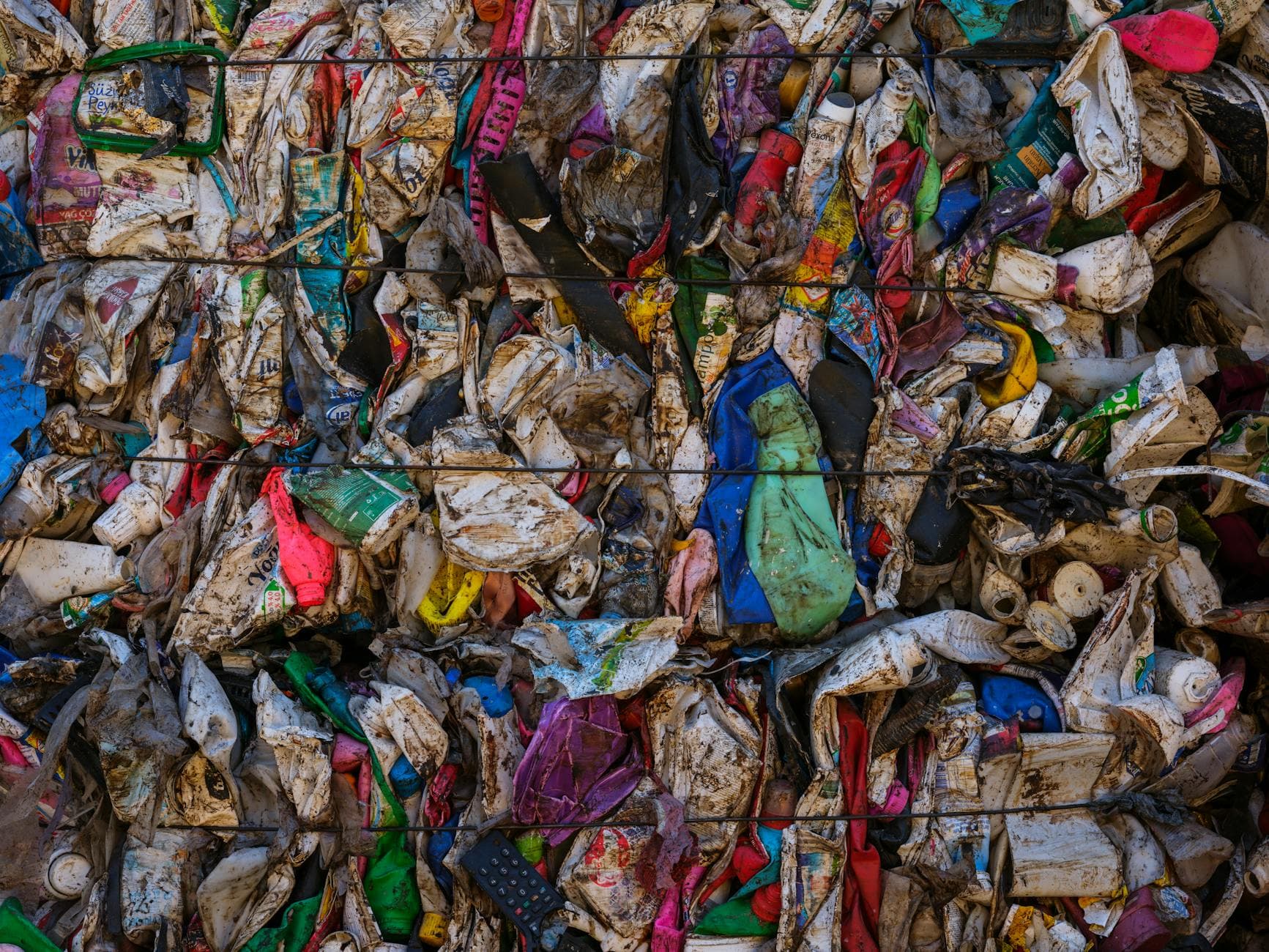
The catch is that bottle-to-garment recycling is not the same thing as textile circularity. Textile Exchange found that recycled polyester is still overwhelmingly made from plastic bottles, about 99 percent, while textile-to-textile recycling accounts for less than 1 percent of all recycled polyester. That means the system is still leaning on another industry’s waste stream rather than building its own loop.
For a shopper, that distinction is everything. A bottle repurposed into a pair of leggings is not useless, but it is also not a closed loop. It is downcycling with better branding, and the fashion industry has spent years turning that partial fix into a full moral story.
The scale problem no hang tag can solve
This is where the halo effect becomes misleading. Recycled polyester can reduce pressure on virgin plastic in a single product, but it does not solve the larger problem of fashion’s material appetite. Textile Exchange said the same basic pattern persisted in 2023, warning that continued reliance on virgin fossil-based synthetics could undermine climate goals.
The European Commission has put textiles in blunt terms: in EU consumption, they have the fourth-highest environmental and climate impact after food, housing, and mobility. Its EU Strategy for Sustainable and Circular Textiles, published on March 30, 2022, set the direction toward products that are durable, repairable, and recyclable by 2030. That is a different ambition from simply swapping one recycled content claim for another.
UNEP is equally direct. It describes the fashion and textile sector as a frontline issue in the triple planetary crisis of climate change, biodiversity loss, and pollution and waste. The language is stark because the stakes are real: the industry is not just sorting trash more cleverly, it is trying to slow a system that keeps generating too much of it.
Why recycling is still stuck at the bottle stage
If the answer were only technical, the industry would have solved this by now. Bottles are relatively uniform, which makes them an easier feedstock than mixed textile waste. Clothes arrive with dyes, blends, trims, finishes, and construction details that do not behave as neatly in recycling streams, and that complexity is exactly why textile-to-textile systems remain limited.
Textile Exchange’s numbers make the bottleneck visible. Systems for textile-to-textile recycling are in development, but they still account for less than 1 percent of recycled polyester. That tiny share is the real story behind many recycled leggings: the market is still using one product category, plastic packaging, to green another, apparel, because the infrastructure for clothing-to-clothing recycling is not yet scaled.
The Ellen MacArthur Foundation has argued that a circular fashion system has to do more than divert waste. It must eliminate waste and pollution, circulate products and materials at their highest value, and regenerate nature. The foundation has also made the policy case for extended producer responsibility, or EPR, as part of the solution, because private branding alone cannot build public infrastructure.
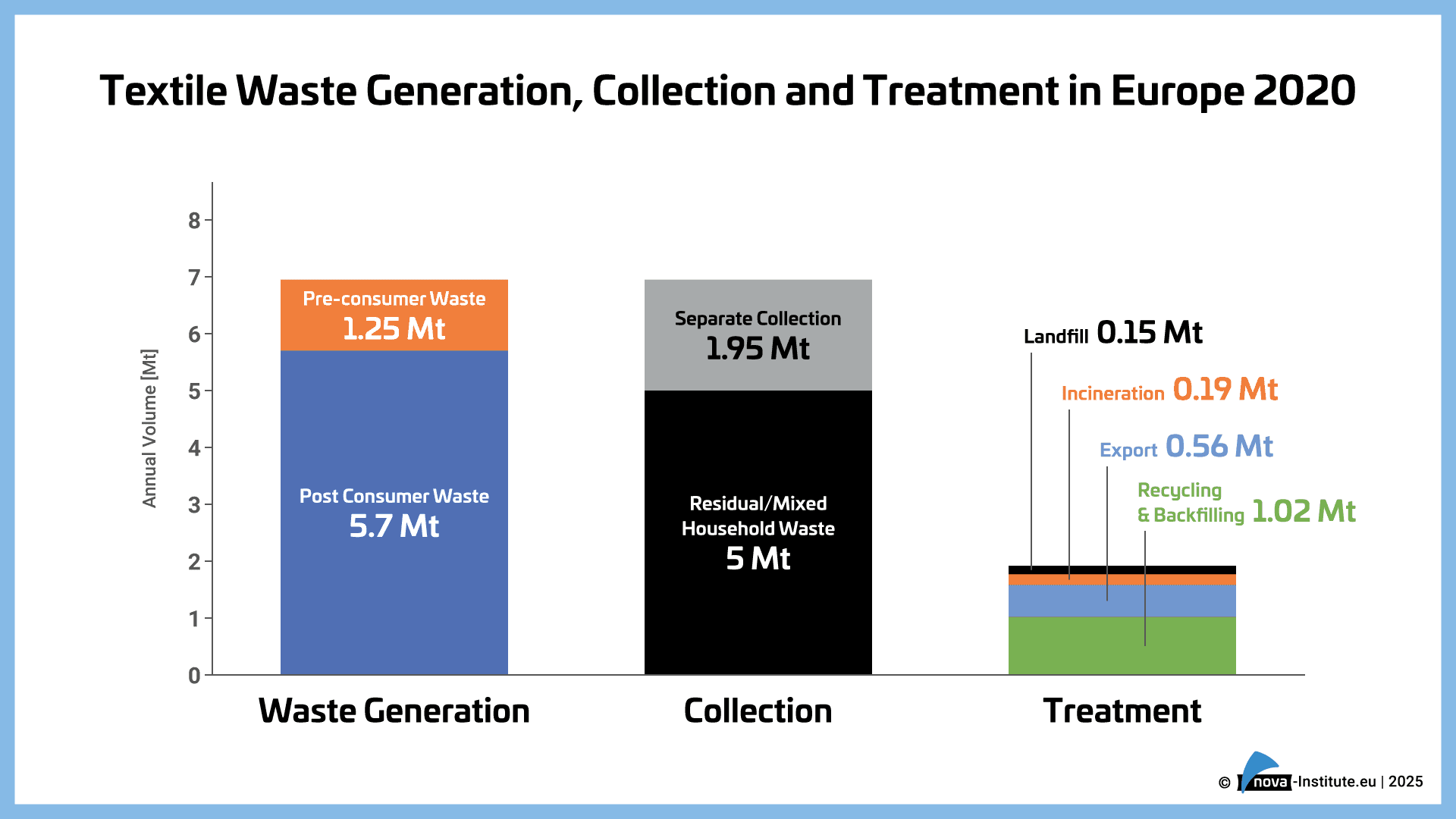
A 2024 presentation from the foundation made the scale of the disposal problem hard to ignore. About 12 million tonnes of textiles are placed on the EU market each year, more than 8 million tonnes end up incinerated or landfilled, and 4 percent to 9 percent of textiles sold in Europe are destroyed before use. Those are not symptoms of a nearly circular system. They are evidence of a system still designed to extract, sell, and discard.
What green marketing leaves out
This is why recycled polyester has become such a useful greenwashing risk. FashionUnited flagged the problem in 2024: when brands overstate the circularity of recycled polyester, they blur the line between incremental improvement and true system change. The result is a cleaner-looking garment tag that can make the shopper feel better while the industry keeps operating on the same fossil-based logic.
That critique is not theoretical. The Conversation has pointed out that brands such as H&M and Cotton On have used recycled polyester in sustainability initiatives, yet most clothing is not designed to be recycled and the industry still lacks the infrastructure for true circularity. A recycled-strap tank or a high-stretch legging may feel like progress, but if the next step is landfill or incineration, the circle never closes.
That is the part many wardrobes still hide. The most important question is not whether a legging contains recycled content, but whether it was designed for a second life, and whether the system exists to give it one.
How to read a recycled legging more honestly
- Treat “recycled polyester” as a material signal, not a circularity guarantee.
- Look for transparency on where the recycled content comes from, bottles or textiles.
- Favor garments built for durability and repair, because longevity is still the simplest form of sustainability.
- Be skeptical of claims that imply a closed loop when textile-to-textile recycling remains tiny.
- Read the policy backdrop too: if brands are not supporting infrastructure, EPR, and design for recyclability, the tag is doing more work than the supply chain.
The most fashionable sustainability story is still the least glamorous one: building the factories, policy tools, and collection systems that can move clothing from one garment to another without detouring through plastic bottles first. Until that exists at scale, recycled-polyester leggings will remain what they are now, an improved material in a still-imperfect machine.
This article was produced by Prism’s automated news system from verified source data, official records, and press releases, then run through automated quality and moderation checks before publishing. The system is built and supervised by the people who set the standards it runs under. Read our full AI policy.
Did this article answer your question?