Kappahl doubles circular revenue, cuts emissions 30 percent from 2022 baseline
Kappahl’s circular revenue jumped 102 percent, but the company still calls it a small slice of turnover. Its emissions cut looks real, yet the scale question is still the whole story.
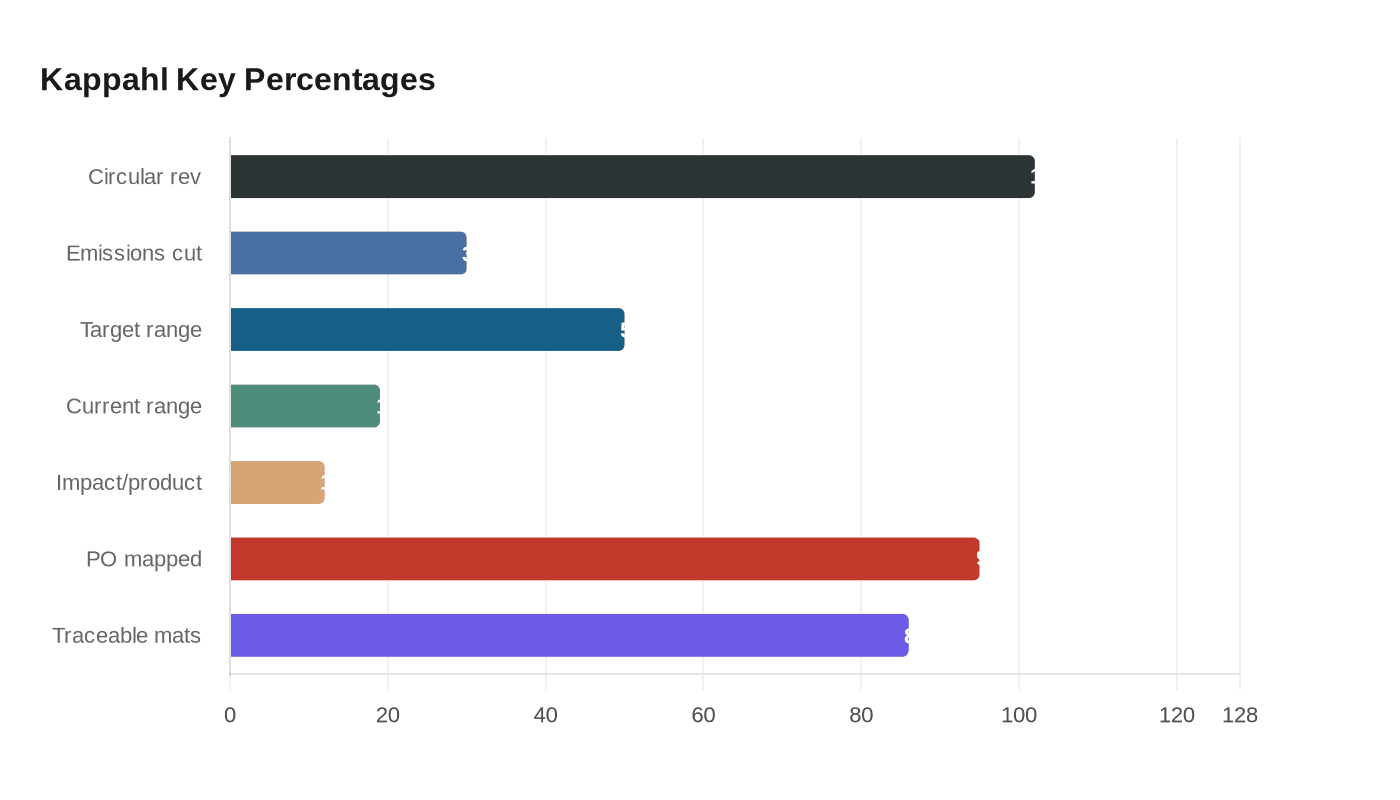
Kappahl has found the sweet spot every sustainability-minded fashion group wants and almost nobody can prove at scale: circular revenue surged 102 percent, while climate emissions fell 30 percent versus its 2022 base year. The problem is right there in the fine print. Kappahl still says circular business is a small share of turnover, which makes the headline less a victory lap than a test of whether resale can ever matter as much as selling new clothes.
Kappahl describes that circular figure as net revenue from circular business initiatives, and the company’s own website shows how hard it is trying to push the model beyond a side project. By 2026, it wants at least half of its range to be made for a circular economy; its target page says it is currently at 19 percent. That 30 percent climate number also sits alongside a separate 12 percent improvement in average climate impact per product sold in 2025, so the report reads like a base-year emissions cut, not just a cleaner-per-garment intensity move. Kappahl says 2022 is the baseline because its targets were validated by the Science Based Targets initiative.
That’s why the peer comparison matters. H&M Group, which is far larger, said resale across Sellpy and its brands reached 0.8 percent of turnover in 2025, and that share rose 31 percent from the year before. Kappahl, by contrast, expands the narrative without giving readers its own percentage, only saying the circular business remains small. It has broadened second-hand and other circular services to around 100 stores and built a consumer-to-consumer channel with reCRQL, but the scale still looks like a pilot fleet, not the main engine.
The company has been laying track for years. Founded in 1953 in Gothenburg and now operating around 340 stores in Sweden, Norway, Finland, Poland and the UK, with online sales in more than 20 markets, Kappahl has also spent on traceability and logistics. In 2025, 95 percent of purchase orders were mapped back to fiber level through TrusTrace, and Kappahl said 86 percent of garments were made from certified and/or traceable materials in 2024. A new automated distribution centre in Arendal is scheduled to open in autumn 2026, a reminder that the real growth story is still built on moving more product, faster, even as the brand tries to make fashion feel less disposable.
This is the sharp edge of Kappahl’s report: it is clearly moving, and the numbers are not soft. But a 102 percent jump on a small base is not the same thing as circularity becoming core, and that gap is exactly where the industry still has to do the hard work.
This article was produced by Prism’s automated news system from verified source data, official records, and press releases, then run through automated quality and moderation checks before publishing. The system is built and supervised by the people who set the standards it runs under. Read our full AI policy.
Did this article answer your question?


