Biomimicry and bio-sourced materials shape future of sustainable winter wardrobes
Mycelium, bacterial cellulose and microbial cellulose are moving biomimicry from fantasy to sourcing reality, while algae and runway experiments still read like mood, not mass market.
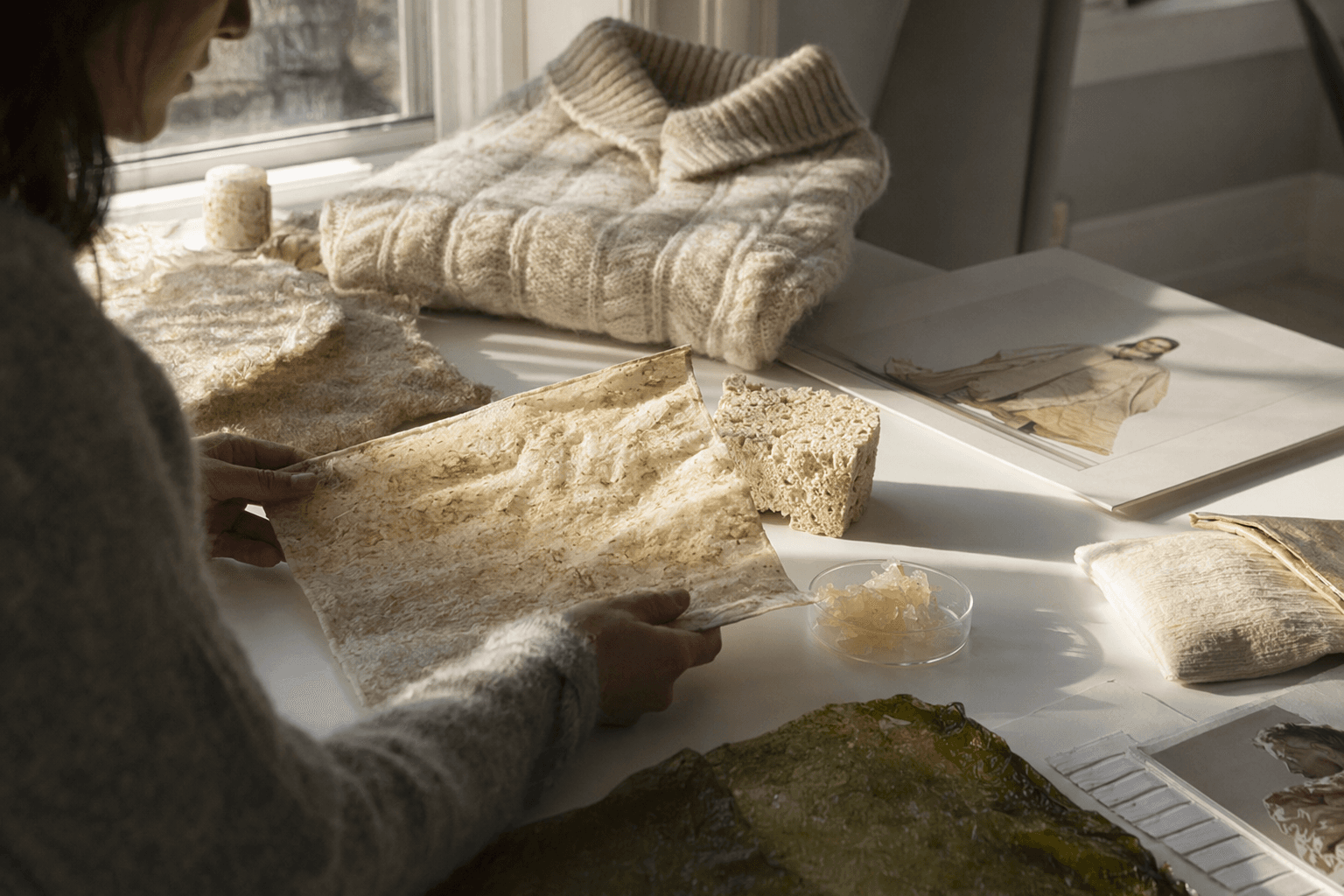
The winter materials race is no longer about pretty theory
Première Vision Paris dropped its Autumn-Winter 26-27 preview at the September 16 to 18, 2025 trade show in Paris, and the most interesting thing in the mix is not a silhouette. It is the material logic underneath it. The season is built around three scenarios, New Dynasties, Ego-Eco and Territories of Expression, but the one that actually feels like it could change what gets made is EGO-ECO: a program centered on well-being, protection and regeneration.
That matters because winter clothing is where fashion either proves its usefulness or exposes its waste. Coats, shells, linings and knit layers are supposed to protect the body, so they are the perfect place for a quieter kind of innovation, one that moves beyond gimmick and into the supply chain.
EGO-ECO is the cleanest read on where sustainability is headed
Première Vision’s EGO-ECO framing is not just about looking soft and technical at the same time. It puts sensory materials, soothing technologies and bio-innovations at the center of a wardrobe that is meant to feel gentle, adaptive and sustainable. The language around protection is especially sharp: protection of human health and skin, buffering pollution and sensory overload, and safeguarding natural ecosystems in production processes.
That is the right mindset shift. Sustainable winter dressing is not only about recycled fibers or muted colors. It is about whether a fabric can do the work of insulation, shielding and comfort without leaning on the usual high-impact baggage. If a material can hold structure, wear well and carry a better footprint, it has a real shot at crossing from concept into commercial use.
The materials closest to scale are the ones with names you can actually remember
This is where biomimicry stops being an abstract moodboard word and starts sounding like sourcing. FashionUnited points to three concrete examples that have moved from prototype territory toward more functional options: Reishi® by MycoWorks, a mycelium-based biomaterial; Celium™ from Polybion, a bacterial-cellulose material; and Nullarbor™ from Nanollose, a microbial-cellulose fiber.
That cluster matters because it shows where the market is finding traction. Mycelium, bacterial cellulose and microbial cellulose are not just nature references pasted onto a concept sketch. They are process-led materials, which is exactly what brands need if they want to build something repeatable rather than theatrical. The cleaner the material story, the easier it becomes to buy, verify and scale it.
There is also a real fashion case study here: Ganni worked with Polybion on a bio-leather blazer made entirely from Celium™. That is the kind of application that actually makes sense for winter wardrobes, because tailoring needs body, clean edges and a believable hand. A blazer is not a laboratory object; it is a wardrobe staple. If a bio-based material can survive that category, it has a future.
The runway can still dream, but it is not the same as adoption
Iris van Herpen has been experimenting with bio-sourced materials made from fungi, bacteria and algae, and that practice keeps biomimicry at the sharp end of fashion’s visual language. Her work matters because it shows what happens when designers let biology shape form, texture and movement instead of treating sustainability as a beige afterthought.
But there is a difference between a runway experiment and a material system built for commercial repetition. Algae, in particular, still feels more like an artistic signal than a mainstream winter wardrobe answer unless it comes attached to a verified production chain. The same is true for any bio-inspired surface that looks extraordinary but cannot yet survive the grind of volume, cost and consistency. The industry has seen enough beautiful dead ends to know that spectacle is not scalability.
The pressure to prove this is only getting stronger
The environmental numbers leave very little room for fluff. UNEP says the textile industry generates 2 to 8 percent of global greenhouse-gas emissions and uses 86 million Olympic-sized swimming pools’ worth of water every year. The Ellen MacArthur Foundation has spent years arguing that fashion needs to move out of its linear habit of overproduction and waste and into a circular system built on value and resilience.
Policy is tightening too. The European Environment Agency says EU member states must establish separate collection systems for used textiles from 2025. Then, in September 2025, the European Parliament gave final approval to revised waste rules aimed at reducing textile and footwear waste and making producers more responsible for end-of-life management. That is not background noise. That is a reminder that the era of vague sustainability language is closing fast, from Paris to Brussels.
What to look for if you want the real thing
A lot of brands are still going to wrap conventional product in nature-coded language. The trick is to separate storytelling from substance.
- Look for materials with specific identities, not just labels like “bio-inspired” or “nature-based.”
- Pay attention to where the material sits in the garment, because a bio-based shell, lining or trim says more than a vague marketing phrase.
- Favor names tied to actual production systems, like Reishi®, Celium™ and Nullarbor™.
- Treat strong design language as a bonus, not proof of lower impact.
The other two scenarios in Première Vision’s season preview still have a role. New Dynasties links cultural heritage with innovation to define winter silhouettes, while Territories of Expression focuses on emotion and sensoriality. But when the question is whether biomimicry is moving into commercially viable, lower-impact material adoption, EGO-ECO is the one with the most teeth.
The future of sustainable winter wardrobes will not be built on nature as an image. It will be built on nature as a method, with enough technical discipline to survive the market and enough restraint to outlast the trend cycle.
This article was produced by Prism’s automated news system from verified source data, official records, and press releases, then run through automated quality and moderation checks before publishing. The system is built and supervised by the people who set the standards it runs under. Read our full AI policy.
Did this article answer your question?


