Fashion climate fund still faces a huge capital shortfall
Fashion’s climate fund was built to unlock $2 billion. Four years on, the missing piece is still the same: capital that will back suppliers, not just slogans.

The cleanest seam in fashion’s climate story is still financing, and it has not been stitched up. Four years after the Apparel Impact Institute launched its $250 million Fashion Climate Fund at the Global Fashion Summit in Copenhagen, the industry still faces a stark capital shortfall even as emissions rise and suppliers remain stuck with the bill. Aii says the fund was designed to unlock up to $2 billion in blended capital and help cut up to 100 million tonnes of CO2 from the apparel supply chain by 2030. That ambition looks bold on paper. The money needed to make it real remains the harder problem.
The scale of the gap is visible in the emissions data. Aii’s 2025 analysis found fashion’s emissions rose 7.5 percent in 2023 to 944 million metric tons of CO2e, equal to about 1.78 percent of global greenhouse gas emissions. The group had previously estimated the industry emitted just under 1 metric gigaton of CO2e in 2021. Back in 2021, Aii and Fashion for Good put the decarbonization investment shortfall at more than $1 trillion, with more than 60 percent of that amount needed for existing solutions, not futuristic breakthroughs. The problem is not a lack of ideas. It is a lack of financing architecture that can move at the speed of the supply chain.
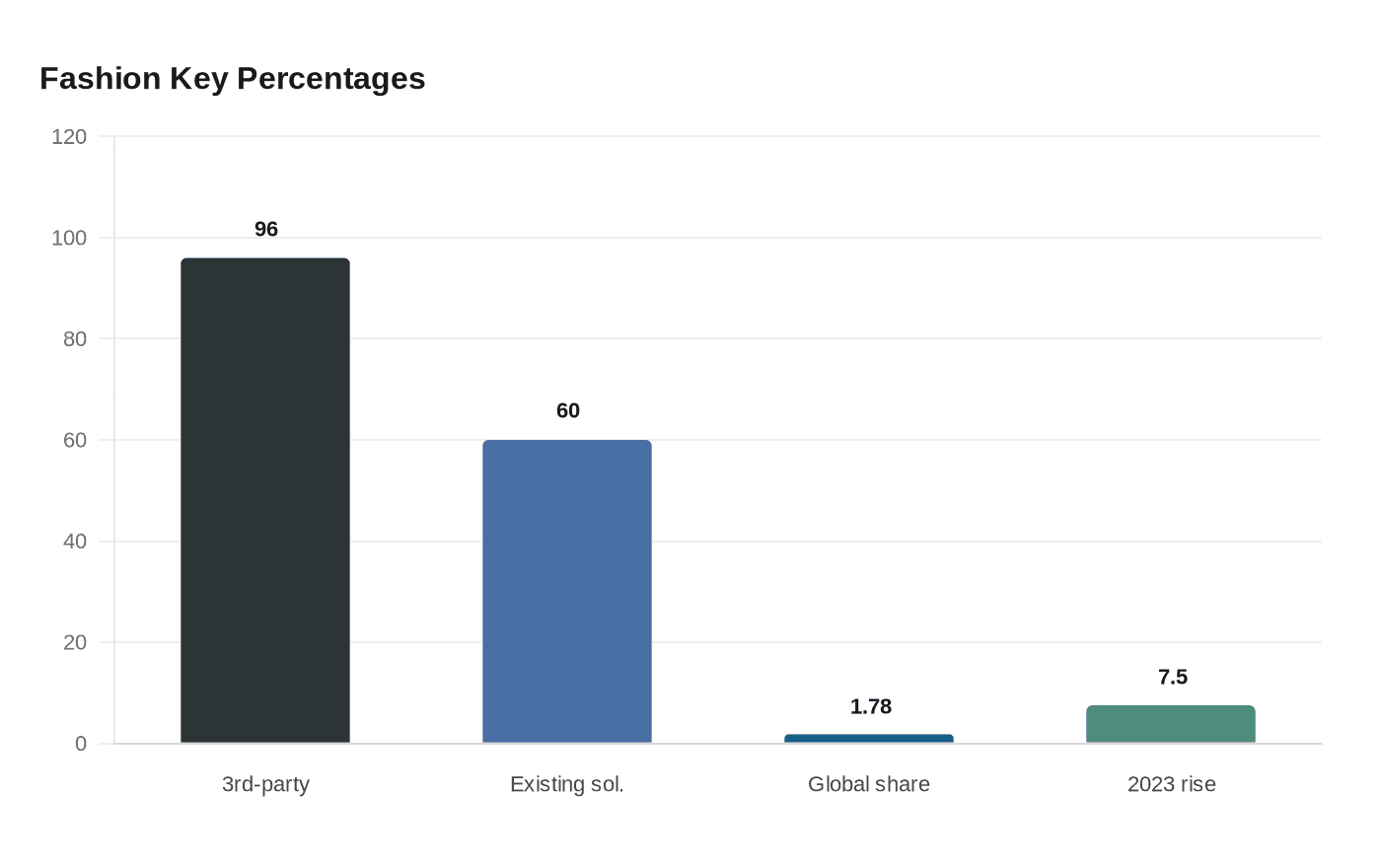
That is where the bottleneck gets ugly. Aii and the World Resources Institute say 96 percent of fashion emissions come from third-party farms and factories shared across brands, which makes them too risky for any single company or conventional lender to underwrite alone. Textile producers still face limited access to affordable capital, so Aii has leaned on first-loss provisions and loan guarantees to pull commercial lenders into the market. The fund can deploy up to $30 million a year, and by 2023 Aii said it had begun deploying capital through its Climate Solutions Portfolio, including first grant recipients. But $30 million a year is a small current in a sector that still needs a river.
The industry has also been forced to confront how unevenly the burden is being shared. H&M Foundation said in 2025 that suppliers face limited capital, technical constraints, and inconsistent access to clean energy solutions, while brands often demand emissions cuts without matching that pressure with payment. Its supported three-year supplier-led decarbonization initiative was said to target Tier 2 textile manufacturers in India, Bangladesh, China, and Vietnam, with 240 facilities already participating and a path toward 2,000 by 2030. H&M said 17 Green Fashion Initiative projects had been financed by January 2023, with a potential annual reduction of 50,000 tonnes of CO2 in its own supply chain and another 140,000 tonnes beyond it. The message is clear: fashion knows where the carbon sits. What it still lacks is a financing model willing to meet it there.
This article was produced by Prism’s automated news system from verified source data, official records, and press releases, then run through automated quality and moderation checks before publishing. The system is built and supervised by the people who set the standards it runs under. Read our full AI policy.
Did this article answer your question?


