British Startup Fibe Turns Potato Waste Into Low-Carbon Cotton Alternative
Fibe's potato-waste fibre Patacel uses 99.7% less water and 82% fewer carbon emissions than cotton, and it runs on existing spinning equipment.
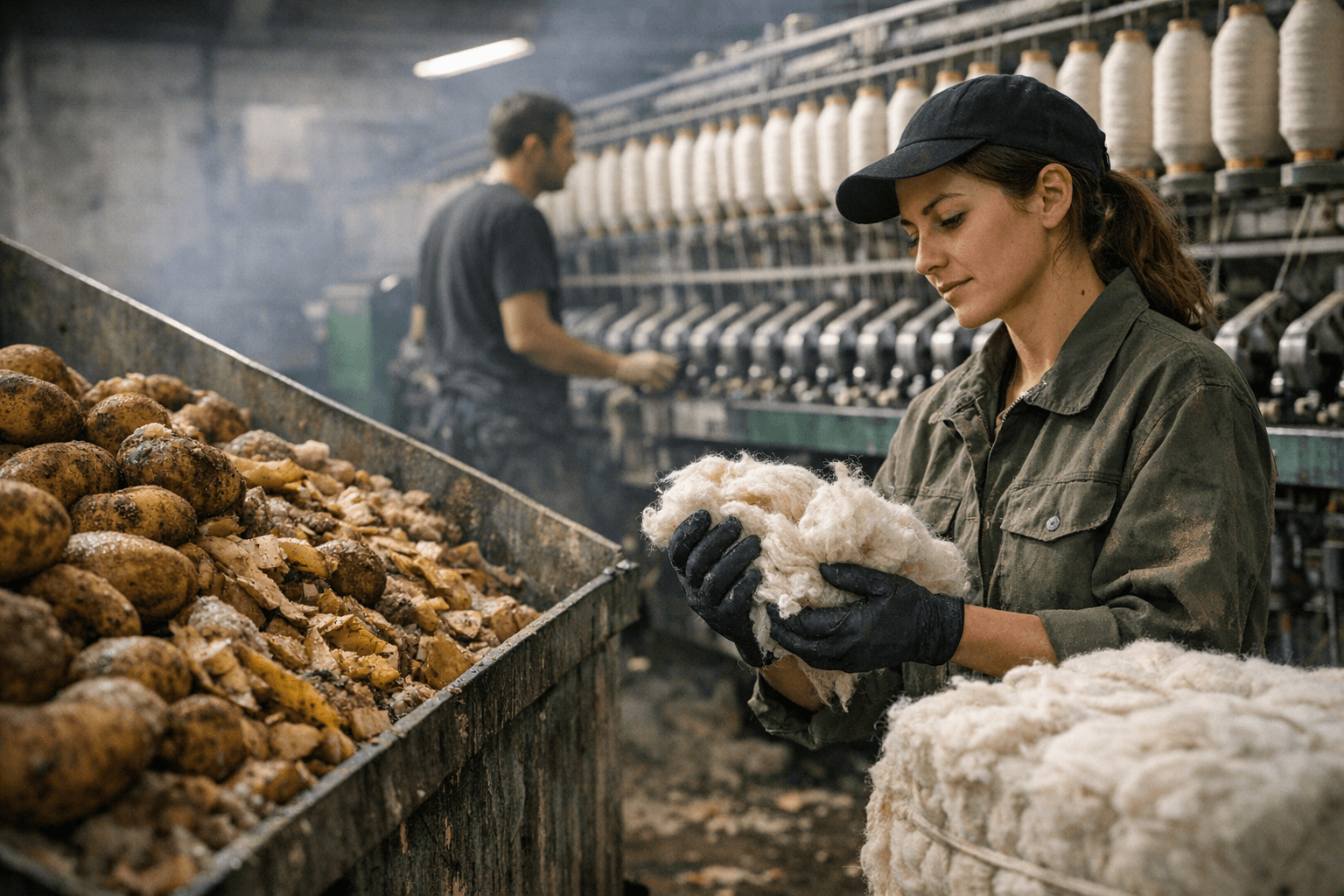
Every year, 150 million tonnes of potato plant stems and leaves get pulverised or incinerated because they're inedible and too risky to compost. London-based startup Fibe sees that number differently: as a feedstock. The company, founded in 2022 by Idan Gal-Shohet, David Prior Hope, Premal Gadhia, and Bianka Hazel Gonda, has developed a hybrid biological and mechanical process to extract spinnable cellulose fibres from that discarded agricultural mass, producing a material it calls Patacel, without the harsh chemicals that define most conventional fibre processing.
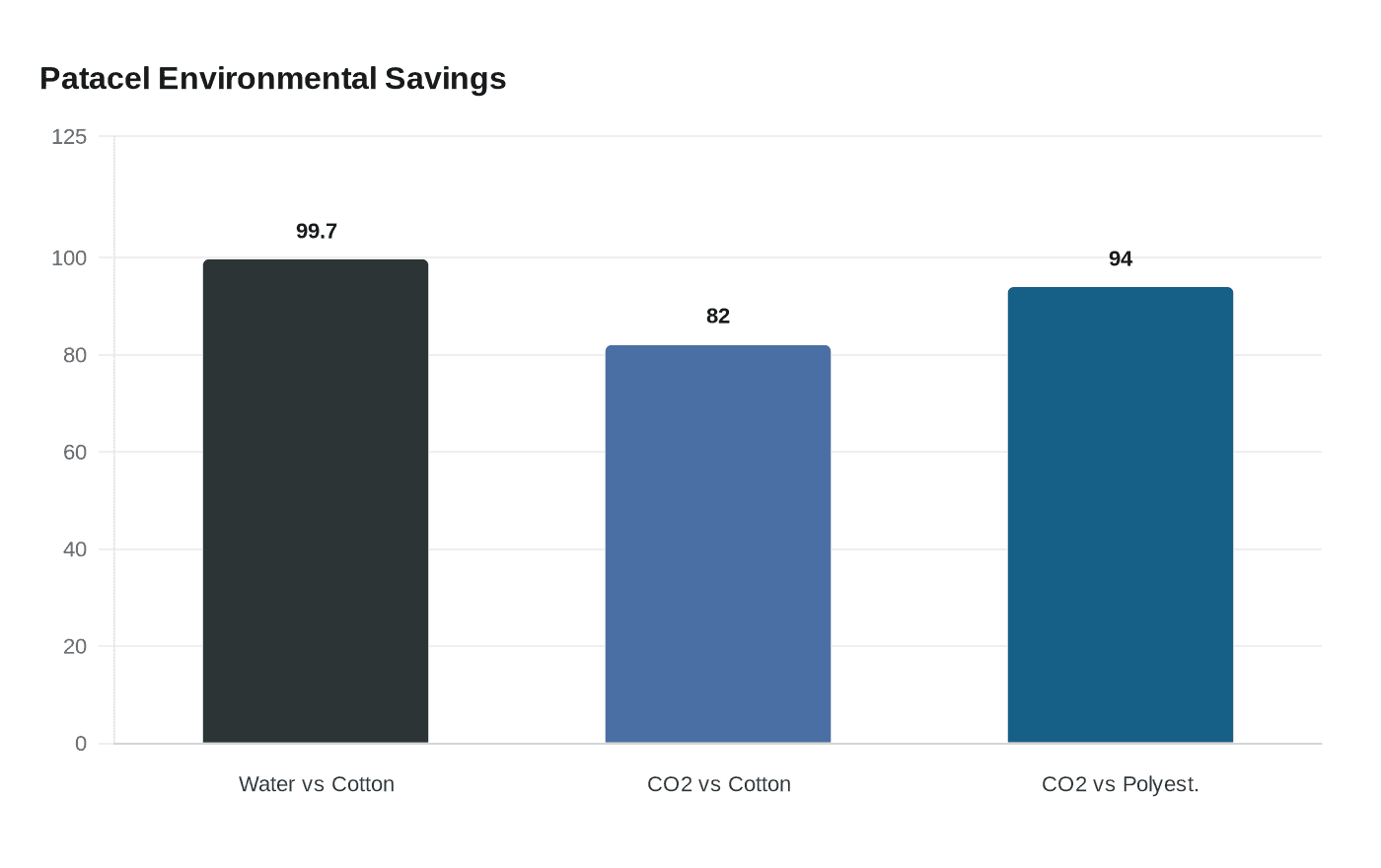
The numbers Fibe is putting forward are striking. Patacel requires 99.7% less water and emits 82% fewer carbon emissions than cotton across its life cycle, and because it draws from waste streams rather than dedicated cropland, it occupies no new agricultural land at all. Compared to polyester, the company claims 94% CO2e savings. Priced at roughly £40 per tonne of potato waste feedstock, the raw input is six times cheaper than conventional cotton, and Fibe calculates that compensating farmers for that waste could generate £1.3 million in farm revenue once the model scales.
What makes Patacel particularly interesting to brands right now is the "drop-in" argument. The fibre diameter sits close to cotton, outperforming bast fibres like hemp and linen on fineness, which means it can run on existing spinning and weaving machinery without significant retooling. Gal-Shohet, who studied Design Engineering at Imperial College London's Dyson School before co-founding Fibe, put it plainly: "Our proprietary, low-impact technology is the core advantage: it uses 99% less water and creates 82% less CO2 than cotton."
The company has attracted serious early backing. Innovate UK grants totalling £785,000 anchored initial development, and total investment including funding from Patagonia's venture arm Tin Shed Ventures has reached approximately $2.6 million. Fibe ranked 41st on the Startups 100 index for 2026, and the company is currently in talks with textile brands while working to establish a commercial pilot plant this year, with products targeted for market in 2026.
Real obstacles remain. Supply-chain logistics around collecting agricultural residue at scale, dyeing compatibility, and long-term performance testing under wash and wear conditions are all still being worked through. Gal-Shohet has acknowledged that Patacel will likely carry a price premium over conventional fibres early on, with cost parity dependent on production volume. The technology is still at pilot scale, and the jump to industrial processing is where most material innovations stall.
Still, the structural case for what Fibe is attempting goes beyond environmental virtue signalling. Major manufacturing hubs across Europe and Asia depend heavily on imported cotton, a commodity increasingly exposed to climate disruption, geopolitical friction, and water scarcity. A domestically sourced, waste-derived fibre that slots into existing mill infrastructure without a factory overhaul addresses a real supply-chain vulnerability, not just a sustainability checkbox. Whether Patacel can hold up through the scaling process is the question the next twelve months will answer.
This article was produced by Prism’s automated news system from verified source data, official records, and press releases, then run through automated quality and moderation checks before publishing. The system is built and supervised by the people who set the standards it runs under. Read our full AI policy.
Did this article answer your question?