Build a Lasting Wardrobe With Durable Fabrics, Care, and Repair
Fast fashion's hidden cost isn't the price tag — it's what gets thrown away. Choosing the right fabrics and knowing how to care for them changes everything.
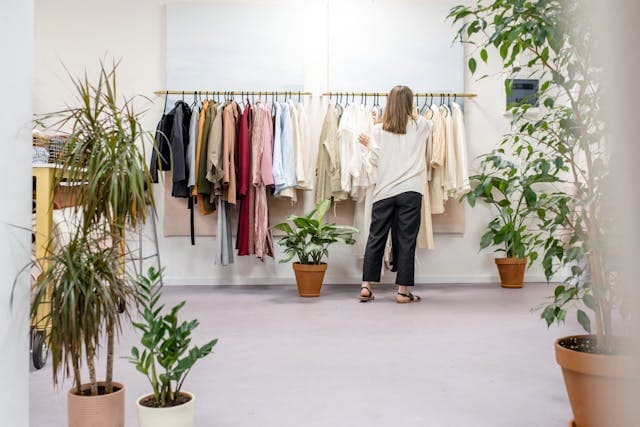
The average garment is worn seven times before it's discarded. That statistic sits uncomfortably against the ritual of a packed wardrobe and the nagging sense that there's still nothing to wear. Building a wardrobe that actually lasts requires shifting your focus from quantity to construction, from trend to texture, from disposal to repair. It's a more considered way of dressing, and once you learn to see clothes through this lens, you can't unsee it.
Start with the fabric
The foundation of any lasting wardrobe is fibre quality. Natural fibres, such as wool, linen, silk, and organic cotton, have been worn for centuries because they perform well, age gracefully, and biodegrade at end of life. Wool in particular is remarkably resilient: a well-maintained merino jumper can outlast a decade of synthetic alternatives that pill, bag, and fade within a season. Linen only improves with washing, softening without losing its structural integrity. These are fabrics that reward patience.
Certified recycled fibres are increasingly worth your attention too. Recycled polyester, when certified through established standards like the Global Recycled Standard (GRS), diverts plastic from landfill while still delivering the durability and moisture-wicking performance that makes synthetics so prevalent in activewear and outerwear. The distinction matters: not all recycled or sustainable claims on labels are equal, and learning to read certifications is as important as reading the fabric content itself.
What to look for when evaluating fibre content:
- Organic cotton certified by GOTS (Global Organic Textile Standard), which covers both environmental and social criteria
- Wool certified by the Responsible Wool Standard (RWS) for animal welfare and land management
- Recycled synthetics carrying GRS certification from Textile Exchange
- Linen and hemp, which require minimal pesticide input and have naturally strong fibre structures
- Lyocell (often sold as Tencel), a wood-pulp-derived fibre produced in a closed-loop water system
Construction is as important as content
A beautiful fabric can be undone by poor construction. When you're examining a garment, turn it inside out. Seam allowances should be generous, at least 1.5 centimetres, giving a tailor room to let pieces out or take them in as your body or preferences change. Flat-felled seams, the kind you see on the interior of well-made denim, lie flat and resist fraying without any additional finishing. French seams, common in fine shirting and silk blouses, encase the raw edge entirely for a clean, reinforced finish.
Look at buttons and buttonholes with the same scrutiny. Buttons sewn with a thread shank (a small loop of thread between the button and fabric) have room to pass through a buttonhole without straining the attachment point. Buttonholes should be tightly stitched with no loose threads. On knitwear, check that the pieces are fully fashioned, meaning shaped during the knitting process rather than cut from a flat panel and sewn together. Fully fashioned construction produces a more precise fit, less yarn waste, and a garment that holds its shape under repeated wear.
Stitching density matters too. A higher stitch count per inch means finer, more even tension across the seam, which distributes stress more effectively and extends the life of the join. This is particularly important on high-stress points: underarms, crotch seams, waistbands, and the points where handles meet a bag body.
Care is where most wardrobes go wrong
The vast majority of a garment's environmental footprint, some estimates place this at around 80 percent for cotton T-shirts, comes from consumer care rather than production. That means the decisions you make at the laundry basket matter enormously. Washing at 30 degrees rather than 60 uses significantly less energy and is sufficient for most everyday garments that aren't heavily soiled. Reducing wash frequency altogether, by spot-cleaning and airing garments between wears, extends fibre life noticeably.

A few practices that make a measurable difference:
- Wash dark and delicate garments inside out to reduce surface abrasion and colour fading
- Use a mesh laundry bag for synthetics to capture microfibres before they enter the water system
- Skip the tumble dryer when possible; heat degrades elastic fibres and shrinks natural ones over time
- Store knitwear folded rather than hung to prevent shoulder distortion
- Cedar blocks or lavender sachets deter moths in wool and cashmere storage without the toxicity of mothballs
- Steam rather than iron where possible; direct heat can scorch and flatten natural fibre textures
Dry-clean only labels deserve a second look. Many garments marked this way can, in fact, be hand-washed gently in cool water with a specialist detergent, wool wash solutions like Eucalan or Soak are particularly good, without damage. Dry-cleaning solvents, particularly perchloroethylene, are chemically aggressive and best reserved for structured tailoring where pressing and reshaping after cleaning is genuinely necessary.
Mending as a skill, not a compromise
The shift toward repair is perhaps the most radical aspect of building a lasting wardrobe, because it requires letting go of the idea that a worn or damaged garment is a lesser one. A well-placed darn, a replaced button, a reinforced pocket lining: these are marks of a garment that has been lived in and valued.
Basic mending skills are worth acquiring even if you're not naturally handy with a needle. Visible mending, a technique that uses contrasting thread or decorative stitching to repair holes or worn patches, has moved from folk tradition into contemporary fashion; designers including Boro-influenced labels and independent labels working in Japanese sashiko traditions have made patching and stitching a deliberate aesthetic. A worn elbow on a blazer, rather than being a reason to donate, becomes an opportunity for leather or suede elbow patches, a detail that traditionally signalled long use and good taste.
For repairs beyond your own skill level, the alterations and repair economy is expanding. Many dry cleaners offer basic mending services, and specialist repair services, some operating as mail-order operations, now handle everything from reweaving moth damage in cashmere to replacing zips on performance outerwear. The cost of a repair is almost always a fraction of a replacement, and the garment you return to often fits more reliably than anything new would.
The longer view
A wardrobe built on durable fabrics, sound construction, careful maintenance, and a willingness to repair is not a wardrobe of deprivation. It is, if anything, a more visually coherent and personally meaningful one. The pieces you know by their weight and drape, the linen shirt that's spent four summers softening, the wool coat that's been resoled and relined because it fits too well to replace: these are clothes with a genuine relationship to the person wearing them.
The fashion industry will continue to produce novelty at speed. Choosing to invest in fewer, better things is its own quiet form of resistance, and it tends to produce a wardrobe that looks considerably more intentional than one assembled from seasonal impulse.
This article was produced by Prism’s automated news system from verified source data, official records, and press releases, then run through automated quality and moderation checks before publishing. The system is built and supervised by the people who set the standards it runs under. Read our full AI policy.
Did this article answer your question?


