California Textile EPR Needs Funding to Make Reuse Work at Scale
California’s textile EPR law is real, but reuse will only scale if the state funds the gritty middle: collection, sorting, grading, logistics, and end markets.

Policy without a physical system is performance art, and California’s textile EPR rollout is about to find out if it can survive contact with the warehouse floor. SB 707 sounds clean on paper, but the whole thing rises or falls on the unglamorous work of getting worn clothes out of closets, into the right bins, through sorting lines, and into markets that can actually use them again.
What SB 707 really changes
Governor Gavin Newsom signed the Responsible Textile Recovery Act of 2024 on Sept. 28, 2024, and it is widely described as the first textile extended producer responsibility law in the United States. That matters because it shifts responsibility upstream, forcing producers of apparel and certain textile products to form or join a Producer Responsibility Organization to run the system instead of leaving cities, charities, and recyclers to absorb the mess.
The law is not just about collecting castoffs. The required plan has to cover collection, transportation, repair, sorting, recycling, and safe end-of-life handling for apparel and textile articles. CalRecycle also says the program has to include incentives and grants for reuse, repair, and recycling infrastructure, which is the part that separates real policy from a glossy promise.
The real bottleneck is not the law, it is the pipeline
Everyone loves the word reuse because it sounds elegant, circular, and brand-safe. But reuse only works if the system can capture enough material in a condition that is actually wearable, repairable, or resellable. That means collection sites that people will use, transport that is cheap enough to move low-value material, sortation that can separate good from bad fast, and grading systems that do not collapse under volume.
California’s own timeline shows how tight the window is. PRO applications were due Jan. 1, 2026, CalRecycle was slated to approve a PRO in March 2026, and producers must join by July 1, 2026. That is not much time to build a functioning textile recovery machine in a state that generates mountains of fashion waste and has never had a mature statewide system for routing it back into commerce.
The state has to spend on the boring stuff first: collection networks, sorting capacity, grading labor, logistics, and markets for the output. If the funding skews too heavily toward compliance paperwork and not enough toward physical infrastructure, the program will mostly move materials around before sending them right back to landfill or downcycling.
Reuse is the highest-value lane, but only if it can move at scale
Reuse is the sexy part of the circularity pitch, and for good reason. It preserves the most value, keeps more of the original garment intact, and avoids the energy burn of turning textiles back into fiber. In the near term, it is the clearest win California can chase, but only if the state can build enough capture and triage capacity to keep decent garments from being mixed with the junk.
That is where the real failure point lives. A cute local drop-off network does not solve the problem if the system cannot process the incoming volume, and a landfill-heavy textile stream does not magically become reusable because the policy says it should. The law’s grant and incentive language is useful precisely because it recognizes that reuse is infrastructure, not a vibe.
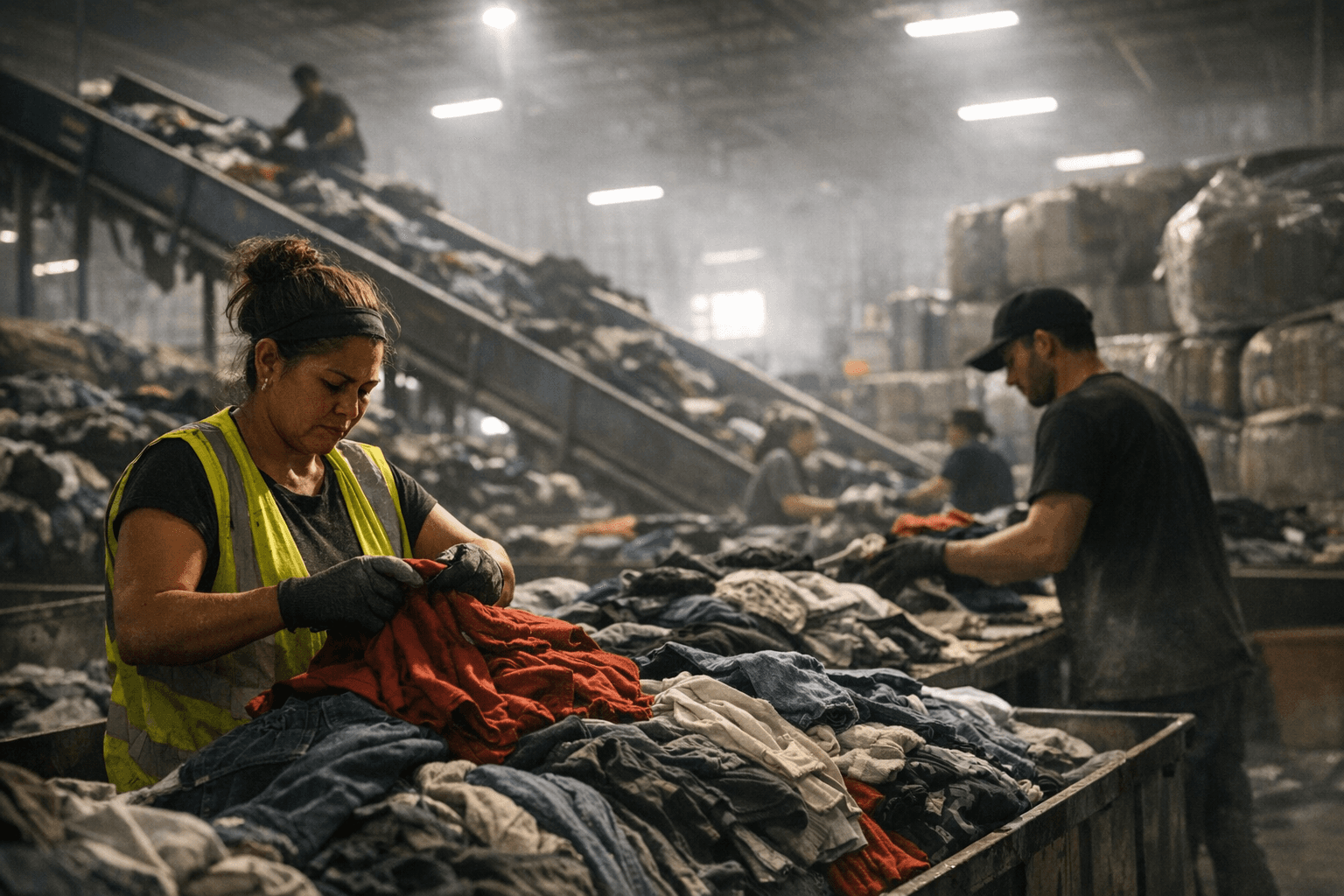
The hard truth is that every garment has to survive a chain of decisions before it gets a second life. Somebody has to collect it, move it, inspect it, sort it, grade it, and route it to the right downstream outlet. Miss any one of those steps and the system becomes an expensive detour to the dump.
The politics of the PRO are already messy
The implementation fight has started before the system is even running. Trade groups launched the Textile Renewal Alliance to support California textile EPR implementation and potentially serve as the Producer Responsibility Organization, while CalRecycle has designated Landbell USA as the PRO. The American Apparel & Footwear Association has already filed a legal complaint challenging that selection, which tells you exactly how much money and control are at stake.
That fight is not cosmetic. Whoever runs the PRO will influence how much money flows into collection, sorting, repair, recycling, and end-market development, and whether the system behaves like a true recovery engine or a narrow compliance program. When trade groups start organizing around the operator slot this early, it usually means industry understands the stakes even if the public still sees the law as abstract.
There is also a broader retail dimension here. The National Retail Federation and the California Retailers Association are part of the conversation around Textile Renewal Alliance, and that matters because retailers sit closest to consumer behavior. If the collection system is inconvenient, confusing, or underfunded, shoppers will not suddenly become better waste managers out of goodwill.
France shows what a mature system can look like
California is not inventing textile EPR from scratch, even if it is the first U.S. version to go this far. France launched its textile EPR system in 2007, and Refashion now runs it with producer fees that fund collection, sorting, reuse, recycling, communications, and research and development. That is the part California should be studying with a sharp eye, because the French model shows that EPR is not just about charging producers, it is about sustaining the whole recovery ecosystem.
The difference is in the plumbing. Refashion’s funding structure makes collection and downstream processing part of the system’s core budget, not a charitable afterthought. California will need that same discipline if it wants the law to do more than create a nicer-sounding version of the current waste problem.
The scale of the waste problem is not small
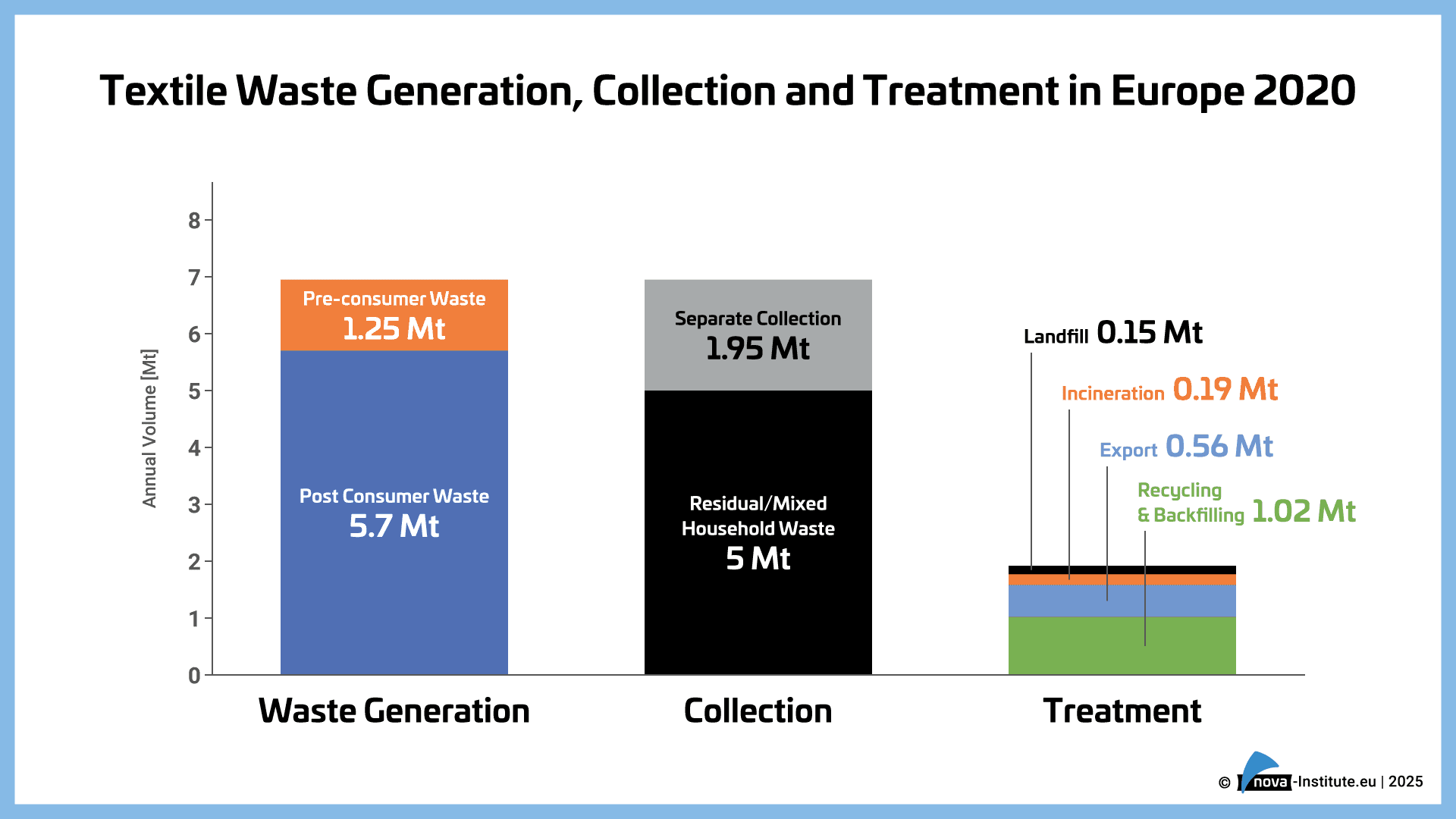
This is not a boutique issue. A report commissioned by USAgain estimated that Californians sent nearly 1.2 million tons of textiles to landfill in 2021 and spent about $99 million a year doing it. Those numbers are the blunt reminder that textile waste is already a large, expensive system, even before the state asks producers to help manage it differently.
That scale changes the conversation from virtue to infrastructure. California is not only trying to reduce waste, it is trying to build the collection and recovery backbone the U.S. textile sector has historically lacked. If the state funds the right pieces, SB 707 can move garments into reuse and recycling instead of trash. If it does not, the law will still exist, but the material reality underneath it will not change much at all.
The outcome will be decided by the least glamorous parts of the chain, and that is exactly why this policy is worth watching. In textiles, the future is not won on the runway. It is won in the sorting room, on the truck route, and inside the accounts that keep end markets alive.
This article was produced by Prism’s automated news system from verified source data, official records, and press releases, then run through automated quality and moderation checks before publishing. The system is built and supervised by the people who set the standards it runs under. Read our full AI policy.
Did this article answer your question?