Cambridge spinout Sparxell raises €4.2 million for plant-based dyes
Sparxell just raised about €4.2 million to turn plant-based colour into an industrial business, targeting dyes that shed synthetic chemicals and microplastics.

Colour is the hidden mess in fashion’s sustainability debate. Fibres get the headlines, but conventional dyeing is still tied to toxic chemistry, fading finishes and microplastics that linger long after a garment leaves the rail. Sparxell, the Cambridge spinout founded by Dr Benjamin Droguet and Professor Silvia Vignolini, is betting that the next big clean-up starts with what clothes look like, not just what they are made of.
The company raised €4.2 million, about $5 million, in pre-Series A funding to push its plant-based structural colour technology from pilot programmes toward tonne-scale production. SWEN Capital Partners’ Blue Ocean 2 fund led the round, with support from Alpha Star Capital and Cambridge Enterprise. Sparxell says the money will help it move toward industrial-scale manufacturing, certification and a commercial launch in 2026.
The pitch is straightforward and ambitious. Instead of conventional dyes, Sparxell uses cellulose derived from agricultural waste to create bioinspired structural colour, a method that relies on how light interacts with a molecular structure rather than on pigment chemistry alone. The result is designed to be biodegradable, free of toxins, and usable across pigments, glitters, sequins, films and foils. Cambridge sources say the materials contain no mica and no titania, a detail that matters in a category still dependent on mined inputs and chemical heavy lifting.
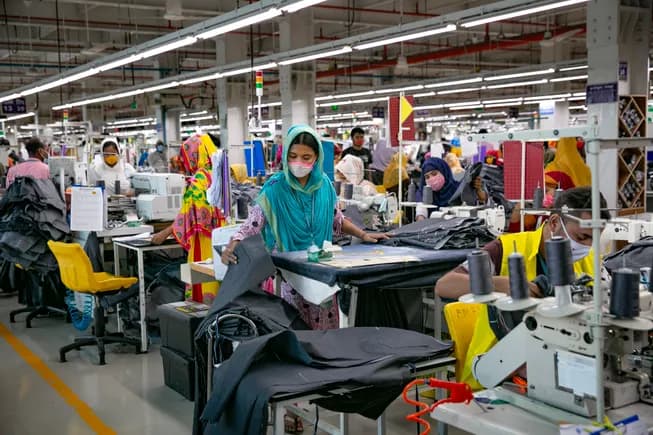
That puts Sparxell in a growing race to make colour cleaner without making it less useful. Fashion brands do not buy sustainability language alone; they buy shade consistency, production reliability and costs that can survive factory math. Sparxell’s test is whether its plant-based system can work on industrial machinery and hold up in real manufacturing, not just in the laboratory shimmer that makes every sustainable-material story look easier than it is. Droguet’s technology page shows the company is already leaning into that challenge, using industrial equipment to reproduce the vivid colours found in nature.
The company has already built momentum. It won a $100,000 Ray of Hope Prize from the Biomimicry Institute and was selected for the Morgan Stanley Sustainable Solutions Collaborative. A Cambridge case study said Sparxell was a 12-person company when it had already received $350,000 from Morgan Stanley’s initiative, a reminder that this is not a fresh concept suddenly emerging from nowhere, but a long research arc now trying to scale into a market Cambridge Enterprise values at $48 billion globally.
If Sparxell can get the cost, performance and manufacturing fit right, it could become more than a clever material story. It could help shift colour itself from fashion’s dirtiest invisible input into one of its most compelling sustainability upgrades.
This article was produced by Prism’s automated news system from verified source data, official records, and press releases, then run through automated quality and moderation checks before publishing. The system is built and supervised by the people who set the standards it runs under. Read our full AI policy.
Did this article answer your question?