Canada Goose brings fabric donations and sewing skills to Alaska Indigenous communities
Canada Goose sent 14,000 pounds of fabric and materials to Kotzebue and Nome, testing whether a sewing-based circularity model can travel beyond Northern Canada.
Canada Goose’s Alaska push asks a sharper question than most brand sustainability gestures do: can a Resource Centre built on fabric donations, sewing know-how and community access become a repeatable circularity model for remote Indigenous communities, or does it only work as a highly local, brand-controlled intervention? The answer is mixed. The materials move, the skills transfer, and the reach is real. But the system still depends on Canada Goose deciding what is donated, where it lands and who gets to use it.
The Alaska activation was the programme’s first location outside Canada. Canada Goose and Ryan Air brought 14,000 pounds of fabric and materials to Kotzebue and Nome, then paired the drop with a live sewing demonstration led by Inupiaq seamstress Precious Gray. The instruction was practical, not symbolic: participants followed the full making of a children’s parka, from pattern cutting and design through sewing, assembly and completion. That matters in fashion, where circularity often stops at the collection bin. Here, the intervention extended the life of surplus material by putting it back into circulation as wearable product, while also reinforcing local production capacity.
The Resource Centre Programme first launched in 2009, and Canada Goose says it has since delivered free fabric donations and materials to remote communities throughout Northern Canada. The company says the programme has supplied more than two million metres of fabric, along with buttons, zippers and trims, to more than a dozen communities, reaching tens of thousands of people. Since 2019, Canada Goose says it has hosted Resource Centre events across 20-plus Northern communities. Canadian North, one of the company’s long-time logistics partners, says the programme’s roots trace back to a 2007 visit by Inuit designers Meeka Atagootak and Rebecca Kiliktee, who asked to take scrap fabric home to Pond Inlet.
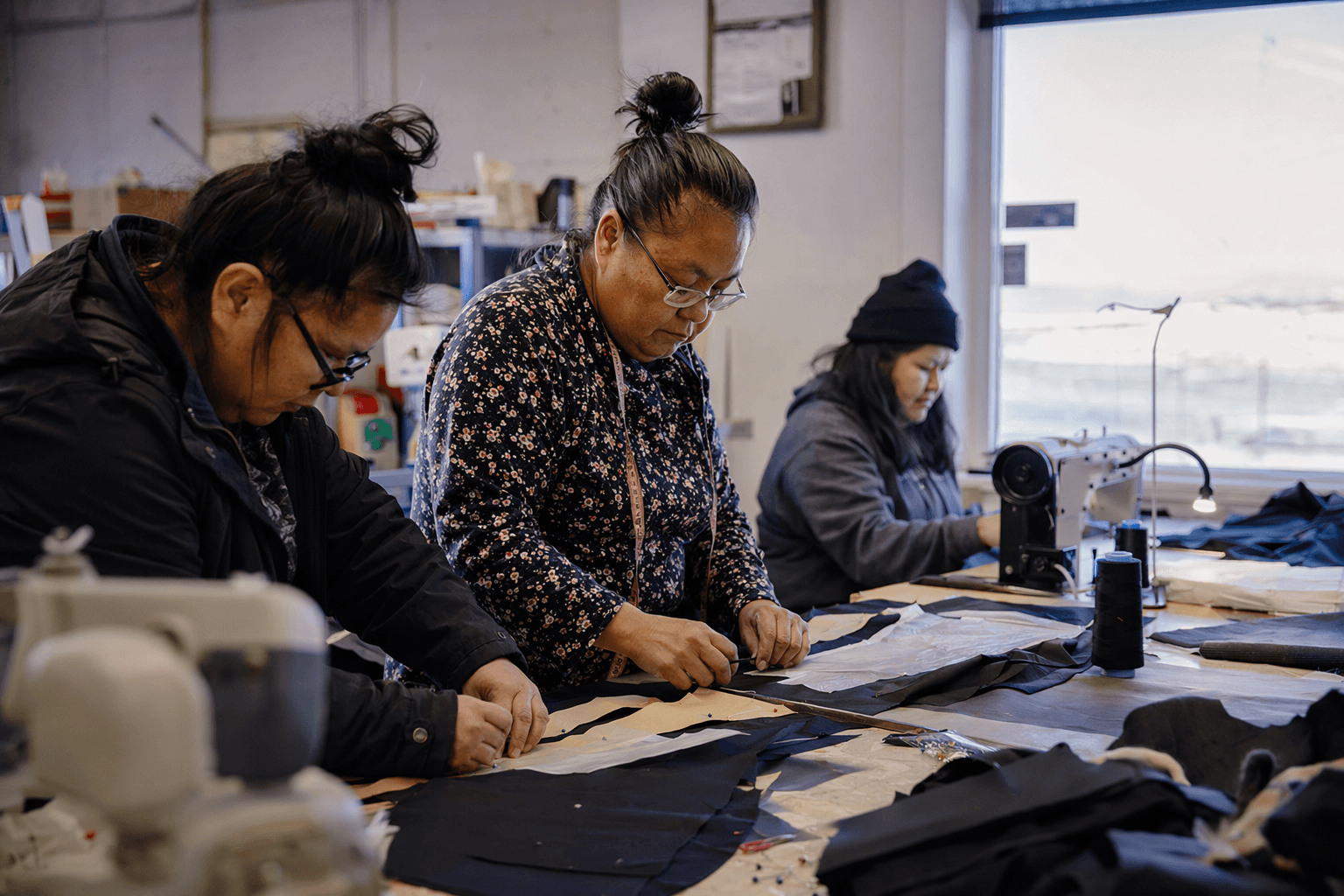
The scale is notable, especially for a program that deals in hard-to-move goods and remote logistics. Canadian North says Canada Goose has given away about 35,000 kilograms of Arctic Tech fabric in the North, enough for 17,500 parkas. At one Iqaluit event, the airline says 5,500 kilograms of material reached 500 people in just two hours. That kind of throughput suggests demand is immediate and deep, but it also shows how dependent the model is on brand supply and freight infrastructure.
Canada Goose broadened the programme in 2020 to include donations of repurposed parkas in Inuit Nunangat, alongside material donations. The company has also tied its sustainability strategy more tightly to circularity and traceability, and said its FY25 science-based climate targets were approved by SBTi in April 2025. Alaska makes the case that the Resource Centre is more than a feel-good surplus donation stream. It is a workable template for keeping fabric, skills and garment-making alive, though its real test will be whether other remote communities can inherit the model without relying on Canada Goose’s own logistics, inventory and oversight.
This article was produced by Prism’s automated news system from verified source data, official records, and press releases, then run through automated quality and moderation checks before publishing. The system is built and supervised by the people who set the standards it runs under. Read our full AI policy.
Did this article answer your question?


