Canvaloop Raises $1.43M to Turn Agri-Waste Into Textile Fibers at Scale
Canvaloop secured Rs. 13.3 crore ($1.43M) led by GVFL to scale agri-waste fiber output tenfold, from 30 to 300 tonnes a month within a year.
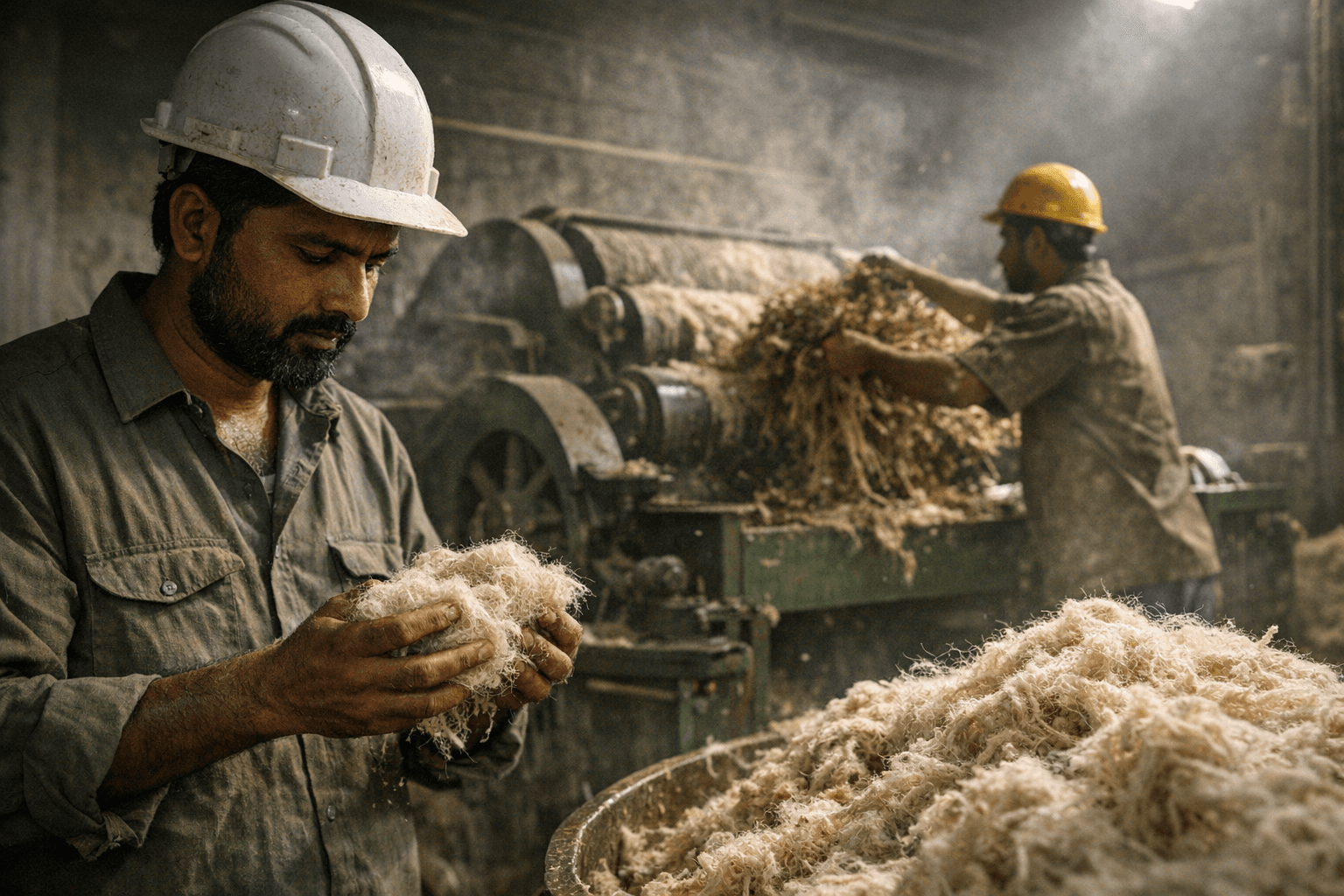
Canvaloop, a developer of textile-grade material from agricultural residue, has raised $1.43 million in funding led by GVFL in a round that positions the Surat startup as one of India's most credible bets on circular fiber technology. GVFL, an Indian venture capital firm, invested Rs. 10 crore (approximately $1.07 million), with Rockstud Capital contributing the remaining Rs. 3.3 crore ($356,000).
Founded in 2020 by Shreyans Kokra, Canvaloop develops spinnable fibres from crop residues including hemp, flax, banana, nettle and pine, under product names such as HempLoop, FlaxLoop, BanLoop, NettleLoop, and PineLoop. The company designs its materials to integrate with existing spinning mills, a deliberate engineering choice that removes one of sustainable fiber's most stubborn commercial barriers: the cost of retooling. A mill that already spins cotton can, in theory, run Canvaloop's fibers without capital overhaul.
Canvaloop plans to use the new capital to expand monthly production capacity from 30 tonnes to 300 tonnes and to advance research and development in regenerative cellulose. The company will also add team members to support growth. A tenfold output increase within six to twelve months is an ambitious target, but the company already has commercial traction to underpin it: Canvaloop has supplied more than 200 clients and reported revenue generation to confirm the commercial viability of its products.
The company targets premium and luxury market segments through proprietary processing that aims for consistent and cost-effective quality. That positioning matters. Sustainable fiber startups that chase volume at commodity price points routinely struggle against incumbent cotton and polyester. By anchoring in the premium segment, Canvaloop gives brands a quality-led reason to switch rather than an ethics-only one.
The process behind the product is notably clean. Kokra described it as a "climate-friendly, closed-loop process" that "eliminates the use of solvents, recycles water, and utilises bio-waste as a heat source." Kokra stated that the company's objective aligns with the textile and fashion industry's target to reduce greenhouse gas emissions from fibre and raw material production by 45% by 2030.
For investors, the strategic logic is clear. GVFL managing director Mihir Joshi said Canvaloop "exemplifies the scalable innovation Gujarat startups are delivering in deep-tech sustainability," adding that the firm is "excited to fuel their journey from a local waste-to-fibre pioneer to a global supply chain backbone." Rockstud Capital managing partner Abhishek Agarwal framed the investment around supply chain transformation, saying Canvaloop's work shows "how sustainability and industrial innovation can go hand in hand" and that "such solutions are vital for the shift to circular manufacturing in global supply chains."
Kokra is a fourth-generation textile and fashion entrepreneur, which gives Canvaloop an unusual edge among deep-tech founders: an inherited understanding of how mills actually buy, blend and spin. On the quest for an eco-friendly fabric, Kokra zeroed in on hemp because of its negative carbon footprint and biodegradability, while the bast fibre from its stem lends itself to scaling up in textile manufacturing. That material logic then extended outward to banana stems, flax straw, nettle and pine residues, each waste stream re-imagined as a fiber input.
Reaching 300 tonnes per month would signal a meaningful shift from niche supplier to credible volume player, the threshold at which global brands can begin treating agri-waste fiber as a default rather than a design story.
This article was produced by Prism’s automated news system from verified source data, official records, and press releases, then run through automated quality and moderation checks before publishing. The system is built and supervised by the people who set the standards it runs under. Read our full AI policy.
Did this article answer your question?


