Circular Fashion Studio Sugar on Top Weaves Jobs and Craft Revival in Bosnia
Sugar on Top is turning textile offcuts into dignified jobs for women artisans in Bosnia and Herzegovina, with IFC and EFSE backing a circular model that bets on craft over volume.
Small businesses generate nine out of ten jobs in developing economies. Sugar on Top shows what it takes to help them succeed. The Bosnian studio has built something quietly radical: a circular fashion model that converts textile waste into wearable product, revives traditional craft, and delivers stable income to the women who need it most.
A studio built to break the mold
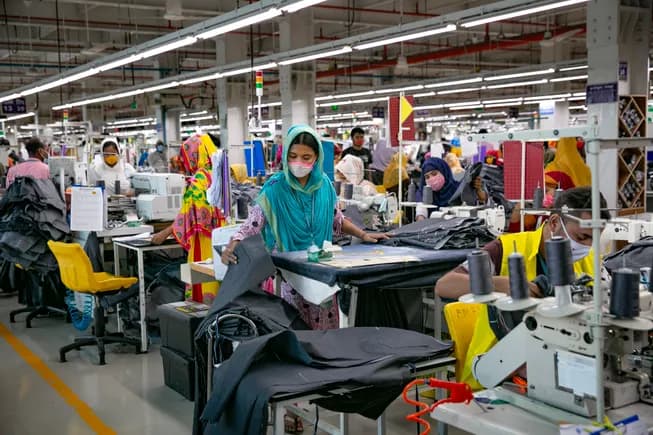
Sugar on Top d.o.o. is a pioneering micro-enterprise established to challenge the dominant lohn model in Bosnia and Herzegovina's textile sector. The lohn system, in which local factories operate almost entirely as low-margin subcontractors for foreign brands, has long defined the country's apparel industry. Most of the textile industry operates as subcontracted labor for foreign brands, leaving little room for local ownership or profit retention. Sugar on Top's answer to that trap is to go in the opposite direction entirely: with a strong focus on local design, sustainability, and value-added production, the initiative supports MSMEs and independent designers through tailored design and development services, facilitating the creation of high-impact, narrative-driven fashion products rooted in place, ethics, and circularity.
The studio also markets under the name Stribor, operating as Stribor by Sugar on Top d.o.o. Edina Hadzic, one of the key figures behind the venture, has framed the studio's ambition in terms that go well beyond fashion: "showing that small-batch, sustainable production can compete on quality rather than volume."
The circular model: waste in, craft out
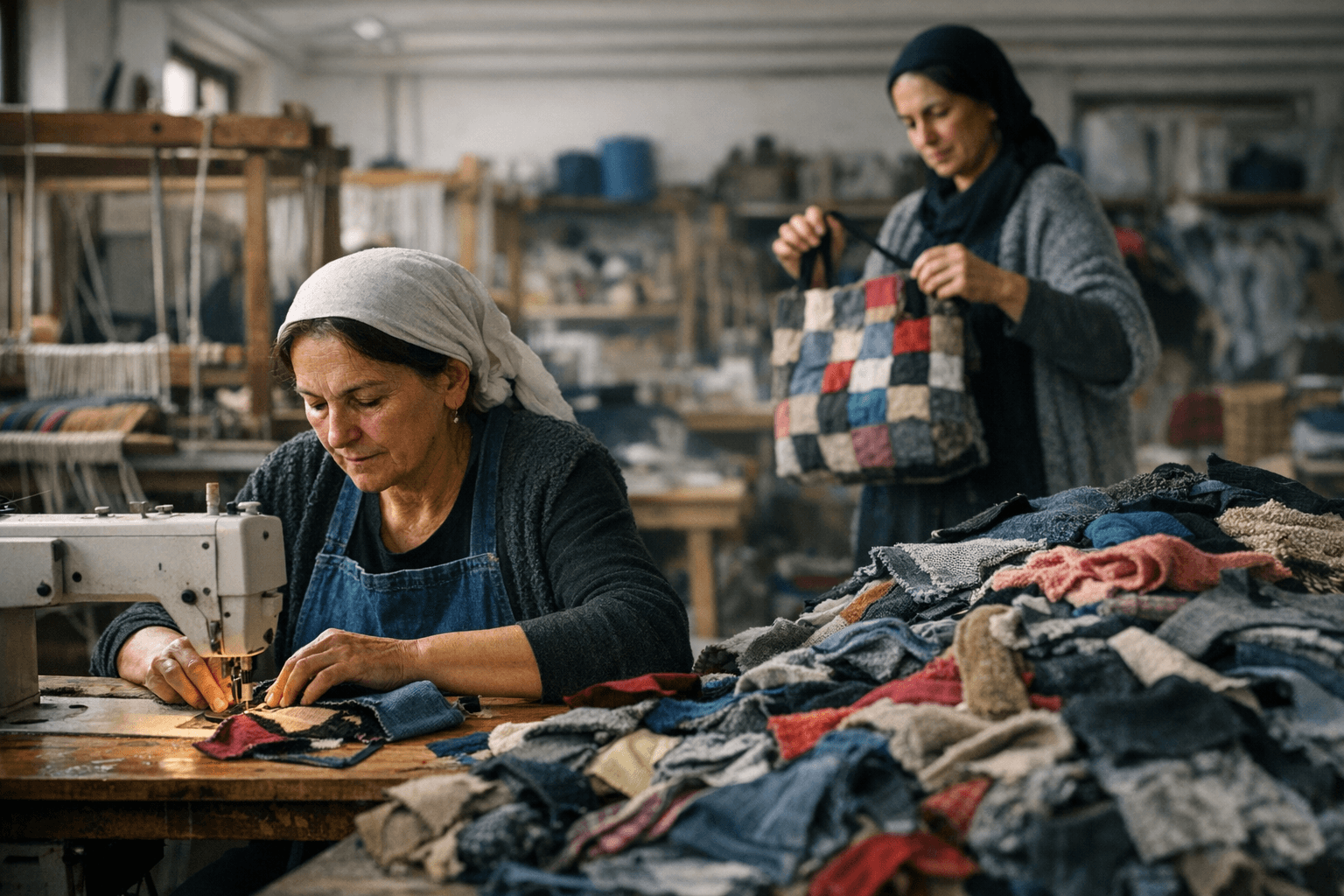
The production philosophy at Sugar on Top centres on three pillars that work together: small-batch production, offcut regeneration, and artisan skill revival. The production process is fully committed to waste minimisation. The studio utilises deadstock materials, surplus unused fabrics from previous production runs, and post-industrial textile waste, transforming them into valuable new products. This approach significantly reduces environmental impact while encouraging innovative design techniques such as patchwork, hand knitting, and upcycling.
Each garment is ethically produced in Bosnia and Herzegovina with care for the balance between quality and sustainability, producing clothes in small batches to avoid waste using 98% of the material. That figure alone tells you something about how different this studio's logic is from the cut-and-discard rhythm of conventional garment production. Fabric is not a cost to be minimised on a spreadsheet; it is a material to be used almost entirely, with what remains becoming the starting point for the next object.
Sugar on Top's "Go Green" initiative was implemented with the support of the Challenge to Change 2 project, which promotes sustainable socio-economic development and innovation among micro and small enterprises in Bosnia and Herzegovina. Through this project, the studio transformed textile waste from production into eco-friendly kitchen products, such as reusable alternatives to plastic bags and single-use items. These waste-to-product projects, run annually, demonstrate a methodical commitment to closing the loop rather than treating circularity as a branding exercise.
Women, craft, and the meaning of dignified work
The social architecture of the studio is as deliberate as its production model. The initiative provides employment opportunities for women from rural and economically marginalized backgrounds, offering them stable income and meaningful work. This is not incidental to the business model; it is structural. Through its inclusive model, the studio trains rural women in design-thinking, sustainable craftsmanship, and small-batch circular manufacturing.
The initiative creates stable, dignified jobs for women from rural and economically marginalized communities. Through employment, training, and participation in the creative process, they gain access to new economic opportunities, develop valuable skills, and become active contributors to the local economy. The phrase "dignified jobs" is doing real work here: it signals income that is not just survival wages, but work that carries creative participation and skills transferable beyond the studio walls.
The broader employment context sharpens why this matters. As Edina Hadzic noted publicly, "1.2 billion young people will enter the workforce in developing economies in the next decade, but far fewer jobs are expected to be created." Small enterprises, she argued, will carry much of the responsibility for absorbing that pressure, "yet many still struggle to access the financing and support they need to survive and grow." Sugar on Top is one concrete answer to that challenge.
Co-design as a growth engine
Sugar on Top's impact extends beyond its own production floor. The studio provides expert-led co-design and product development services tailored for micro, small, and medium enterprises as well as freelance designers. Through personalised guidance, technical support, and mentoring, the team helps shape unique collections that blend creativity with sustainability and circularity principles, with the goal of empowering these actors to create competitive products with strong narratives and clear environmental impact.
The studio supports MSMEs in transitioning from a purely service-based or lohn manufacturing model to developing their own locally designed and value-added products. This shift is economically vital in a country where most of the textile industry operates as subcontracted labour for foreign brands. By offering technical support, circular design expertise, and production services, Sugar on Top helps build a stronger, more self-sustaining domestic fashion ecosystem.
The initiative is led by a small multidisciplinary team within Sugar on Top, with a strong emphasis on strategic collaboration with independent designers. A multidisciplinary team of designers, circular economy experts, technologists, and artisans dedicates time and knowledge to methodology development, co-creation processes, and product innovation.
IFC, EFSE, and the role of development finance
With support from the European Fund for Southeast Europe (EFSE) and IFC, the studio is scaling sustainable design and creating inclusive jobs. The International Finance Corporation published a feature story on the studio under the title "Weaving the Future: How Circular Fashion is Creating Jobs in Bosnia and Herzegovina," extending its profile well beyond the Western Balkans. The World Bank Group's climate and environment teams amplified the story further across social channels, a signal that development institutions are watching this model closely.
Through its zero-waste approach, use of deadstock materials, and annual waste-to-product projects, Sugar on Top builds an inclusive, ethical, and transparent value chain. The company has been recognised by programs like Challenge to Change and as a finalist of the WE.Circular initiative, continuing to innovate in circular fashion. That recognition from both international development finance and sustainability programme networks confirms that Sugar on Top is not operating in isolation; it sits at the intersection of craft revival, impact investment, and the emerging policy interest in circular textile production across Southeast Europe.
A model worth watching
The studio specialises in helping brands define their unique voice through thoughtful visuals and detailed design, with a strong focus on sustainability and ethical practices. It provides tailored support for brand development, collection design, technical preparation, and production management, catering primarily to small brands seeking original and well-structured product portfolios. Its innovative approach emphasises transparency, community support, and the creation of products with real value for people and the planet.
What makes Sugar on Top worth serious attention is the precision of its model: every component, from the 98% material utilisation rate to the training of rural women in design-thinking, interlocks with the others. It is not sustainable fashion as a marketing layer over conventional manufacturing; it is a ground-up redesign of what a textile business can be in a developing economy. The studio applies both qualitative and quantitative methods for tracking progress, including the number of MSMEs and independent designers supported, the volume of textile waste reused, and the number of women employed and trained, while building indicators that capture circularity performance, local economic value creation, and long-term empowerment outcomes. In an industry still debating whether sustainability and commercial viability can share the same seam, Sugar on Top is stitching them together, one small batch at a time.
This article was produced by Prism’s automated news system from verified source data, official records, and press releases, then run through automated quality and moderation checks before publishing. The system is built and supervised by the people who set the standards it runs under. Read our full AI policy.
Did this article answer your question?