Clear Fashion App Lets Shoppers Scan Garments for Environmental Impact Scores
The Clear Fashion app launched a barcode scan feature covering 27,000 garments, letting shoppers pull France's official environmental impact scores directly from the store floor.
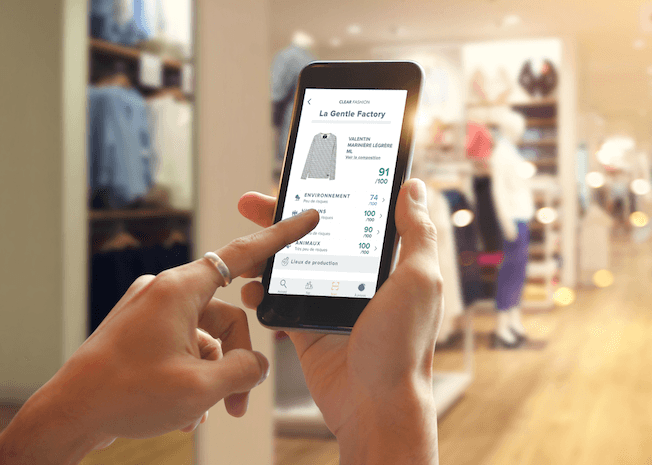
Buying sustainably used to feel like homework you did at home, hours before setting foot in a store. Clear Fashion's latest update changes that calculus entirely. The independent French app, already described as a kind of Yuka for clothing, rolled out a barcode scanning feature in early April that puts official environmental impact scores into shoppers' hands at the exact moment they matter: standing in the aisle, garment in hand.
The mechanics are straightforward. Open the app, select the brand, and scan the barcode on the label. Within seconds, the app retrieves the product's score from France's "affichage environnemental" scheme, the government's official textile environmental-labelling framework. The score isn't a proprietary estimate or a brand-generated claim; it is drawn directly from calculations submitted via the government portal. That distinction matters. When a brand's data appears on your screen, it has been logged in a regulated system, not self-reported on a marketing page.
What the scores actually measure spans four dimensions: environmental impact, social responsibility, health, and animal welfare, evaluated across more than 150 criteria per product. The environmental cost figure, expressed as points per 100 grammes of garment weight, is particularly instructive for side-by-side comparisons. A Carrefour Tex organic cotton T-shirt, for instance, scores 510 points per 100 grammes. A comparable non-organic T-shirt from a fast fashion brand clears 1,000 points on the same scale, where lower is better. The difference is not marginal; it is, in practical terms, double the environmental burden for what looks, from the hanger, like the same item.
The limitation worth knowing: the scan function only works where brands have published their impact calculations. As of early April, 66 brands had done so, covering the more than 27,000 products now indexed in the app. The range spans mass market to luxury, with names including Kiabi at one end and Courrèges at the other, alongside the contemporary label ba&sh. That list represents a meaningful starting point, but it also means a significant portion of what hangs in any given store will return no result on scan. Silence from the app is its own signal.
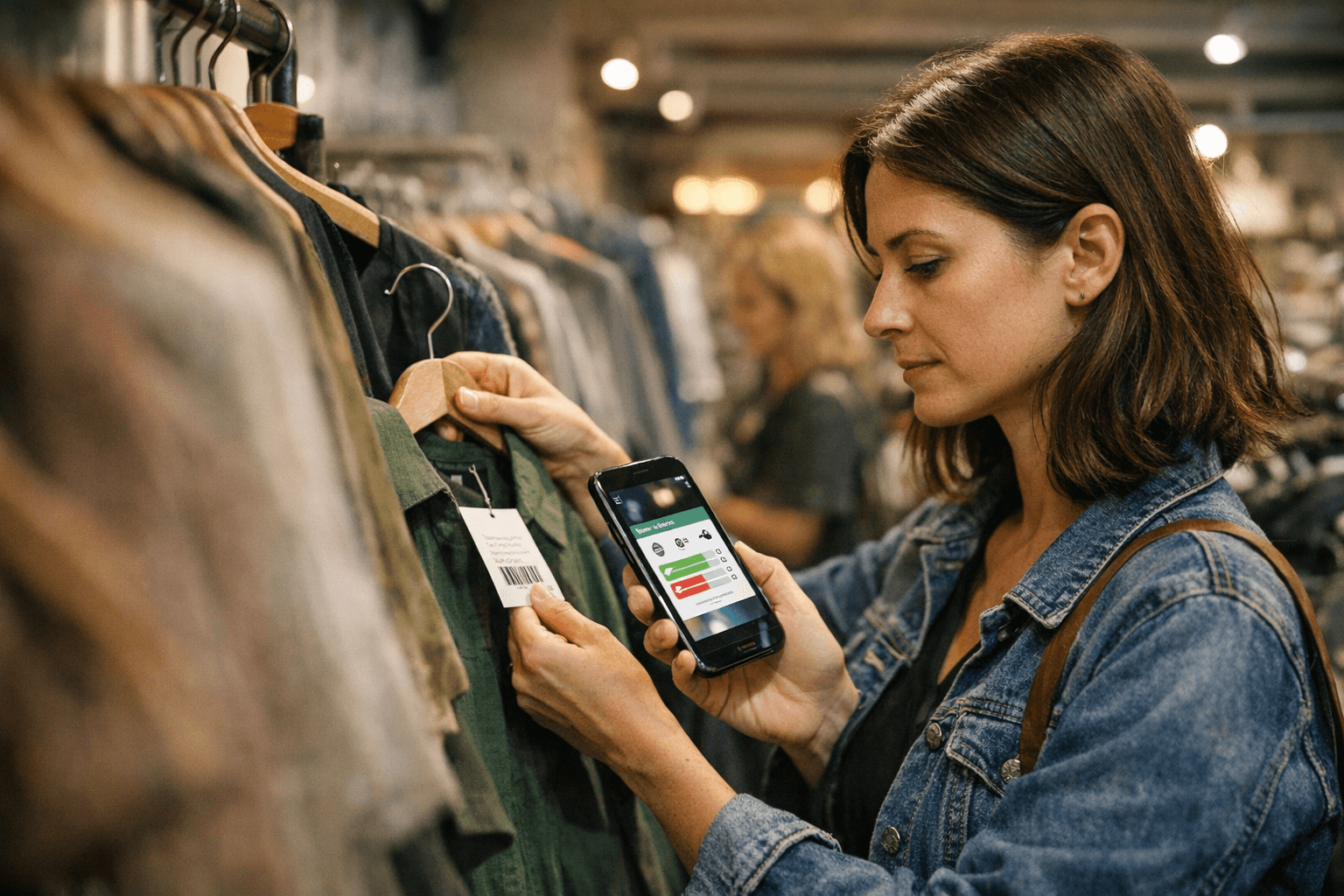
For a practical three-minute store test, scan the item you are considering and check the environmental cost figure. Then scan one comparable piece from a neighbouring brand. If only one result populates, note which brand chose to publish and which did not. Finally, tap through to the official environmental labelling portal linked within the app to see the full methodological breakdown behind the headline number. The score is a summary, not a verdict; the portal is where the sourcing and production data actually live.
Clear Fashion's user base had grown to more than 400,000 at the time of the launch, and the app is scheduled to demonstrate the scanning tool at the ChangeNOW summit in the coming weeks. The more consequential date, however, is October 2026, when default calculation methods are set to simplify compliance with the affichage environnemental scheme. At that point, brands that have not self-declared their data risk having scores published on their behalf using worst-case assumptions, by third parties including consumer groups and NGOs. The incentive structure, in other words, is about to shift sharply in favour of transparency.
For now, 27,000 products is a number worth pausing on. In a market where greenwashing remains a routine complaint and environmental claims are rarely verified at the point of sale, having that many items in a single regulated database, scannable by any shopper with a phone, represents a structural change in how accountability reaches the shop floor.
This article was produced by Prism’s automated news system from verified source data, official records, and press releases, then run through automated quality and moderation checks before publishing. The system is built and supervised by the people who set the standards it runs under. Read our full AI policy.
Did this article answer your question?