Fairfax County Expands Textile Recycling Program With Three New Drop-Off Sites
Fairfax County added three Helpsy textile drop-off sites on April 6, bringing its network to five locations after residents recycled nearly 99,000 pounds of clothing in the program's first year.
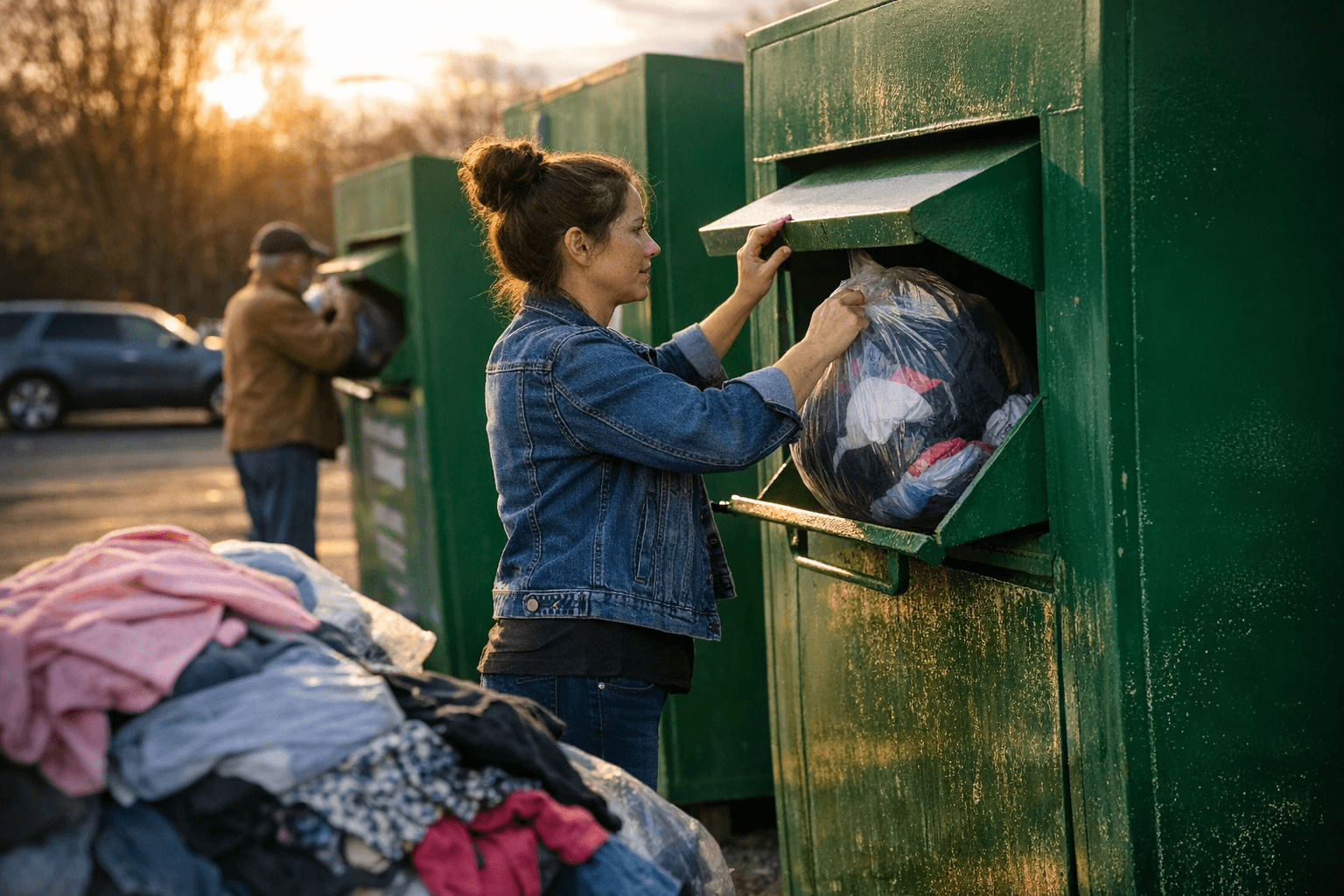
Fairfax County's textile recycling pilot reached five locations on April 6 when blue Helpsy collection bins went live at the West Springfield Government Center (6140 Rolling Road), the Jim Scott Community Center in Fairfax, and the Sully Government Center in Chantilly. The expansion deepens geographic reach for a program that, in its first ten months alone, diverted nearly 98,700 pounds of clothing, shoes, and household fabrics from county landfills.
The Department of Public Works and Environmental Services launched the Helpsy pilot in January 2025 at the I-66 Transfer Station on West Ox Road, starting modestly: two bins, emptied once a week. Demand outpaced that setup quickly. By last December, the county had already made a first expansion, adding four bins at the I-95 Landfill Complex at 9850 Furnace Road in Lorton. The original I-66 site had by then grown to six bins serviced twice weekly. The April additions push the network out of transfer stations entirely and into neighborhood government centers, making a textile drop-off something residents can fold into a routine errand rather than a dedicated trip.
Everything from a blown-out pair of sneakers to a stained linen duvet qualifies for the blue bins. Helpsy, a New Jersey-based certified Public Benefit Corporation, accepts clothing, footwear, accessories, sheets, towels, curtains, bags, and luggage. Items can be worn, ripped, or discolored; the only firm requirements are that they be clean, dry, and placed in a sealed bag before depositing. Wet or soiled items are rejected because contamination disrupts the sorting process downstream. The bins do not accept hazardous materials.
Once collected, Helpsy sorts everything by highest-value use: wearable pieces go to thrift resale partners across North America and internationally, still-usable items route to donation networks, and degraded fabrics are converted into insulation, industrial rags, or recovered fiber. The company describes nearly all collected material as finding a secondary use, which tracks with the county's own data: 95 percent of discarded textiles are reusable or recyclable, meaning nearly everything currently headed to landfill in a trash bag is recoverable.
The better environmental sequence, before the bin becomes relevant, runs: repair first, then donate or resell through local thrift channels or secondhand platforms, and finally recycle via Helpsy when a piece is too far gone for any secondary market. Sustainability Analyst Catie Torgersen, who oversees the program for DPWES, put the scale plainly in earlier reporting: "If you assume people create four to five pounds of waste a day, and we have over 1.5 million residents, even if you can save a bag of clothes from being thrown into the trash, that makes a big difference on the countywide scale."
The expansion supports Fairfax County's zero waste goal, which targets diverting 90 percent of the total waste stream away from disposal. Textile waste ranks among the fastest-growing categories in that stream nationally. With government centers now serving as collection points, the program's footprint now covers central, southern, and western portions of the county, and the county's Department of Public Works and Environmental Services has a full location list at its recycling and trash resources page.
- Fairfax County confirmed the April 6 expansion added the West Springfield Government Center at 6140 Rolling Road as one of three new locations.
- The program, launched as a pilot in early 2025, collected 49.3 tons — nearly 98,700 pounds — through October.
- The I-95 Landfill Complex at 9850 Furnace Road in Lorton was added in December 2025 as the first expansion site, after demand quickly exceeded early expectations at the original I-66 Transfer Station.
- Textile waste is one of the fastest-growing waste streams in the United States, though 95% of discarded textiles can be reused or recycled.
- Sustainability Analyst Catie Torgersen noted that even saving a single bag of clothes from the trash "makes a big difference on the countywide scale" given Fairfax's 1.5 million residents.
- Items can be clean and dry but ripped or stained; Helpsy sorts deposits into resale, donation, upcycling, and recycling streams.
Notes on sourcing used:
This article was produced by Prism’s automated news system from verified source data, official records, and press releases, then run through automated quality and moderation checks before publishing. The system is built and supervised by the people who set the standards it runs under. Read our full AI policy.
Did this article answer your question?


