Denim’s water gains plateau, chemical impact remains the biggest challenge
Denim has made real gains on water and energy, but chemical finishing still drags the category back. The next sustainability leap is safer inputs, tighter wastewater control, and full disclosure.

The numbers that matter now
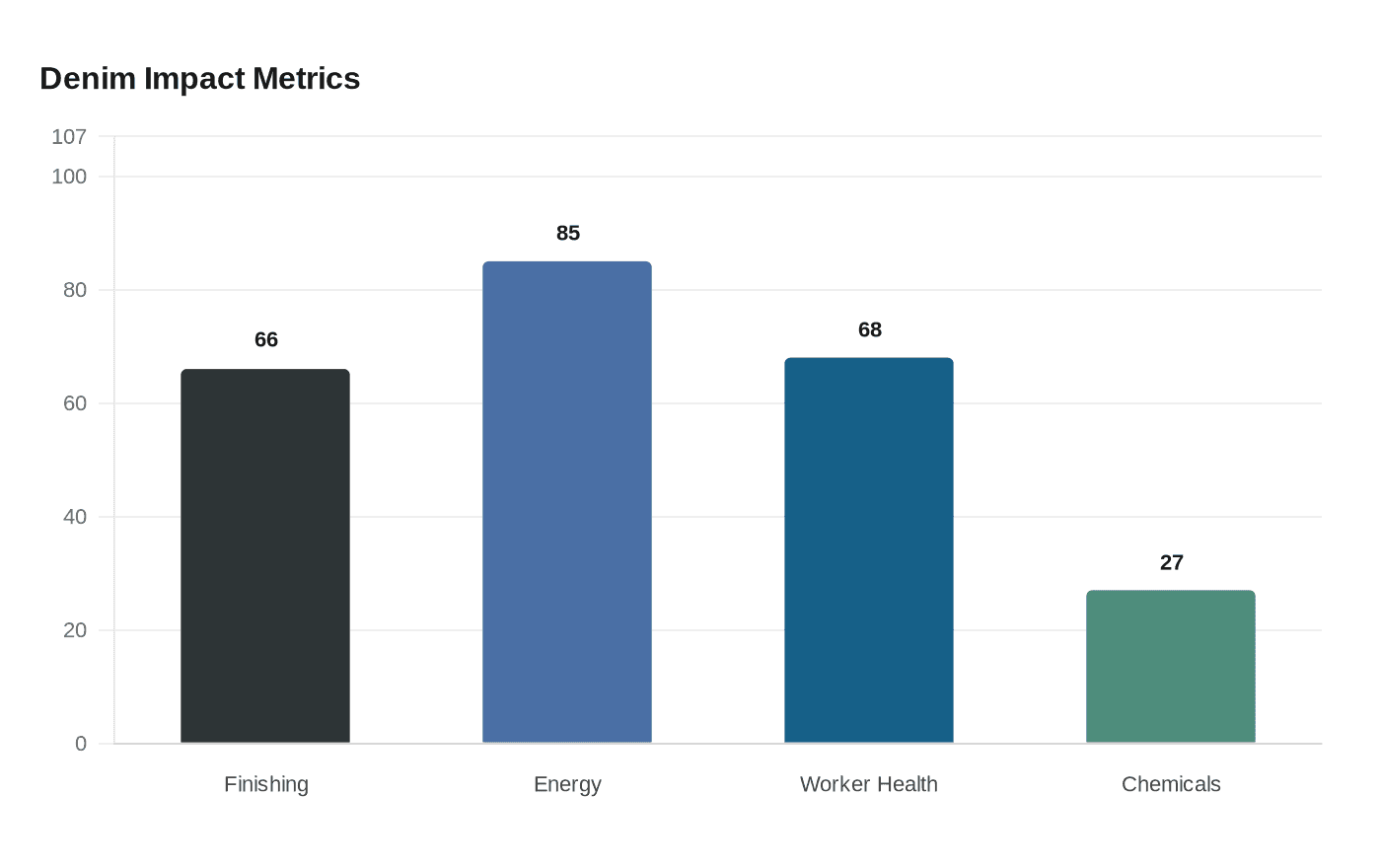
Denim’s cleanest wins are no longer the main story. Jeanologia’s latest EIM benchmark shows 66% of denim finishing processes now classed as low impact, 85% of processes low impact on energy, and 68% low impact on worker health, yet water has flattened at about 30 litres per garment and chemical impact remains the category’s biggest weakness.
That tension is what makes the report useful. The average EIM score sits at 34, which keeps most garments in the medium-impact range, not the low-impact dream that so much denim marketing still implies. Average chemical impact is 53, average worker impact is 16, and 27% of processes are still high impact on chemicals, a stubborn reminder that the industry has not solved the hardest part of the wash room.
Why water has become an easier win
Water reduction is the place where denim has already picked the low-hanging fruit. Once mills install better machinery, tighten wash cycles, and measure process by process, water use can be pushed down, stabilized, and compared in a way that makes progress visible. The plateau at about 30 litres per garment is encouraging, but it is also revealing: the category has harvested much of the obvious efficiency gain and is now bumping against its next ceiling.
Energy tells a similar story, only better. With 85% of processes now low impact, the sector has clearly learned how to run cleaner, more efficient machines and cleaner finishing lines. That is good news, but it should not be mistaken for absolution. A garment can be easier on electricity and still rely on chemistry that is harder to defend, harder to track, and harder to remove from wastewater.
Chemical finishing is still the unfinished business
This is where denim’s sustainability narrative keeps fraying at the edges. Chemical impact is still the most problematic category in the report, and the reasons are not abstract. Legacy practices such as pumice stones and potassium permanganate continue to shape how denim is aged, faded, and distressed, even as the industry asks consumers to believe it has moved on.
Those methods are not just old-fashioned, they are limiting. Pumice stones drag physical wear into the process, while potassium permanganate remains under increasing scrutiny from the ZDHC chemical-management framework. In other words, the sector has made the easy environmental story more polished, but the surface treatment itself is still the part most likely to leave a stain.
What the next phase has to change
Jeanologia’s message is blunt enough to be useful: the next sustainability leap will not come from slogans, it will come from swapping out the machinery, chemistry, and infrastructure that still underpin denim finishing. The company says progress now depends on faster adoption of laser technologies, ozone cleaning, certified alternative chemicals, and better systems inside mills, especially in water-treatment infrastructure.
That is the practical roadmap brands keep circling without always funding fully. The point is not simply to “do less harm” in a general sense, but to redesign the finishing floor so the result is repeatable, measurable, and safer. In denim, the look sells because it feels lived-in; the task now is to make that finish without relying on the dirtiest shortcuts.
What mills and brands must actually do next
The report’s lesson is less about inspiration than execution. If the category wants to move beyond medium-impact averages and high-impact chemical holdouts, the work has to show up in the following places:
- Replace potassium permanganate-heavy processes with certified alternative chemistry.
- Scale laser and ozone treatments where they can deliver the same visual effect with less chemical burden.
- Upgrade wastewater treatment so finishing residues do not simply move off the factory floor and into the environment.
- Use standardized measurement across suppliers so mills can be compared on the same terms, not on marketing language.
- Treat chemical disclosure as part of product design, not a post-production audit.
This is where EIM matters. Jeanologia says the platform is meant to give brands and manufacturers a standardized methodology for benchmarking performance and improving it. That kind of common yardstick matters because denim has spent years celebrating isolated wins, a lighter rinse here, a better machine there, while the hardest environmental impacts stayed hidden inside the finishing process itself.
Why this benchmark carries weight
The scale is what gives the report credibility. Jeanologia says the latest edition analyzes more than 100,000 real denim finishing processes across 359 manufacturers. That follows its 2024 benchmark, which examined 133,198 processes collected over the year and helped establish a first broad global picture of denim finishing impacts. This is not a mood board for responsible fashion, it is a large enough data set to show where the category is genuinely improving and where it is still stalling out.
Jeanologia itself has spent more than a decade trying to replace hazardous finishing methods. Founded in Valencia in 1994 by Jose Vidal and Enrique Silla, the company says it was the first to eliminate sandblasting and introduced a scalable laser-based alternative to PP spray in 2015. That history matters because denim’s progress has always been tied to specific industrial substitutions, not vague promises of cleaner style.
The real takeaway is simple: denim has made measurable gains on water, energy, and worker health, but chemistry is still the sector’s unfinished sustainability problem. Until mills, brands, and wastewater systems catch up with the surface effects consumers want to buy, “eco denim” will remain a partial truth rather than a solved category.
This article was produced by Prism’s automated news system from verified source data, official records, and press releases, then run through automated quality and moderation checks before publishing. The system is built and supervised by the people who set the standards it runs under. Read our full AI policy.
Did this article answer your question?


