Education and SMEs drive fashion waste into circular resources
Fashion waste will not become feedstock on innovation alone. The real unlock is tighter links between campuses, communities and SMEs, where sorting, skills and funding finally meet.
The fashion waste problem is not short on ideas. It is short on wiring. A new Frontiers mini-review by Haoran Zheng and Anupam Khajuria of the United Nations University’s Institute for the Advanced Study of Sustainability in Tokyo makes the case that textile waste only becomes a circular resource when education, communities and small and medium-sized enterprises are pulled into the same room, with the same goals and the same systems underneath them.
Why the waste problem keeps stalling
The review treats fashion as a systems problem, not a shiny-tech problem, and that is exactly the right call. The sector is a major source of waste generation, greenhouse gas emissions, water pollution and marine microplastic contamination, so the fix cannot be a lone material breakthrough that never leaves the lab. Existing circularity research has already shown that new fibers alone will not solve textile waste unless design, production, consumption, education and stakeholder coordination all move together.
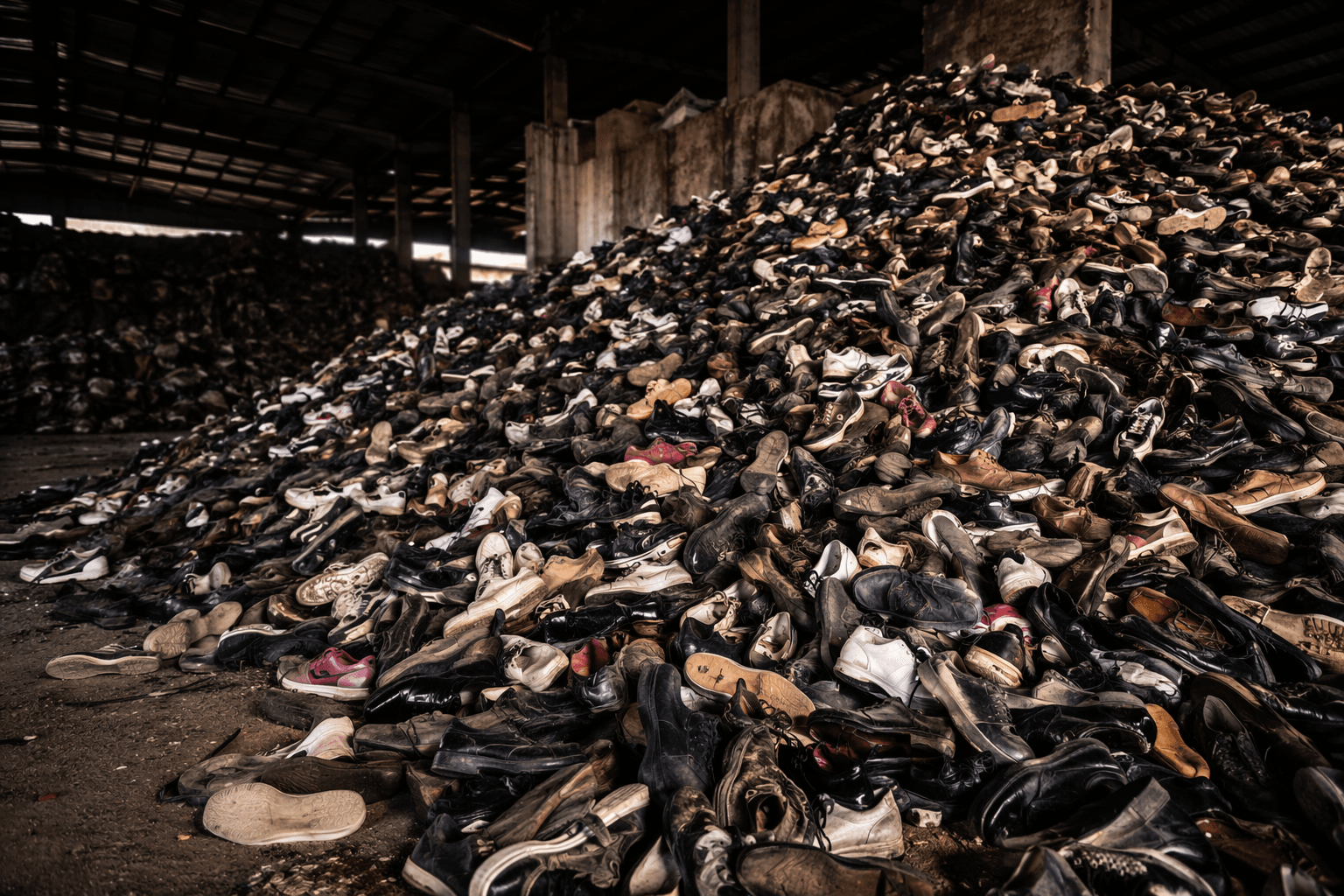
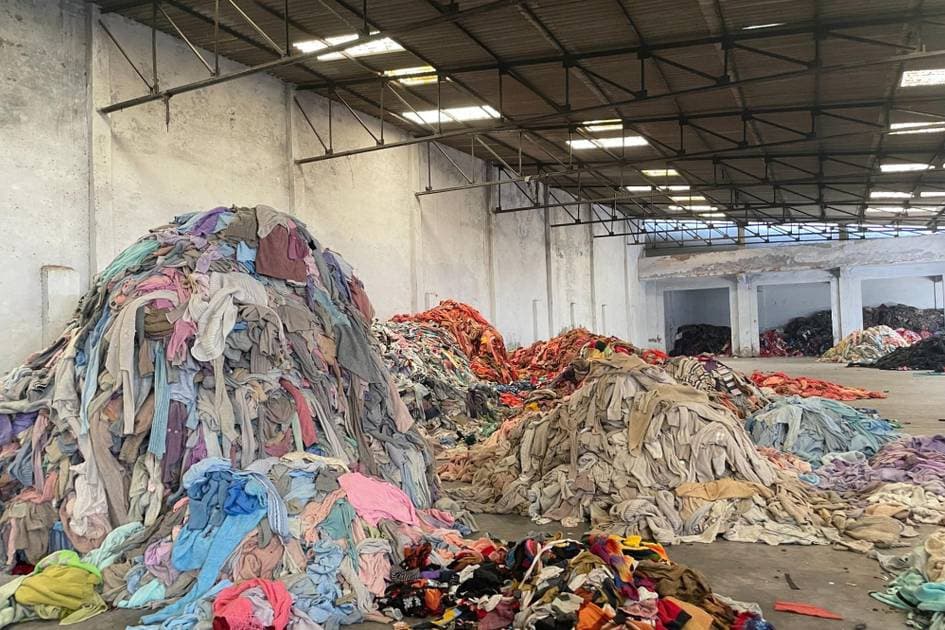
That broader pressure is why the numbers matter. The European Environment Agency says Europe generates about 12.6 million tonnes of textile waste each year, and clothing and footwear account for 5.2 million tonnes of that, about 12 kilograms per person. European Parliament materials put the scale beside food waste too: almost 60 million tonnes of food waste and 12.6 million tonnes of textile waste every year in the EU. Less than 1 percent of textiles worldwide are recycled into new products, which is the kind of stat that should make any fashion brand pause before tossing around the word circular like a mood board slogan.
Education is where the habit change starts
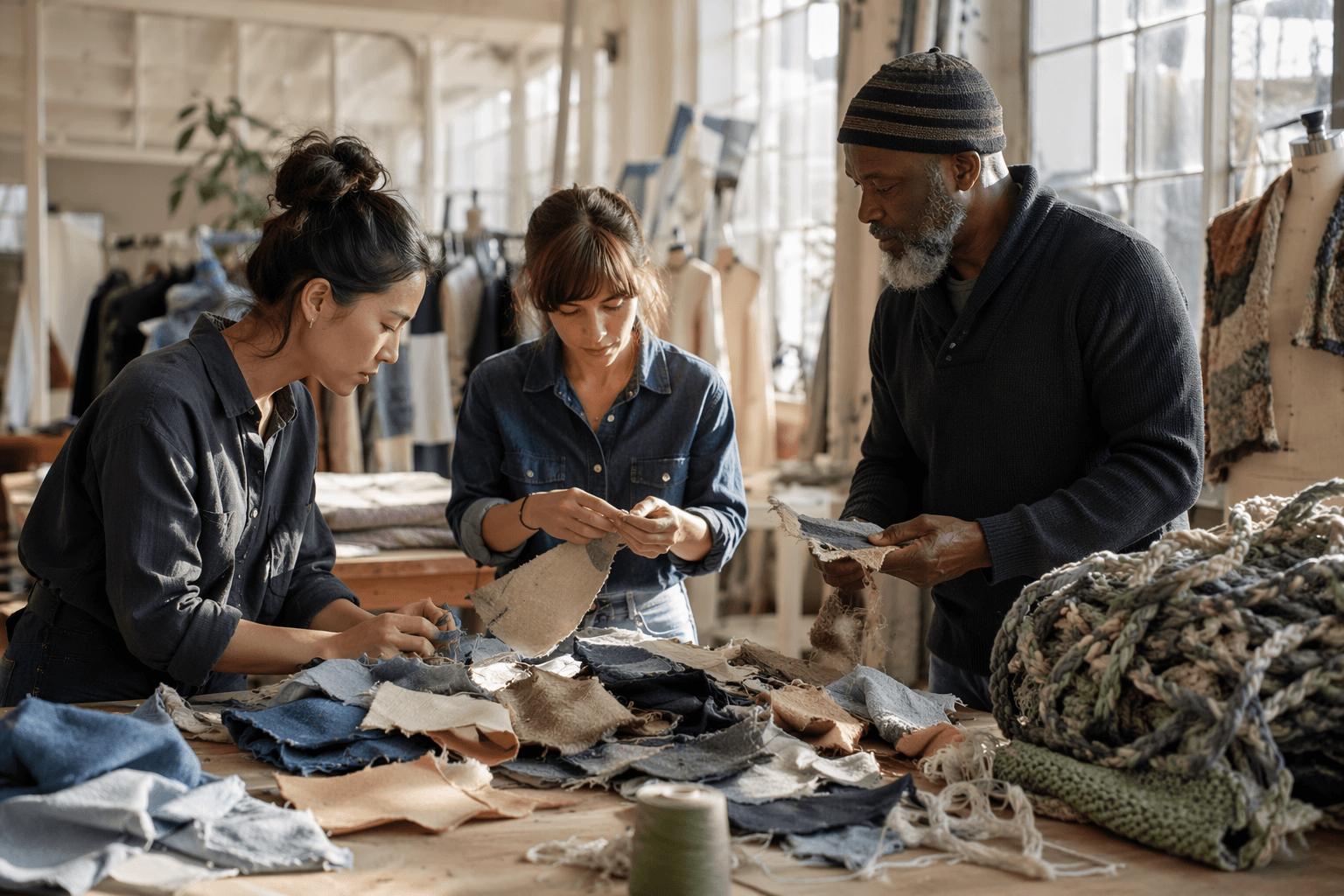
What makes this review useful is that it refuses to treat education as decoration. The authors fold in education-focused discussions because the habits that drive textile waste are learned, repeated and normalised long before a garment hits a resale rack or a recycling bin. Hands-on learning, upcycling projects and real-world problem-solving are not cute add-ons here, they are the training ground for changing how students and consumers think about clothes, value and disposal.
That is the part fashion keeps underestimating. If you only teach consumers to buy better, but never teach them how clothes are sorted, repaired, reused or remade, the circular economy becomes an abstract virtue, not an operating system. The practical version looks much less glamorous: classroom workshops where fabric offcuts become something wearable, campus repair clinics, and projects that force students to trace a garment’s afterlife instead of pretending it vanishes after checkout.
SMEs are the bridge between theory and usable feedstock
Small and medium-sized enterprises are the overlooked middle layer in all of this, and they are exactly where the implementation gap opens up. Universities can model systems, but SMEs are the ones who can often move faster on local collection, repair, sorting, remanufacturing and niche upcycling, if they can access the right knowledge and resources. Without that link, good ideas stay in the academic lane and waste stays waste.
This is where the friction gets real: funding, technical know-how, sorting infrastructure and uneven access to innovation all slow the handoff from research to usable feedstock. A lab can identify promising recovery methods, but a small business still needs machinery, training, material input that is actually sorted well enough to process, and a way to keep the economics from collapsing. The review’s real value is that it frames circularity as a collaboration problem, because textile waste does not become a resource just because someone wrote a promising paper about it.
Community initiatives are the sorting floor nobody should ignore
The review also gives community-based initiatives the respect they deserve. FashionUnited highlights examples such as school uniform reuse programmes in Australia and clothing swap events in the UK, and those are not fringe gestures. They are practical, low-drama models that extend the life of garments, reduce textile waste and change behavior where it actually happens, in schools, neighborhoods and social circles.
That matters because communities are where wearability gets judged in real time. A blazer that can be swapped, a uniform that can be passed down, a hoodie that can be repaired instead of binned, these are not grand theories, they are everyday interventions that keep textile volume out of the waste stream. When community initiatives are paired with education and SME processing capacity, the system starts to look less like a donation bin and more like a functioning loop.
What a workable partnership looks like
If fashion is serious about circular resources, the partnership has to be tighter than the usual sustainability conference handshake. Universities need to develop practical research that SMEs can actually use, not just elegant frameworks that live in journals. SMEs need access to pilot funding, equipment, and technical support so they can handle collection, sorting and transformation at a scale that makes commercial sense.
A working model would do three things at once:
- Teach people how to keep textiles in circulation through repair, reuse and upcycling.
- Give SMEs the machinery, methods and funding to turn collected textiles into usable feedstock.
- Build collection and sorting systems that produce cleaner material streams, because circularity dies fast when inputs are contaminated and mixed.
That last point is the unglamorous one, but it is the one that decides whether a garment becomes raw material or landfill. Separate collection systems for used textiles, which EU member states are required to establish from 2025 under the Waste Framework Directive, are the kind of policy nudge that can make the rest possible. Without infrastructure, education just produces better intentions; with infrastructure, it can produce actual recovery.
Why the pressure is only getting heavier
The urgency is not theoretical. In March 2025, the UN said fashion is one of the world’s most polluting sectors, responsible for up to 8 percent of global greenhouse gas emissions and using about 215 trillion litres of water annually. That scale explains why the circular conversation keeps returning to the same conclusion: you cannot solve a material crisis with materials alone.
This is why the Frontiers review lands in the right place. It does not chase a fantasy of perfect recycling technology. It points toward the messier, more believable route, where universities, communities and SMEs share the work of sorting, learning, designing and remaking. That is how textile waste stops being dead stock for the planet and starts becoming the feedstock of a genuinely circular fashion economy.
This article was produced by Prism’s automated news system from verified source data, official records, and press releases, then run through automated quality and moderation checks before publishing. The system is built and supervised by the people who set the standards it runs under. Read our full AI policy.
Know something we missed? Have a correction or additional information?
Submit a Tip