Epoch Biodesign Raises €12M to Scale Enzymatic Nylon Recycling, With Lululemon Investing
Lululemon led a $12M round into London biotech Epoch Biodesign, which uses AI-engineered enzymes to recycle nylon 6,6 back to virgin-quality material.
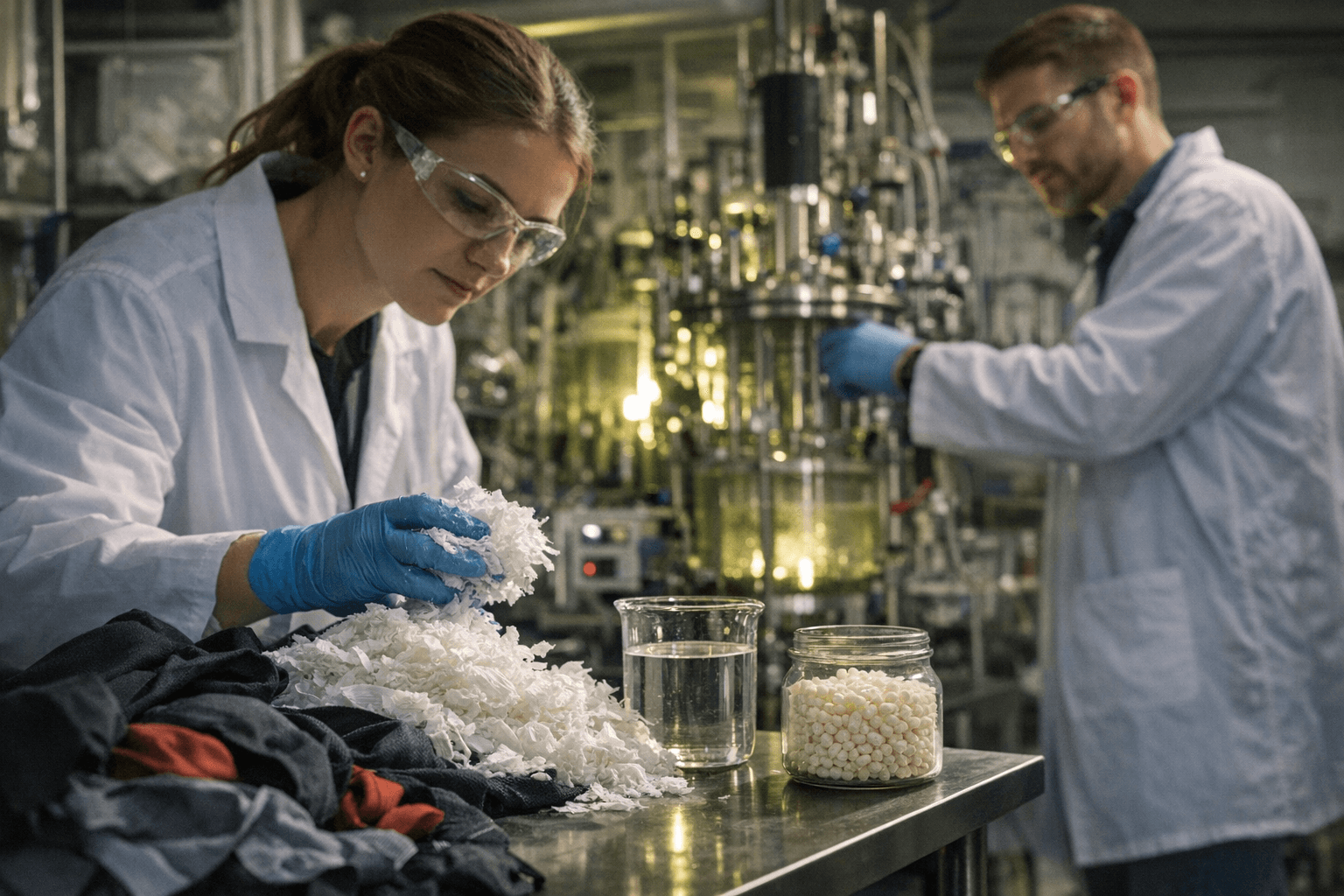
Epoch Biodesign has closed a €10.3 million ($12 million) financing round to accelerate the commercialisation of its recycled nylon 6,6. The round was led by Lululemon, with participation from Extantia, Happiness Capital, KOMPAS VC, Leitmotif, and others. For the Vancouver athleticwear brand, the bet is as strategic as it is principled: Lululemon built its brand on $128 leggings made from polyester and nylon blends, making this not just an environmental play but a supply chain hedge.
Founded in 2019, Epoch Biodesign combines artificial intelligence and advanced synthetic biology to design enzymes to efficiently recycle end-of-life plastic and textile waste at commercial scale. The process is more precise than it sounds. Each enzyme in the cascade attacks a specific bond in the nylon 6,6 polymer, progressively breaking it down into its original monomers: principally adipic acid and hexamethylenediamine, known as HMDA. Its ultra-low emission process produces virgin-quality recycled materials from mixed waste streams. In Jacob Nathan's framing, the economics are as compelling as the chemistry: "For us, a bale of textile is the equivalent of a barrel of oil," the founder and CEO told TechCrunch — meaning waste fabric, not petroleum, is the raw material Epoch starts with.
That pitch has grown considerably sharper in 2026. The price of nylon 6,6 precursors has spiked by as much as 150% in recent weeks on a spot basis, driven by broader petrochemical supply volatility. Epoch's process, starting from waste textiles rather than fossil feedstocks, is structurally insulated from that volatility — a commercial argument that has only strengthened as supply chains have tightened.
The new capital arrives six weeks after Epoch formalized its most significant industrial partnership. In early February, Epoch Biodesign signed a Memorandum of Understanding with Invista, setting out a framework to advance the development of post-consumer recycled nylon 6,6. The alliance will combine Epoch's AI-engineered enzymatic recycling technology with Invista's polymerization expertise and global industrial footprint, with the goal of producing "virgin quality" recycled nylon 6,6, validated by customers and suitable for use in demanding supply chains. Invista's provenance is not incidental: the company is the original inventor of nylon 6,6, which made its choice of partner pointed. "The fact that a company whose legacy is tied to the invention of nylon 6.6 choose our technology is a defining moment," said Nathan. "Working with Invista will accelerate a real change in the material chain and allow us to transform waste into products equivalent to virgin material," he added.
Invista's Global Director of Sustainability, Ethel Garnier, framed the partnership in supply chain terms. She stressed that the company "is committed to exploring innovative technologies that improve the sustainability and resilience of nylon 6.6 supply chains," and added that the collaboration responds to "a real market need." Under the MoU, technical assessment and polymer qualification activities are already underway, with application performance testing planned as the next phase of the work.
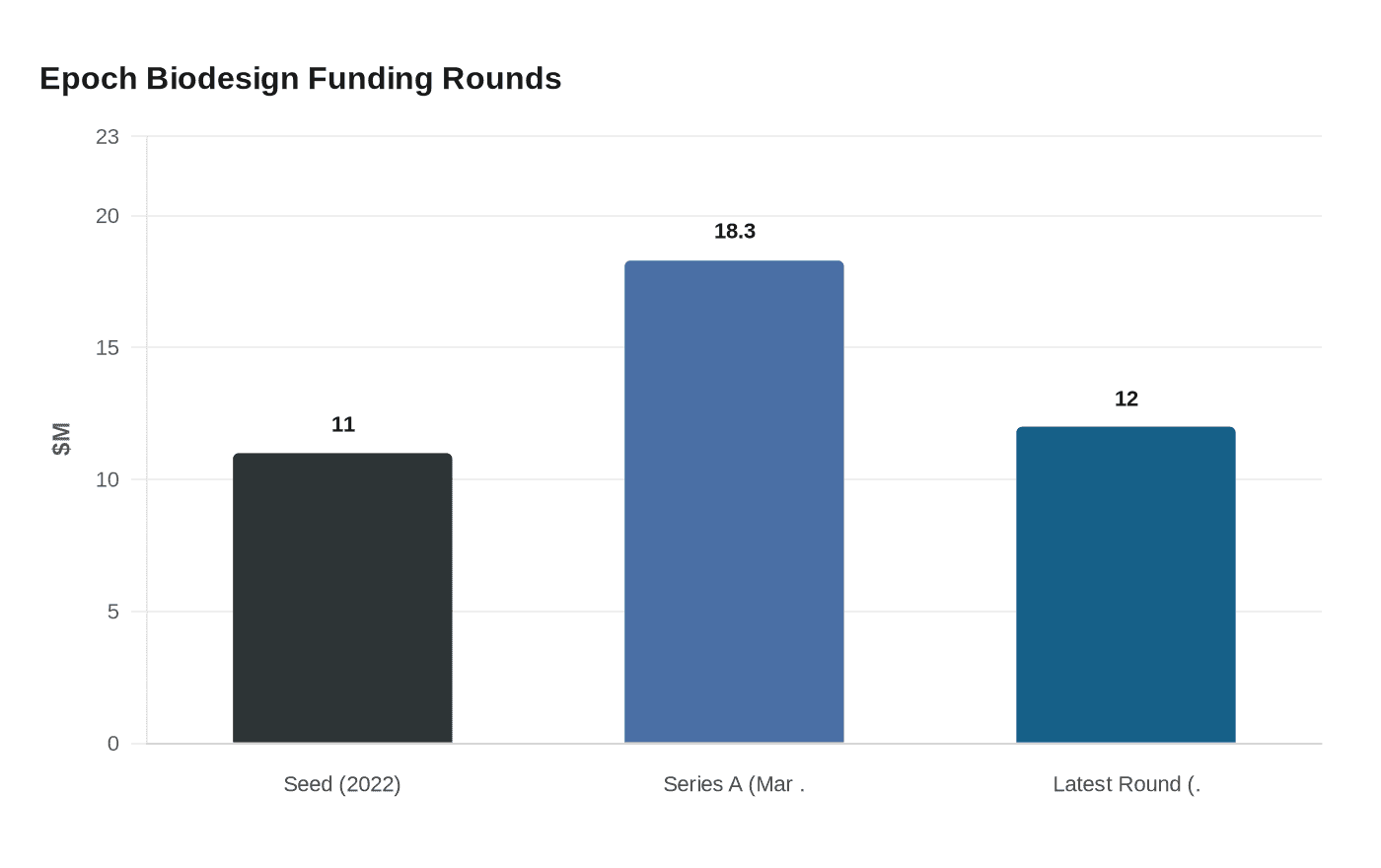
The round brings Epoch's total funding past $50 million, following an $11 million seed in 2022 led by Lowercarbon Capital and an $18.3 million Series A in March 2025 led by Extantia, which also included Inditex, Zara's parent company. The roadmap for that capital is now specific: operations began with a pilot plant launched in 2025 that currently has the capacity to process several tonnes of synthetic nylon textile waste annually, with plans to scale that volume to over 150 tonnes in 2026 through a demonstration plant. The full commercial-scale plant is scheduled to launch in 2028 and will have the capacity to process more than 20,000 tonnes of synthetic nylon textile waste annually.
Nathan said at the close of the round: "Nylon 6,6 is a key material for both apparel and automotive industries, but a circular solution has yet to be successful at scale. Support from partners such as these highlights Epoch's momentum and will accelerate our plans to progress from multi-tonne production to multi-kilotonne scale." With Lululemon now both a customer and a shareholder, Epoch has secured something the chemical recycling industry rarely manages at this stage: a buyer committed before the plant is built.
This article was produced by Prism’s automated news system from verified source data, official records, and press releases, then run through automated quality and moderation checks before publishing. The system is built and supervised by the people who set the standards it runs under. Read our full AI policy.
Did this article answer your question?


