EU Publishes Circular Textiles Playbook Compiling Replicable Industry Practices
The EU's new circular textiles playbook names Lenzing as a case study and sets a stark baseline: the average European discards 11kg of clothing and textiles every year.
Two new reports from the EU Textiles Ecosystem Platform reveal pledges shaping the Transition Pathway and showcase best practices delivering real impact across the value chain — and the second of those reports is the one the industry has been waiting on. The European Commission and EISMEA published the Best practices report, Second Edition of the Textiles Ecosystem Transition Pathway on 25 March 2026, compiled by EY Belgium and CSIL. It is, in plain terms, a working manual: tested, replicable practices drawn from across the textiles value chain, and a concrete set of actions designed to move the sector's green and digital transitions from policy language into factory-floor reality.
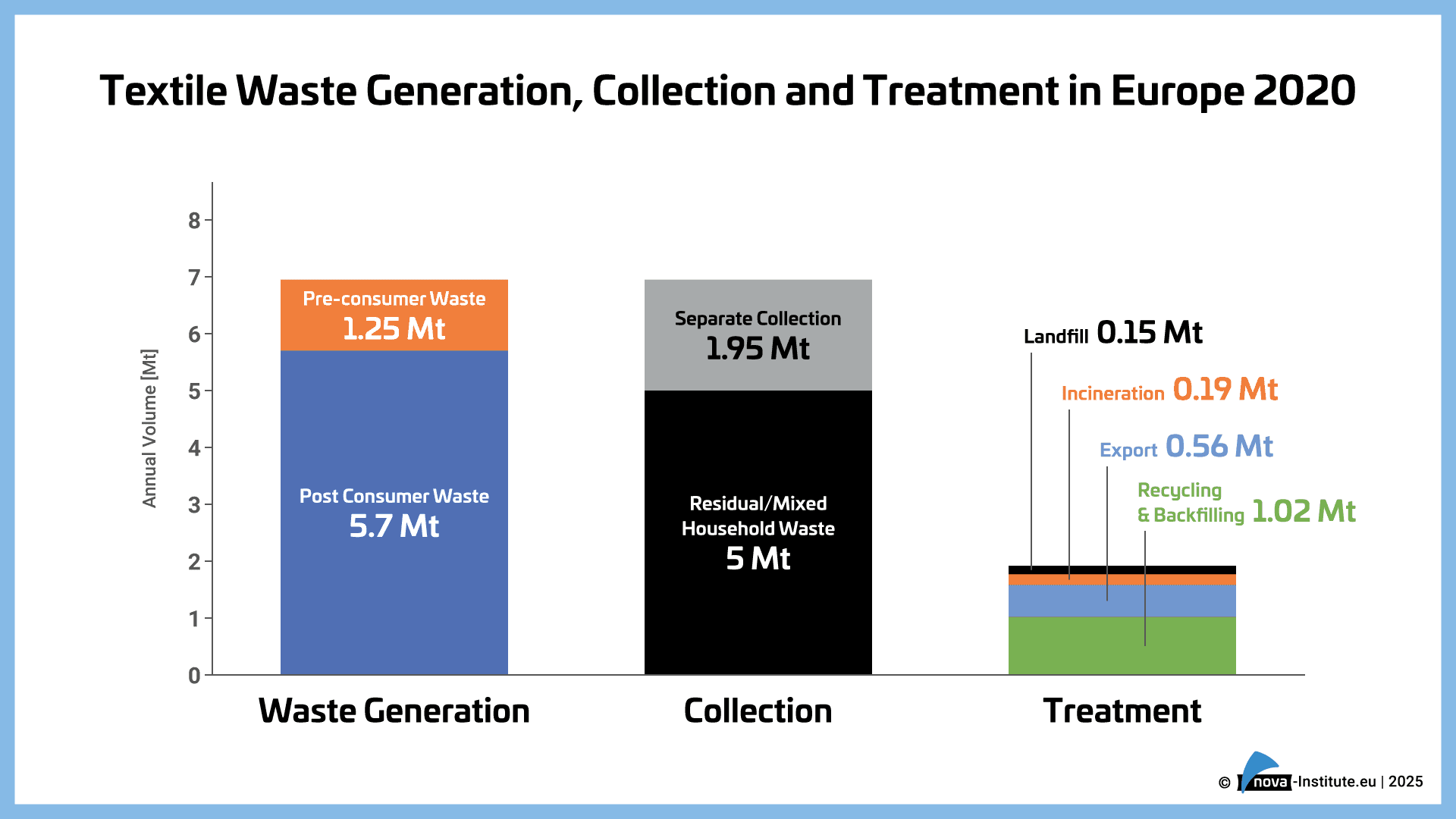
The numbers that frame the problem are not subtle. EU consumption of textiles has, on average, the fourth highest impact on the environment and climate change, after food, housing, and mobility; it is also the third highest area of consumption for water and land use, and fifth highest for the use of primary raw materials and greenhouse gas emissions. And the individual behaviour behind those figures is equally blunt: the average European throws away 11kg of textiles every year, a statistic that renders abstract supply-chain debates uncomfortably personal.
Against that backdrop, the Second Edition organises its guidance around a co-creation model, pulling together commitments from industry, public authorities, and social partners rather than issuing top-down directives. It brings together 79 pledges from 20 organisations across 10 EU Member States and Switzerland, covering all eight building blocks of the Transition Pathway and addressing 30 of its 50 specific actions; the largest share of pledges focuses on Sustainable Competitiveness at 37%, followed by Research and Innovation and Technological Solutions at 20%.
Sustainable Competitiveness is Building Block 1 in the report's action framework, and its first action is the most operationally detailed: promote, support and implement circular and sustainability practices, services and business models, including social economy enterprises — product-as-service models, take-back services, second-hand and repair services, and innovative sorting and recycling — through funding channels including Horizon Europe, LIFE, and the ReSet the Trend #ReFashionNow campaign, alongside actions from the Social Economy Action Plan. Responsibility falls jointly on EU institutions, EU Member States, and industry, with a short-to-medium timeframe attached. The ReSet the Trend campaign was launched in 2023 specifically to raise awareness about sustainable fashion.
The case studies grounding the report in industry practice include Lenzing, the Austrian producer of wood-based cellulosic fibres whose circular ambitions have become something of a benchmark for the sector. Lenzing stands out as a prime example of a company embracing sustainability as an integral part of its business strategy and a driver of innovation, with a commitment that spans its entire value chain, from sustainable wood sourcing to responsible production processes and the promotion of circular economy principles. The report also includes networking opportunities for SMEs in the textile sector, a recognition that circularity cannot be a pursuit reserved for companies with the budget of a multinational.
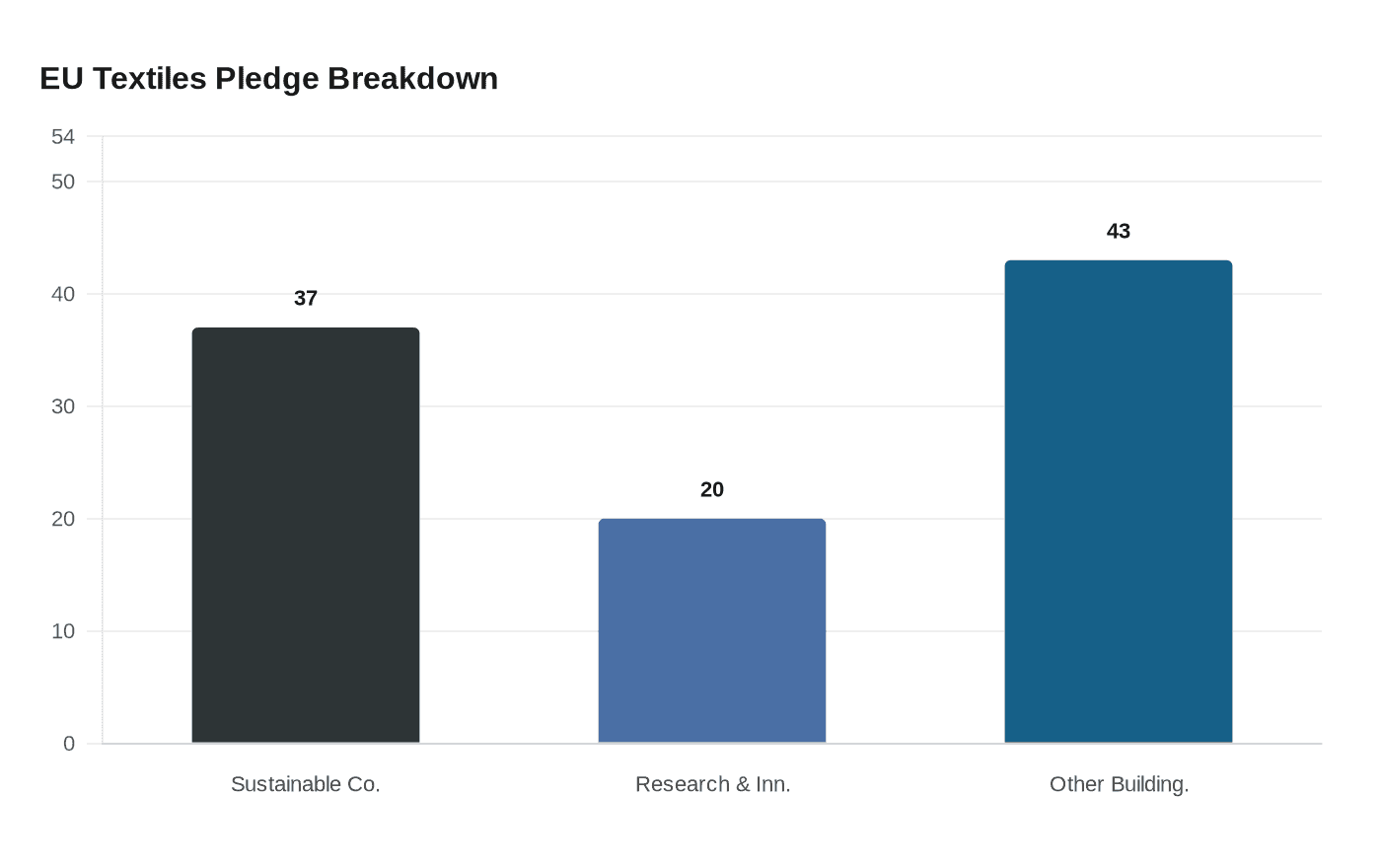
Commitments range from circularity and resource efficiency to skills development and infrastructure, and stakeholders include networks and federations, large companies, SMEs, academic institutions, and NGOs, demonstrating the collaborative nature of this transition. The pathway is also designed to help the sector withstand competitive and systemic shocks — a resilience mandate that now extends well beyond pandemic recovery to encompass the volatility of global supply chains more broadly.
The Commission's vision for 2030 is clear: textile products placed on the EU market should be long-lived and recyclable, to a great extent made of recycled fibres, free of hazardous substances, and produced in respect of social rights and the environment. The Second Edition of the Best practices report is the closest thing the industry has yet had to a step-by-step guide for getting there.
This article was produced by Prism’s automated news system from verified source data, official records, and press releases, then run through automated quality and moderation checks before publishing. The system is built and supervised by the people who set the standards it runs under. Read our full AI policy.
Did this article answer your question?