Europe's textile recycling gains ground, but brands must drive demand
Europe has the rules and the recycling tech, but not enough buyers. Until brands sign long-term offtake and pay for recycled feedstock, circularity stays stuck.
The market is waking up, but it still has a cash-flow problem
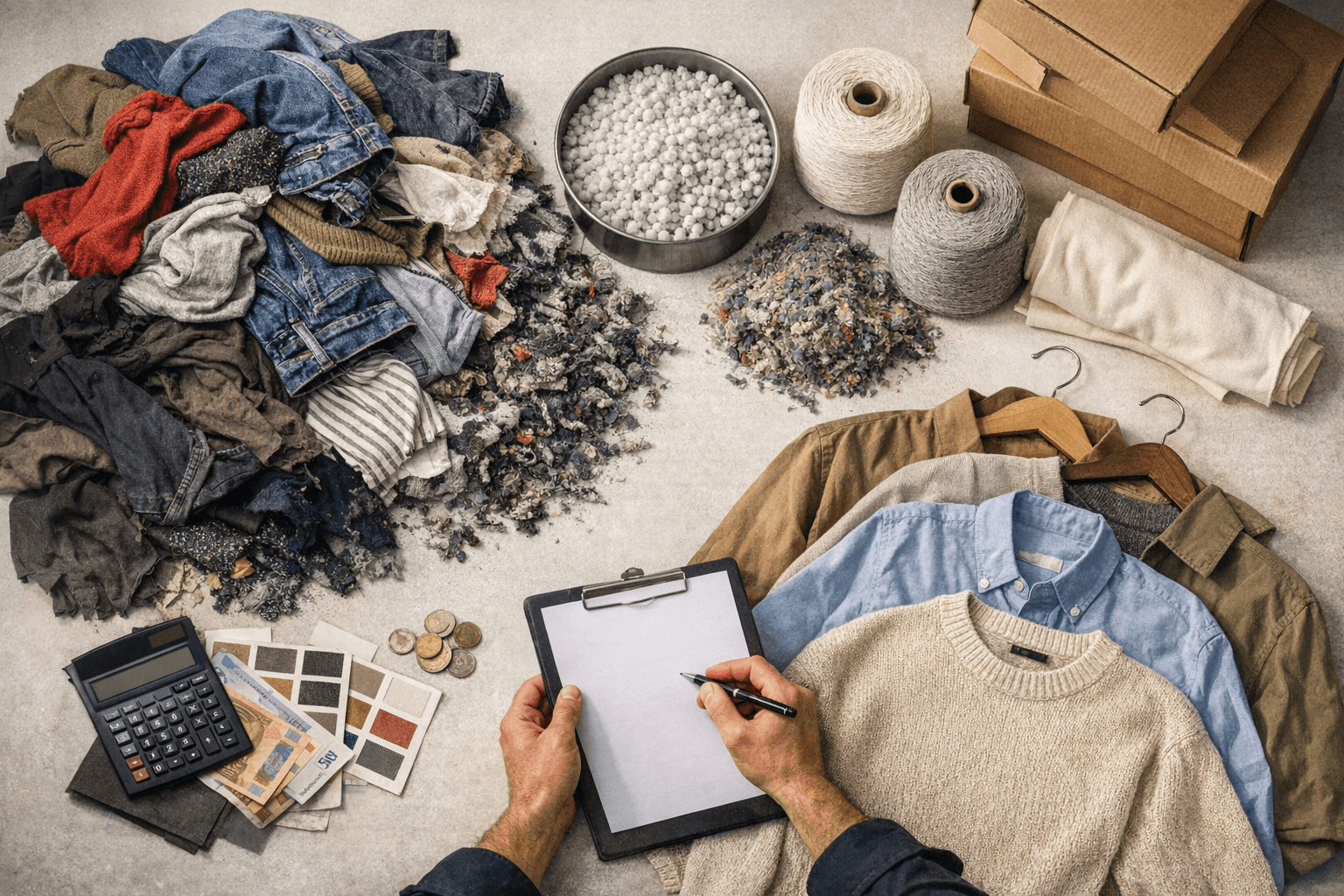
Europe’s textile recycling scene is finally looking less like a pilot project and more like an industrial lane with real corners to turn. The trouble is that the supply side is moving faster than the buyers. Collection is coming, sorting is improving, recyclers are building capacity, and policy is tightening, but the whole system still depends on one blunt question: who is actually willing to buy recycled fibre at scale, every season, at a price that keeps the machines running?
That is the missing link. Without dependable brand demand, the cleanest feedstock in the world is just expensive inventory.
The scale is huge, and the waste is already piling up
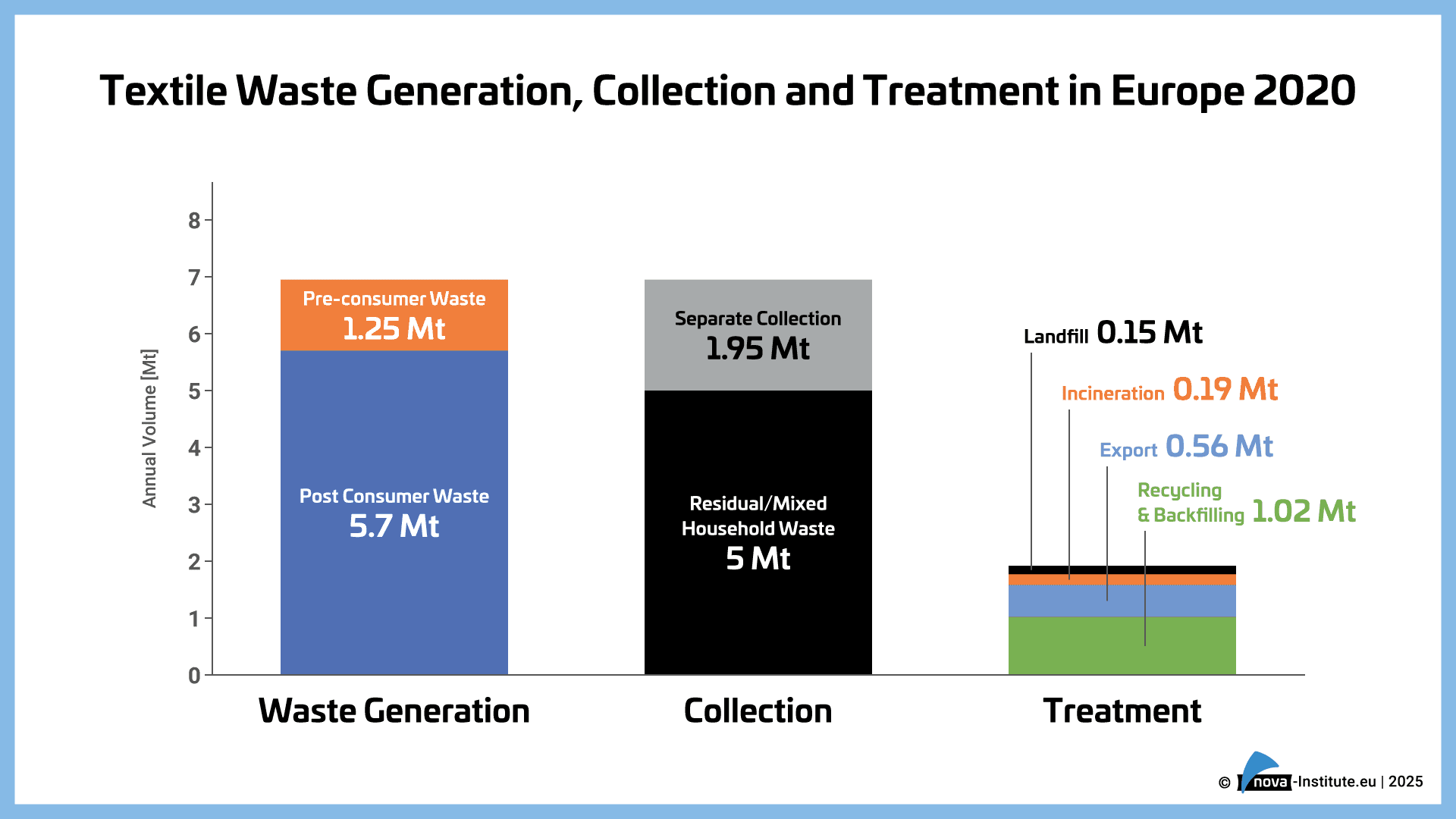
The European Union generated an estimated 6.95 million tonnes of textile waste in 2020, or about 16 kilograms per person. That number should haunt every closet packed with deadstock denim, pilled knits, and last season’s “responsibly made” basics. From 2025, EU member states must establish separate collection systems for used textiles, which means the material stream is getting wider and more visible whether the industry is ready or not.
But collection is not the same as circularity. The European Environment Agency has warned that without enough sorting and recycling capacity, a lot of what gets gathered could still be exported, incinerated, or landfilled. In other words, the bin is not the finish line. It is the beginning of a much messier industrial process.
The headline numbers are still embarrassingly small
This is the part that should stop the victory laps. The T-REX Project says only 2% of post-consumer textiles in Europe are currently diverted to fibre-to-fibre recycling. The European Commission’s own framing is even starker: only about 1% of material in clothing is recycled into new clothing. For a continent that loves to talk about green leadership, those figures read like a reality check in fluorescent lighting.
That gap explains why policymakers are no longer satisfied with collection mandates alone. If most used textiles are still leaking out of the loop, the issue is not just waste handling. It is market design. A recycling system without guaranteed demand is just a very elaborate storage problem.
Why Europe keeps circling back to demand
The European Commission’s 2030 vision is bold on paper: all textile products placed on the EU market should be durable, repairable, recyclable, and to a great extent made of recycled fibres. It also wants sufficient recycling capacity and minimal incineration and landfilling. That is the right direction, but the market will not build itself just because Brussels said so.
That is why the conversation has shifted to offtake agreements, recycled-content mandates, and producer responsibility. Systemiq says Europe could increase textile-to-textile polyester recycling nearly tenfold by 2035 if policymakers and brands act on ten levers, including ambitious EPR schemes, standardized sorting, recycled-content mandates, and long-term brand offtake agreements. Translation: the technology stack matters, but the buying commitment matters just as much.
If brands do not commit to purchasing recycled fibre, recyclers cannot finance the plants, the plants cannot secure feedstock contracts, and the whole thing stalls out in the middle. Circularity sounds elegant until you try to underwrite it.
Feedstock is the new bottleneck
Fashion for Good’s Project FAE, short for Feedstock Activation Europe, puts the problem in plain terms: sorters currently cannot viably prepare post-consumer material at the price, quantity, and quality recyclers require. That is the ugly truth behind all the glossy sustainability decks. Most non-rewearable textiles still have nowhere good to go, even as resale markets soften and recycling capacity begins to emerge across Europe.
FAE is trying to close that gap by assessing advanced pre-processing technologies and mapping regional sorting and pre-processing hubs across Europe. Its brand lineup is telling. adidas is the lead sponsor, with Bestseller and Inditex as brand partners. That matters because it is one thing for a brand to celebrate circularity in a campaign. It is another to show up as a buyer, sponsor the infrastructure, and help create the demand that makes the whole thing financeable.
The sector is finally getting organized, but the standards problem is real
The EU-funded T-REX consortium brought together 13 major players across the textile value chain, including Veolia, Infinited Fiber Company, BASF, CuRe, Fulgar, Indorama Ventures, Linz Textil, adidas, Fashion for Good, Aalto University, FAU, Quantis and Arapaha. That kind of lineup is not just a networking exercise. It is a sign that the industry knows the old patchwork model is not enough.
T-REX also surfaced the unglamorous issues that keep industrial recycling from scaling: uneven material quality, inaccurate composition claims, a lack of standards, and unreliable data across stakeholders. Anyone who has ever looked at a garment tag that overpromises “recyclability” while mixing fibers like a bad cocktail already knows this problem. Recyclers do not need poetry. They need clean chemistry, accurate labeling, and feedstock that behaves the way it says it will.
The rules are getting sharper, and brands are getting squeezed
The European Parliament approved revised textile waste rules in September 2025 that require producers placing textiles on the EU market to cover the costs of collection, sorting and recycling. That is a real shift. It pushes responsibility back onto the brands that have spent years externalizing waste while selling circularity as a vibe.
EuRIC Textiles is pressing for even stronger circularity rules, arguing that textile recycling is still limited to less than 1% of materials being recycled into new clothing. Recycling Europe Textiles wants mandatory, staged recycled-content targets, traceability rules, and use of the Digital Product Passport. That policy mix is important because it changes the economics. Mandatory recycled content does not just reward recyclers; it forces the market to absorb output instead of treating recycled fibre like a virtue-signaling side project.
What to watch if you want to know whether this is becoming a real market
The signs of maturity are not the slogans. They are the contracts, the standards, and the prices. Watch for these proof points:
- Long-term offtake agreements that lock in purchase volumes, not just pilot-test enthusiasm.
- Recycled-content mandates that force brands to use recycled fibre in actual product lines.
- Traceability systems, especially the Digital Product Passport, that make fibre composition harder to fake.
- Sorting and pre-processing hubs that can deliver consistent feedstock at industrial scale.
- Producers paying the real costs of collection, sorting and recycling instead of pushing them downstream.
That is what turns a policy story into a market. Europe now has more regulation, more infrastructure ambition, and more industrial players than it did a few years ago. What it still does not have, at enough scale, is the one thing that makes circularity feel less like a promise and more like a business: brands buying the output, season after season, because they have to, not because it photographs well.
The future of textile recycling in Europe will not be decided by another glossy circularity pledge. It will be decided by whether the market finally treats recycled fibre like a material with value, not a sustainability accessory.
This article was produced by Prism’s automated news system from verified source data, official records, and press releases, then run through automated quality and moderation checks before publishing. The system is built and supervised by the people who set the standards it runs under. Read our full AI policy.
Did this article answer your question?