Zara Workers Fight Proposed Pay Cuts in Inditex’s Home City
A Coruña workers told Marta Ortega the draft pact “looks more like one drafted in 1975” as they fight pay and benefit cuts in Zara’s birthplace.
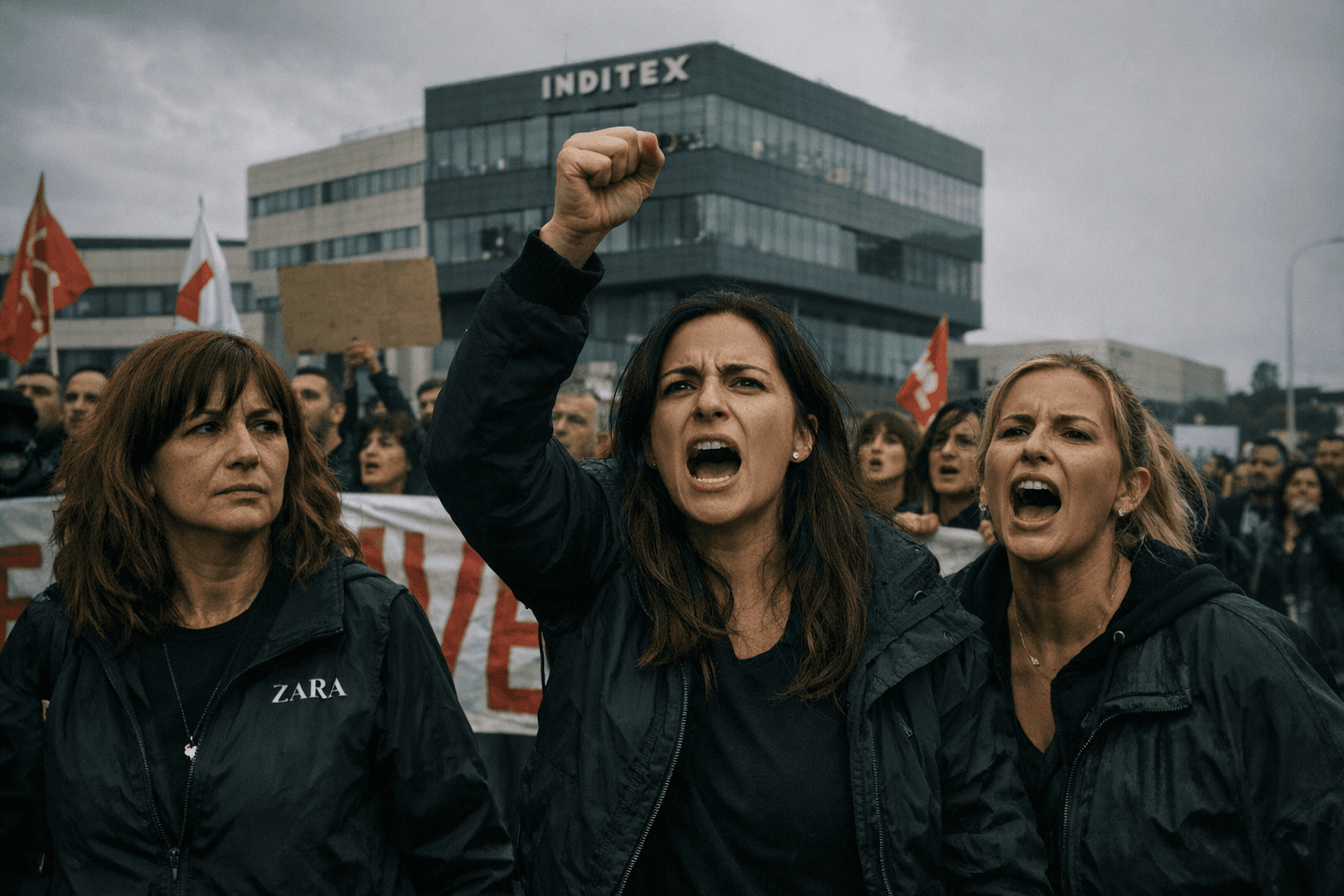
In Zara’s home city, the sustainability argument has moved from recycled fibers to pay slips. Shop workers in A Coruña have asked Inditex’s non-executive chair, Marta Ortega, to halt a proposed labor agreement they say would trim wages and benefits in the brand’s birthplace, where the moral cost of fast fashion is now being measured in euros, not slogans.
The workers’ appeal lands in the middle of a wider retail-textile reset across Spain. A state-level framework was pre-agreed on March 26 after more than three years of bargaining, covering more than 100,000 workers. Arte, the employers’ association, says the deal creates six standardized job categories nationwide, guarantees that no worker loses salary conditions and phases in shorter annual hours and changes to Sunday and holiday pay through 2028. In A Coruña, workers argue that the local draft goes in the opposite direction, and that employees there already earn more than peers in other parts of Spain.
Their language has been blunt. In a letter to Ortega, the workers said the draft agreement “looks more like one drafted in 1975, in Zara’s early days, than in 2026.” That line captures the central fault line in today’s ethical-fashion debate: a company can tout responsible sourcing, climate goals and global labor accords, but if the wage structure in its own home city is being pushed backward, the ESG gloss starts to peel.
This is not the first time Inditex has faced labor pressure in Spain. In 2022, workers protested for higher pay, and unions said the company eventually agreed to a one-off €1,000 bonus for full-time Spanish store workers and an average 20 percent pay rise in Spain, alongside gradual monthly increases. In 2024, unions pressed again after Inditex posted record profits, arguing that more than half of Spain’s 27,000 workers had signed a petition demanding a fairer share of the gains. A year later, on Zara’s 50th anniversary, workers in A Coruña accused the company of a gradual erosion of labor rights and said the shift from provincial to national bargaining was punishing the province’s combative unions.
The numbers behind the conflict only sharpen the contrast. Inditex reported record FY2025 sales of about €39.9 billion and net income of about €6.2 billion, then said store-and-online sales in constant currency rose 9 percent between February 1 and March 8, 2026, compared with the same stretch a year earlier. It also renewed a global agreement with UNI Global Union in October 2024, covering more than 160,000 workers worldwide and addressing freedom of association, collective bargaining, digital transformation, gender-based violence, workplace inclusion and franchising. For a company built on speed and scale, the question in A Coruña is whether ethical fashion means premium margins for shareholders, or durable protections for the people folding the clothes.
This article was produced by Prism’s automated news system from verified source data, official records, and press releases, then run through automated quality and moderation checks before publishing. The system is built and supervised by the people who set the standards it runs under. Read our full AI policy.
Did this article answer your question?


