How to evaluate fashion sustainability claims and certifications (practical checklist)
Most "eco" fashion labels cover just one part of a garment's supply chain. This six-point checklist cuts through the noise so you can shop with actual evidence.
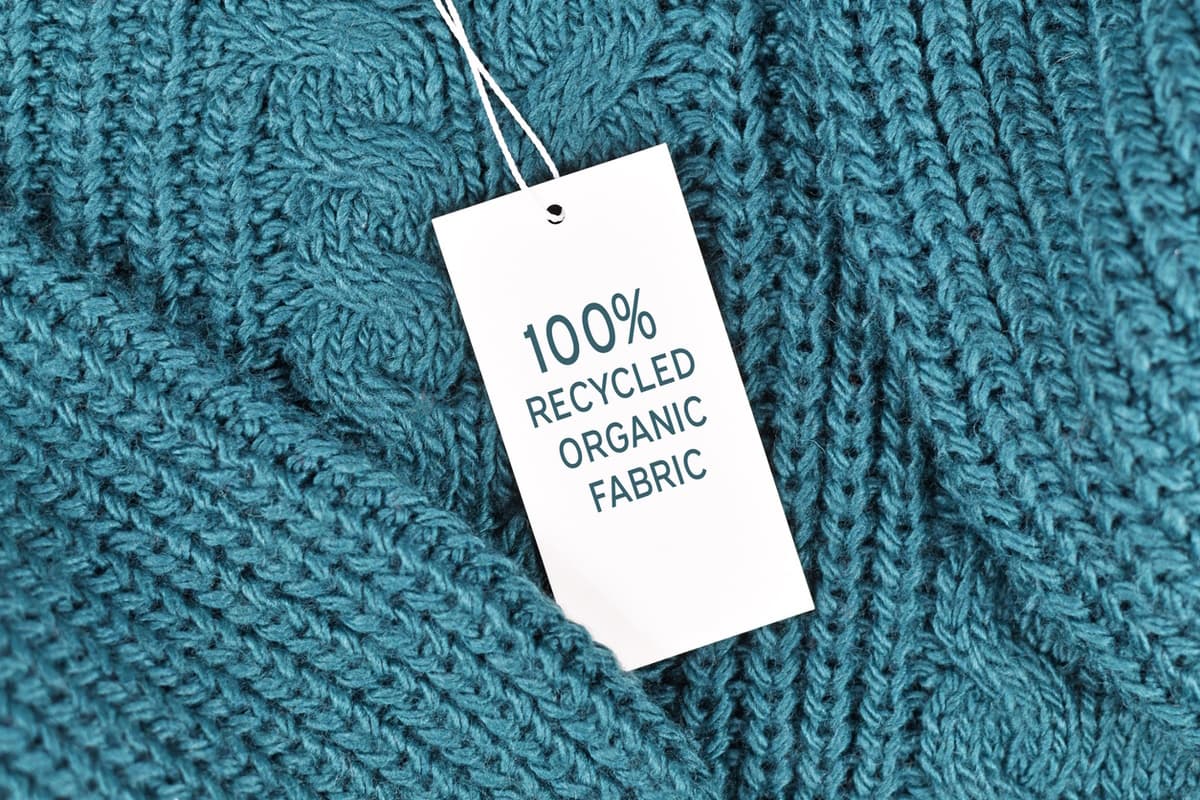
Every second, the equivalent of a rubbish truck's worth of clothes is burnt or buried in landfill. Global fashion generates around 92 million tonnes of textile waste each year, and 87 percent of all fiber input ends up incinerated or discarded. Against that backdrop, the proliferation of "eco," "green," and "planet-friendly" labels on hangtags and product pages is not just confusing; it can be actively misleading. The good news is that evaluating a sustainability claim is a learnable skill, and it comes down to six concrete questions.
Know which certification matches which claim
Not all certifications are created equal, and, critically, no single standard covers everything. The Global Organic Textile Standard (GOTS) is the benchmark for fibre origin, verifying that cotton or other natural fibres were grown organically and processed under rigorous environmental and social conditions throughout the supply chain. The Global Recycled Standard (GRS) does the equivalent job for recycled content, confirming that a stated percentage of material genuinely comes from post-consumer or post-industrial waste. OEKO-TEX STANDARD 100 covers a different dimension entirely: chemical safety. It confirms that the finished product has been tested and found free from harmful substances, but it says nothing about farming practices, labour conditions, or carbon emissions. B Corp certification and verified science-based climate targets sit at the corporate level, assessing a company's overall governance, accountability, and measurable environmental commitments rather than the properties of any individual product.
The practical takeaway: match the certification to the specific claim being made. A brand advertising "sustainably sourced fibres" should point to GOTS or an equivalent fibre-origin standard. One promoting recycled content needs a GRS transaction certificate. If a brand presents its B Corp status as evidence that its garments are chemically safe, the logic doesn't hold.
Check the scope of the claim
This is where many consumers are quietly misled. A certification or audit might apply to a single component, a particular fabric supplier, or one product line, yet the brand's marketing implies a company-wide commitment. Ask specifically: does this claim cover the whole garment, including trims, linings, and zips? Does it apply to this season's full range, or only a capsule collection? Scope gaps are especially common with chemical safety and recycled-content claims, where a brand may certify its hero fabric but leave ancillary materials unaudited. The narrower the scope, the more cautious you should be about extrapolating that claim to the brand's broader output.
Demand genuine supply chain transparency
A credible sustainability commitment leaves a paper trail. Look for brands that publish full supplier lists, share factory audit results, or provide a product-level supply chain map. The emerging standard here is the Digital Product Passport (DPP), being introduced across the EU under the Ecodesign for Sustainable Products Regulation. Fashion brands selling into the EU should treat 2025 through 2027 as the critical preparation window, with full implementation and enforcement mechanisms arriving from 2026 onward. A DPP links a physical garment, typically via a QR code, to a verified digital record covering material origins, sourcing details, and care and repair data. Brands already piloting this approach are setting the transparency benchmark others will be measured against. If a brand can't point you toward any of these verification mechanisms, that absence is itself informative.
Treat vague language as a red flag
Regulatory pressure on greenwashing is accelerating. In the UK, the Competition and Markets Authority gained direct enforcement powers from April 2025 under the Digital Markets, Competition and Consumer Act, and can now impose fines of up to 10 percent of global turnover for misleading environmental claims. In the US, the FTC's Green Guides explicitly restrict superficial environmental claims: terms like "eco-friendly," "green," and "clean beauty" used without substantiation are already in regulators' sights. Even where enforcement is patchy, the consumer test is simple: if a claim lacks a measurable KPI or a named third-party verifier, it deserves skepticism.
- "Eco" without a named standard: ask which one
- "Sustainable" without a metric: ask sustainable compared to what baseline
- "Planet-friendly" without a scope: ask which part of production this covers
- "Responsible" without an audit: ask who verified it
The vocabulary of vague sustainability is broad precisely because it is legally easier to defend than a specific, falsifiable claim.
Look for genuine circularity, not just the language of it
Circularity in fashion means designing products for extended use and creating structured pathways for what happens at end of life. Take-back programmes, repair services, and explicit reuse or recycling partnerships are the concrete evidence to look for. Critically, a take-back scheme is only as credible as what happens next: does the brand report on volumes diverted from landfill? Does it specify whether returned garments are resold, repaired, recycled into new fibre, or sent through open-loop recycling that extends usable life by some defined period? Schemes that cannot answer these questions may be collecting garments without meaningfully changing where they end up. Brands running genuinely circular programmes will be specific about their downstream partners and willing to share diversion data.
Account for trade-offs and read life-cycle claims carefully
A garment made from recycled polyester may have a lower water footprint than one made from conventional cotton, but higher microplastic shedding in the wash. An organic cotton piece avoids pesticide exposure at farm level but is not necessarily lower in carbon if it travelled further to reach a finishing facility. Lower impact on one metric does not automatically mean lower impact overall, which is why life-cycle assessment (LCA) methodology matters. When a brand cites a life-cycle claim, look for clarity on which life-cycle stages are included (raw material extraction, manufacturing, transport, use phase, end of life), which impact categories are measured, and whether the methodology has been independently reviewed. The EU has been moving toward mandating specific LCA methodological requirements precisely because self-declared comparisons between products or brands can be constructed to favour almost any result.
Putting the checklist to work
Treat these six questions as a standing filter for product pages, press releases, and annual sustainability reports:
1. Is there a recognised third-party certification that matches the specific claim being made?
2. Does the certification cover the whole garment or only one component?
3. Does the brand publish supplier lists, audit results, or a supply chain map?
4. Are there measurable KPIs behind the language, or is it generic and unverifiable?
5. Are there take-back or repair programmes, with reported volumes diverted from landfill?
6. Does the brand acknowledge trade-offs and show an LCA methodology, or does it present a single metric as the whole story?
No brand scores perfectly across all six. What separates credible sustainability commitments from performative ones is not perfection but specificity: named standards, quantified targets, disclosed methodology, and third-party verification. The more specific a brand is willing to be, the more seriously its claims deserve to be taken.
This article was produced by Prism’s automated news system from verified source data, official records, and press releases, then run through automated quality and moderation checks before publishing. The system is built and supervised by the people who set the standards it runs under. Read our full AI policy.
Did this article answer your question?


