Fairly Made opens New York office to court U.S. compliance spending
Fairly Made is opening a New York office as U.S. brands face harder traceability rules, from forced-labor checks to digital product passport demands.
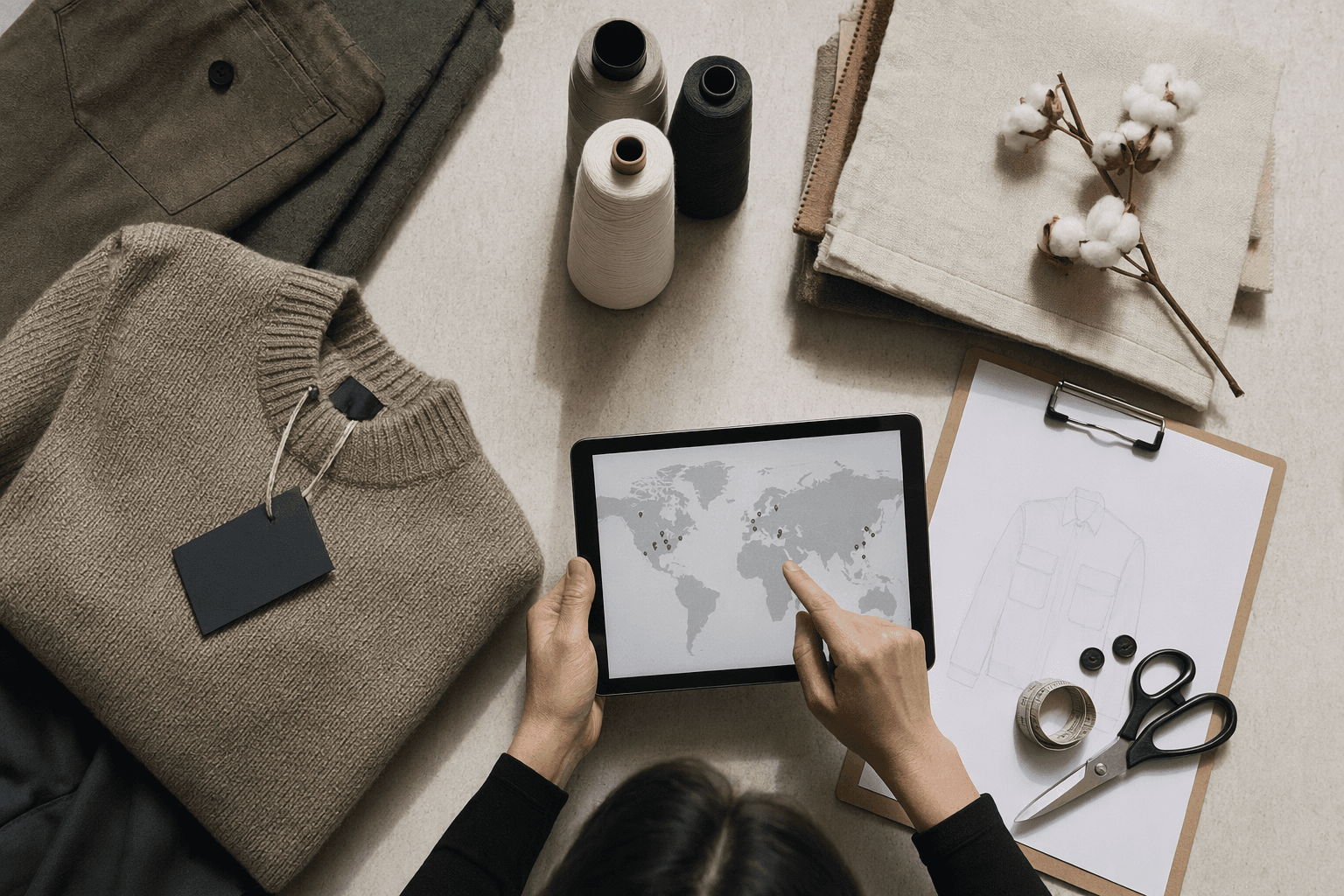
Fairly Made is planting a flag in New York to chase the part of fashion nobody can fake anymore: proof. The Paris-based traceability platform is opening a U.S. office and putting Sydney Ellis in charge of North America as more brands get squeezed by forced-labor scrutiny, retailer demands and the sheer grind of documenting where every fiber came from.
That is the real business here. Fairly Made is betting that American labels will finally pay for the unglamorous plumbing of compliance, the supplier mapping, data collection and audit prep that turn a messy global supply chain into something a legal team can defend. The company says it already works with U.S. clients including Another Tomorrow and G-III Apparel Group, the parent of DKNY and Karl Lagerfeld, which tells you the audience is not fringe sustainability brands alone. It is also the bigger, more exposed groups with enough volume to feel the pain.
The timing is no accident. The Uyghur Forced Labor Prevention Act, signed on December 23, 2021 and implemented on June 21, 2022, created a rebuttable presumption against goods linked to Xinjiang Uyghur Autonomous Region or UFLPA-listed entities. U.S. Customs and Border Protection has been blunt about the remedy: know your supply chain, trace inputs, evaluate risk, communicate with suppliers and keep thorough documentation. That is a tall order for any brand still relying on spreadsheet archaeology and half-broken vendor chains.
Fairly Made says it is built for exactly that problem. The company says its tools trace products from tier 1 back to raw materials, help reduce supplier fatigue and connect brands to a network of 22,000 suppliers. It says 35,000 products already carry its digital passports, a useful number because it shows this is no longer just theory dressed up as ESG language. It is infrastructure.
The New York move also sharpens Fairly Made’s European angle. The company has been positioning itself for the Digital Product Passport era under the European Union’s Ecodesign for Sustainable Products Regulation, which is expected to force brands to manage product data more rigorously and explain sustainability at the item level. Fairly Made has said that framework will reshape how fashion is designed, sourced and communicated.
The company raised €15 million to fund global expansion, and now it is spending that capital where compliance anxiety is hottest. The brands most likely to buy are the ones shipping into both the United States and Europe, with layered supplier webs and enough visibility risk to make traceability worth the bill. In 2026, that is not a nice-to-have. It is table stakes.
This article was produced by Prism’s automated news system from verified source data, official records, and press releases, then run through automated quality and moderation checks before publishing. The system is built and supervised by the people who set the standards it runs under. Read our full AI policy.
Did this article answer your question?