Global Fashion Summit ties sustainability to financial resilience
At Copenhagen Concert Hall, fashion’s sustainability talk turned into a balance-sheet conversation, led by a new CFO agenda built around resilience, risk and survival.

Global Fashion Summit used its 2026 edition to redraw the industry's sustainability script around money, margins and survival. At Copenhagen Concert Hall, Global Fashion Agenda and Boston Consulting Group launched Fashion CFO Agenda 2026: Building Financial Resilience Through Sustainability, a clear signal that the next phase of climate action in fashion is being routed through the finance department rather than the brand floor.
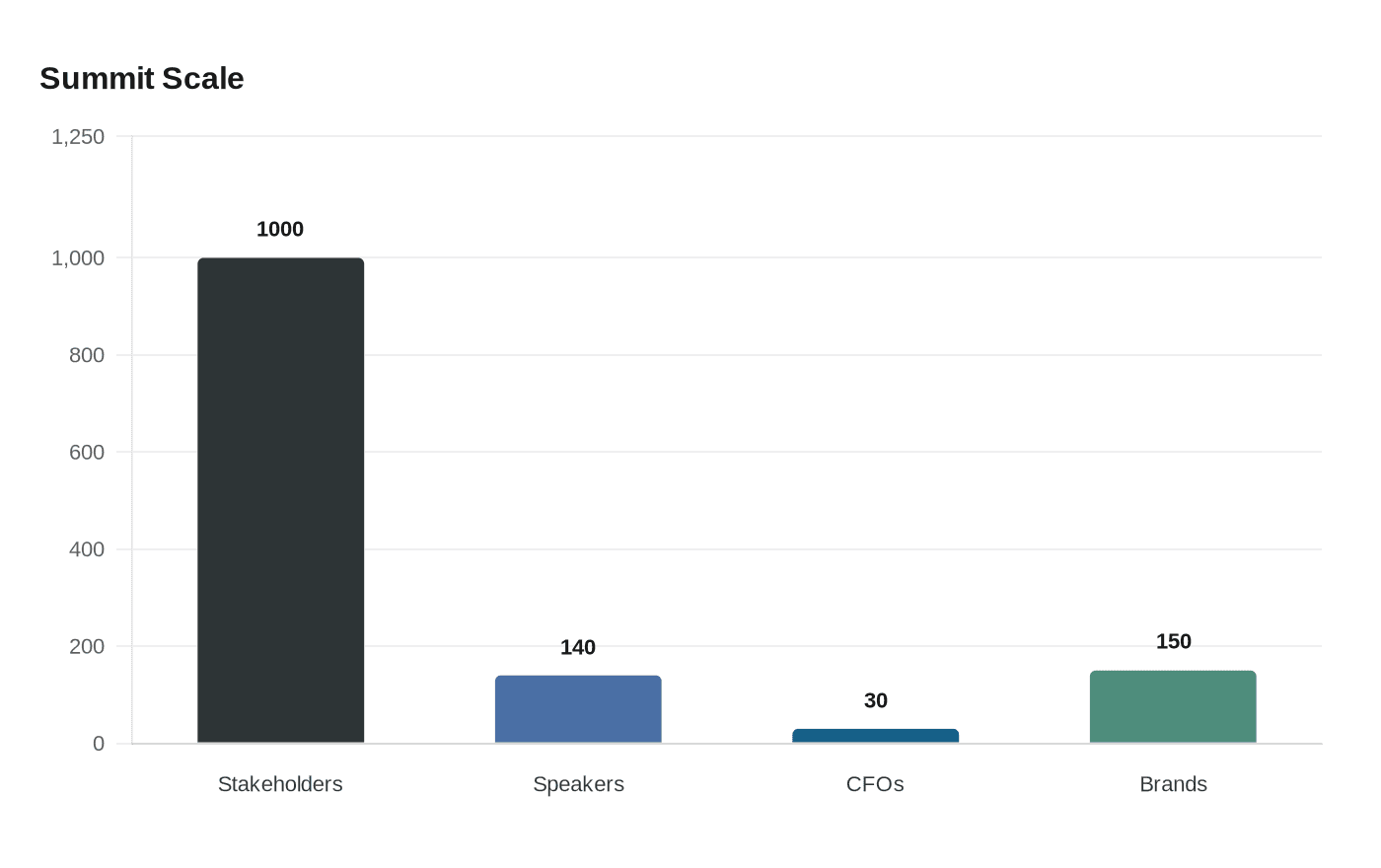
The summit, themed Building Resilient Futures, ran from 5-7 May at the Copenhagen Concert Hall after pre-summit activity across the city on 5 May. More than 1,000 stakeholders came through the doors, from brands and retailers to NGOs, policymakers, manufacturers and innovators, while more than 140 speakers filled the programme. For a forum first introduced in Copenhagen in 2009 as a COP15 side event, the scale alone underscored how far sustainability has moved from a niche concern to a board-level conversation.

The language onstage was noticeably less devotional and more strategic. Boston Consulting Group said the new CFO agenda was built from deep engagement with more than 30 CFOs and senior executives, plus analysis of over 150 fashion brands. Its findings were stark: sustainability mentions in fashion investor-relations earnings calls have fallen by roughly one third since 2022, even as the economics of climate risk have become harder to ignore. Climate-driven disruptions have already pushed cotton and wool prices up by as much as two times, while textile extended producer responsibility fees could shave roughly 4% off net profits by 2030. At the same time, BCG said roughly 70% of fashion-sector greenhouse gas emissions can be reduced at low cost or with cost savings, and circular business models have already delivered double-digit top-line growth for several brands.

That tension, between rhetoric and capital allocation, was the real story of the summit. Marie-Claire Daveu of Kering said innovation remains essential to the company’s climate and biodiversity targets, with next-gen materials, traceability and lower-impact manufacturing at the center of that effort, but she also made the financial case plain: sustainability has to generate economic value. Andrea Baldo of Mulberry described a move from financial crisis toward sustainability-led recovery, arguing for a shift from "volume to value" and linking the whole agenda to stakeholder capitalism and shareholder value. Federica Marchionni, Global Fashion Agenda’s chief executive, called the moment a crossroads defined by climate disruption, economic uncertainty and rapid technological change, and said "resilience is now a responsibility, not an option." That is where fashion’s new sustainability language lands, not as a softer story, but as a harder one about who can still afford to stay in business.
This article was produced by Prism’s automated news system from verified source data, official records, and press releases, then run through automated quality and moderation checks before publishing. The system is built and supervised by the people who set the standards it runs under. Read our full AI policy.
Did this article answer your question?