Fashion for Good launches Stretching Circularity in Amsterdam to validate low‑impact elastane
Fashion for Good launched Stretching Circularity in Amsterdam on 12 February 2026 to pilot bio‑based and regenerated elastane and validate demonstrator T‑shirts with 10% and 2% stretch.
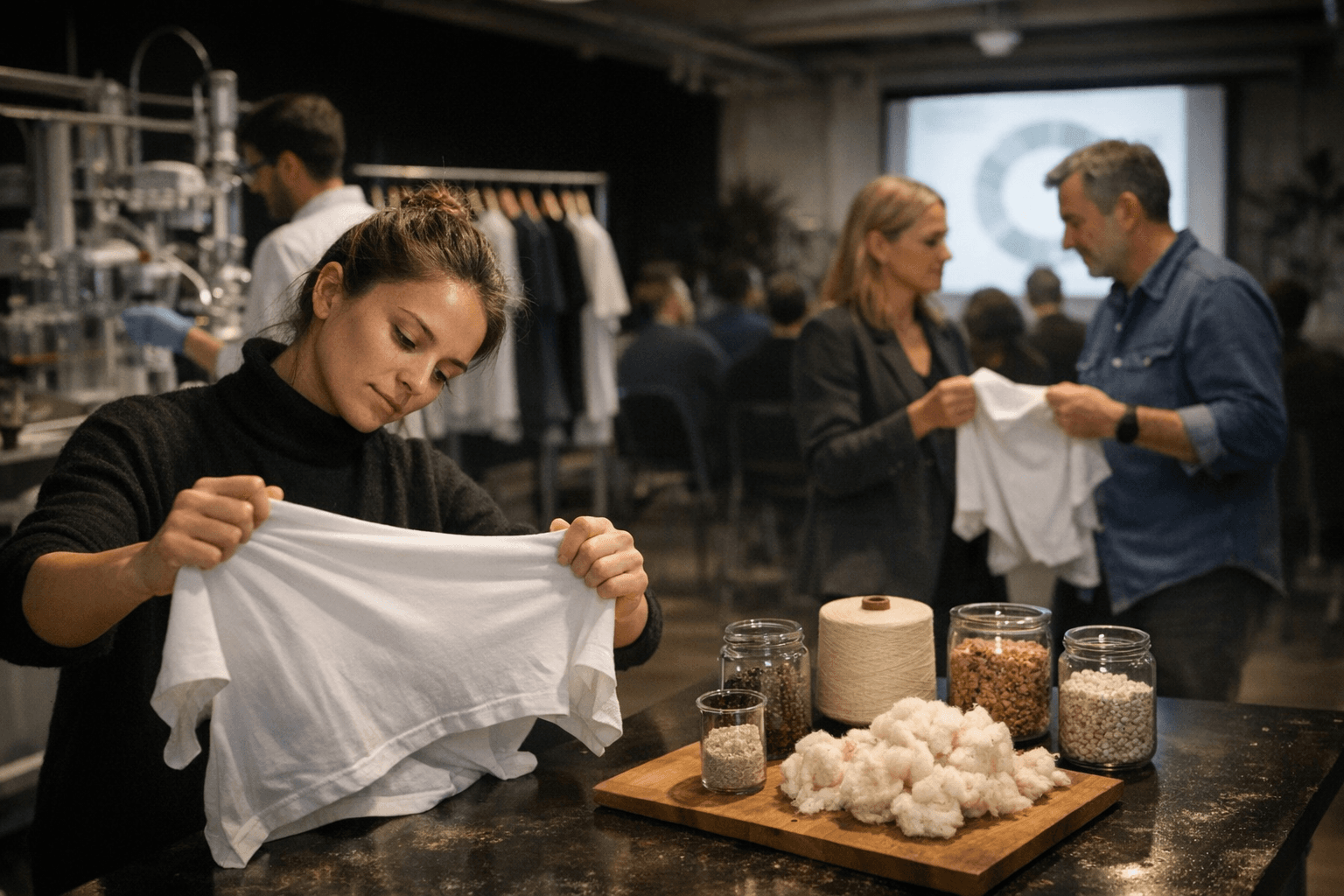
Fashion for Good opened Stretching Circularity in Amsterdam on 12 February 2026 with a clear industry aim: remove one of the most significant technical barriers to a circular textile economy by validating lower‑impact elastane alternatives. The project frames that ambition around pilot‑scale testing and demonstrator garments, positioning bio‑based and recycled elastane as potential replacements for conventional stretch fibers used across apparel.
The initiative runs two complementary workstreams. Workstream 1 tests next‑generation elastane materials made from alternative inputs, explicitly including bio‑based materials and other feedstocks, and will produce a technical T‑shirt containing 10% elastane and a non‑technical T‑shirt containing 2% elastane as demonstrators. Workstream 2 focuses on regenerated elastane produced through emerging recycling innovations. Both workstreams follow a pilot‑scale validation approach designed to generate comparable data on performance, environmental impact, economic feasibility, and scalability.
Stretching Circularity brings named brands into the lab and the supply chain: Levi Strauss & Co (Beyond Yoga), On, Paradise Textiles, Positive Materials, and Reformation are listed as partners, while Ralph Lauren Corporation is acting as an adviser. Ecosystem expertise will be supplied by Materiom and the Ellen MacArthur Foundation to support knowledge exchange and risk assessment related to scaling solutions. Reformation’s sustainability senior director Carrie Freiman Parry framed the effort plainly: “Stretching Circularity is about tackling that problem at the root and proving that lower‑impact stretch materials and new recycling pathways can meet real performance and design standards.”
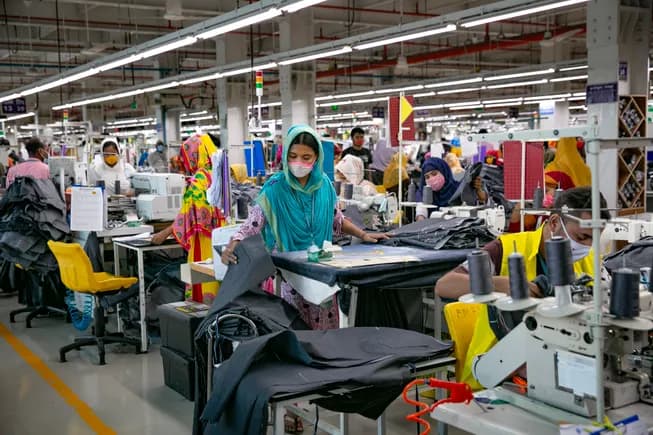
The urgency of the work is practical and quantifiable: elastane is present in about 80% of apparel, appearing at 1–5% by weight in cotton or wool items and up to 20% in polyester or polyamide products. That prevalence makes elastane a persistent blocker for textile‑to‑textile recycling and explains why the project concentrates on both small percentages in everyday garments and higher percentages in technical activewear.
Outputs are concrete: pilot‑scale testing, a structured due‑diligence and validation framework, and demonstrator garments intended to produce comparable performance and impact metrics. The validation framework will assess whether alternative materials can meet the performance standards of traditional elastane, while the project tracks environmental impact, scalability, and economic feasibility as core metrics.
Several practical questions remain open, including the pilots’ timeline, project funding, the specific innovators supplying novel elastane chemistries or recycling processes, the exact test standards that will determine pass or fail, and whether consumer wear trials will be included. For now, Stretching Circularity has assembled brands, advisors, and ecosystem partners in Amsterdam with demonstrator garments and a pilot methodology; if the pilots prove that bio‑based and regenerated elastane match traditional performance, the initiative could clear a structural obstacle to broader textile circularity.
This article was produced by Prism’s automated news system from verified source data, official records, and press releases, then run through automated quality and moderation checks before publishing. The system is built and supervised by the people who set the standards it runs under. Read our full AI policy.
Did this article answer your question?