Fashion Industry Faces Urgent Reckoning Over Water Scarcity, Pollution, and Labor
German nonprofit Drip by Drip's new report names fashion's water crisis as the industry's biggest environmental failure, with 2.2 billion people globally lacking safe drinking water.
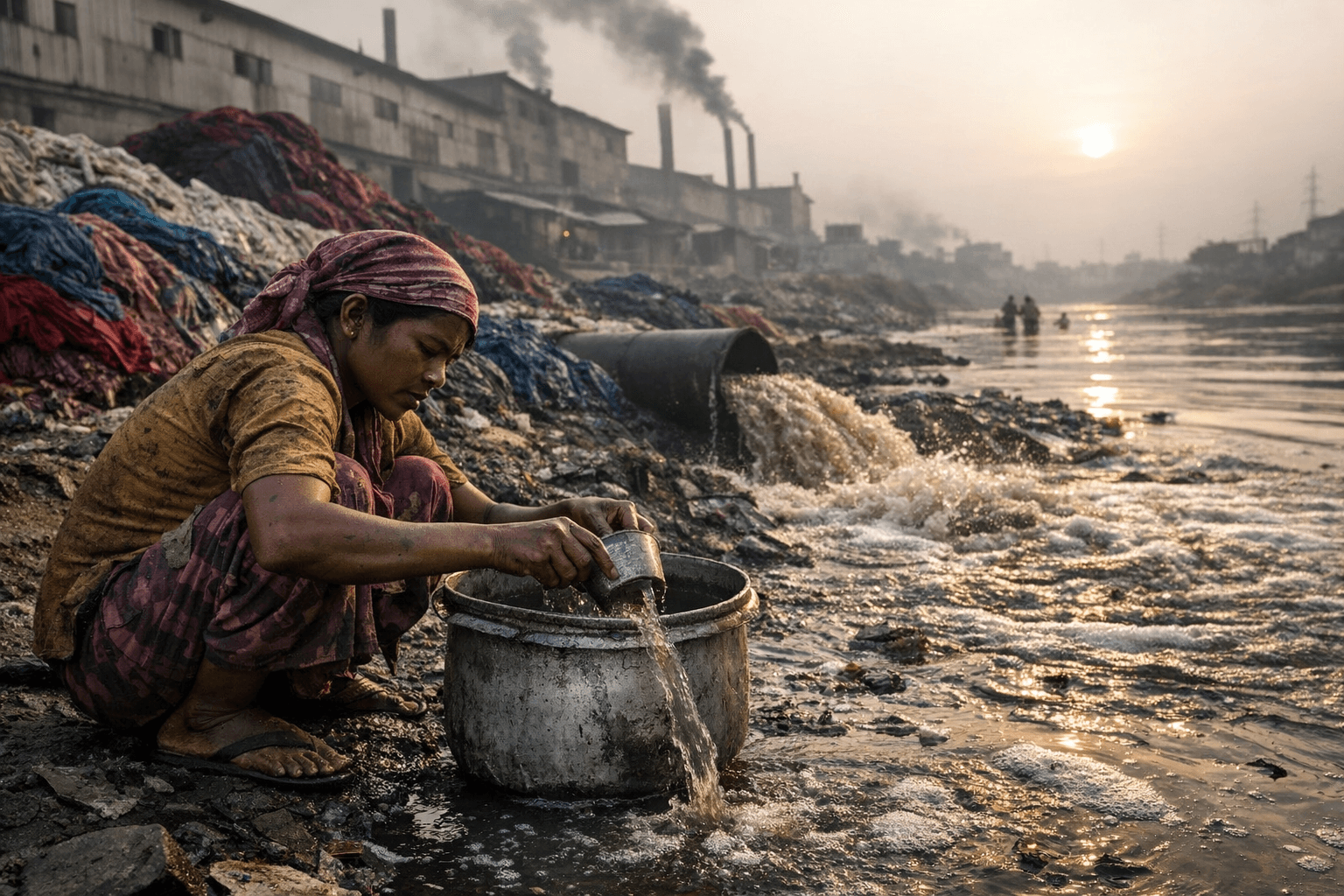
Drip by Drip framed the fashion industry's water problem in a striking image: "Somewhere in the world, a river changes color with every new fashion trend." That line opens the German nonprofit's new report, "The Drip: Voices on Water, Labor and Sustainability in the Fashion Industry," released March 18, and it captures exactly the kind of structural indictment that sets this publication apart from the usual sustainability white paper.
"Water is fashion's most significant environmental impact, yet it remains largely invisible in industry decision-making," said Amira Jehia, Drip by Drip's executive director. The report, she adds, "shifts the perspective. It centres the people and places where fashion's water footprint is felt most directly and challenges the systems that continue to externalise those costs."
At a time when 2.2 billion people globally lack access to safely managed drinking water, the fashion industry continues to consume vast volumes across cotton cultivation, dyeing and finishing. A single pair of jeans can require up to 7,500 to 10,000 litres of water over its lifecycle. Much of this water use remains effectively invisible within corporate disclosures, particularly when embedded in raw material production and wet processing tiers that sit beyond brands' direct operational control.
Released in English and German, the report brings together eight contributors from across the global textile supply chain to examine how fashion's water footprint shapes lived realities in production regions, particularly in South Asia. Accounts featured in the report include garment workers describing being denied adequate drinking water during extreme heat, environmental scientists documenting industrial contamination of local waterways, and former brand auditors outlining how environmental safeguards often intensify temporarily around inspection periods.
That last detail is where the report cuts deepest. One supplier stated: "Auditors come, we show them the ETP (Effluent Treatment Plant), they check the paperwork. But running the ETP full-time? That costs more than the brand pays per garment. So, we turn it off when they leave."
In Pakistan's Faisalabad, environmental degradation intersected directly with labor precarity. Mill workers face high dust exposure, and surrounding communities rely on groundwater that frequently fails to meet safe drinking water standards due to industrial discharges. Wastewater from dyeing and finishing contains high levels of chemical contaminants, contributing to ecological collapse in waterways such as those surrounding Dhaka.
The three main systemic failures identified in the report are the lack of community-owned water data, the disconnect between brand sustainability commitments and purchasing practices, and the disproportionate burden placed on women and frontline communities. The report argues that aggressive pricing, short lead times and volatile order volumes undermine suppliers' ability to invest in wastewater treatment, infrastructure and worker protections, despite brands' public commitments to environmental stewardship.
The report also takes aim at commonly used sustainability metrics, arguing that Life Cycle Assessments regularly rely on global averages that obscure differences in water use and neglect to account for the broader environmental impacts of synthetic fibers.
The Berlin-based nonprofit is the first NGO focused exclusively on a water-just fashion system. Since its founding in 2018, Drip by Drip has implemented 114 community water projects, reportedly impacting over 280,000 individuals across the Global South and providing 87,000 with access to clean water. To mark the release of the bilingual report, Drip by Drip held a public launch event in Berlin, which featured a panel discussion with contributors, a screening of "Once There Were Rivers," and an immersive VR installation by Armin Keplinger.
As climate change intensifies droughts and floods across major production hubs, water security is rapidly becoming a business continuity issue as much as an ethical one. For the brands still treating water as a peripheral KPI, "The Drip" is a well-documented argument that the math no longer works in their favor.
This article was produced by Prism’s automated news system from verified source data, official records, and press releases, then run through automated quality and moderation checks before publishing. The system is built and supervised by the people who set the standards it runs under. Read our full AI policy.
Did this article answer your question?


